Simple Online Application
The application takes a few minutes online from anywhere in Turkey and needs only your child's basic details and the previous school's latest marksheet.

Give your child access to a world of learning with Sunbeam World School, an accredited online school in Turkey offering classes from Nursery to Grade 12. Explore live interactive lessons, six curriculum pathways, and flexible learning options designed to help students thrive academically from home.
Accredited online school in Turkey, recognised by leading national and international education organisations, ensuring trusted academic standards, global credibility, and quality online learning for students worldwide.


Sunbeam World School runs a complete online school for families in Turkey: live classes from Nursery to Grade 12, six curriculum pathways and one published fee per grade. Online school admission in Turkey is open every month, so a household in Beşiktaş, Ataşehir or Beylikdüzü in Istanbul, Çankaya in Ankara or Konyaaltı in Antalya enrols on the same terms.
Sunbeam World School has taught for over 54 years and now runs a virtual online school for 100K+ students in 135+ countries. Turkey has absorbed a large wave of relocating families since 2022, and the schooling question for most of them is continuity rather than proximity. See the eligibility criteria and school timings for the available batches.
Your details are private and never shared.
Admission takes four steps, all from home in Turkey: apply online, a counselling call within 24 hours, documents and fee, then orientation. Admissions are open all year, including mid-year, for Nursery to Grade 12.
The application takes a few minutes online from anywhere in Turkey and needs only your child's basic details and the previous school's latest marksheet.
An academic advisor calls within 24 hours to match your child's grade, curriculum pathway and batch timing to their strengths and your family's schedule.
Every pathway ends in a recognised certificate: NIOS or BOSSE for the CBSE-aligned route, Cambridge IGCSE and A Level, a Cognia accredited American diploma, or the Australian Curriculum certificate.
Enrolment and fee payment are completed online in one sitting, and your child can join live classes within days of registration.
A dedicated academic coordinator and a technical support team stay with each Turkey family through the academic year, from orientation to board exam registration.
Certified teachers run every live class, and students get recordings, digital study material and an AI-enabled learning management system from day one.
A virtual online school with six pathways from Nursery to Grade 12, all taught live from Turkey. Grade-wise pages: Pre-Primary, Primary, Middle, Secondary and Senior Secondary.
Cambridge, IGCSE and A / AS Levels, global recognition, Grades 6-12
Australian curriculum standards, Foundation to Year 12
US K-12 Common Core standards, Cognia accredited
CBSE-aligned curriculum based on NCERT, NEP 2020 and NCF 2023
National Institute of Open Schooling under the Ministry of Education, Government of India
Board of Open Schooling and Skill Education, established by the Government of Sikkim
Our academic counsellors will guide you through a free consultation, and the full grade-wise fee structure is published upfront.
Schooling in Turkey has usually meant choosing a district for its school and then commuting across a large city. Parents comparing the best online schools in Turkey switch for five reasons.
Classes run in a single daily slot between about 07:30 and 16:00 Turkish time.
A transfer from Istanbul to Antalya, or out of Turkey, does not interrupt the academic year.
The time an Istanbul or Ankara school run takes goes back to the child.
Cambridge, American, Australian and three Indian routes without changing school.
A single figure per grade published up front rather than quoted after an enquiry.
Book a free demo class for your child's grade and meet the teacher who would take the batch.
Book a Free Demo ClassThe same five steps for every grade, Nursery to Grade 12. Mid-year admission is open all year.
Complete our online application with your child's basic details. This is all we need to open the file and connect you with an advisor.
Our advisors connect with you to understand your child's learning needs and help select the right grade level, curriculum pathway and batch timing.
Finalise admission by submitting the required documents and the fee online. Our team is available to assist you at every step.
Parents and students receive access to the learning management system, where students attend classes, interact with teachers and appear for exams, and parents track progress and attendance.
Your child starts live online classes with interactive tools and ongoing teacher support, all from a safe and flexible home environment in Turkey.
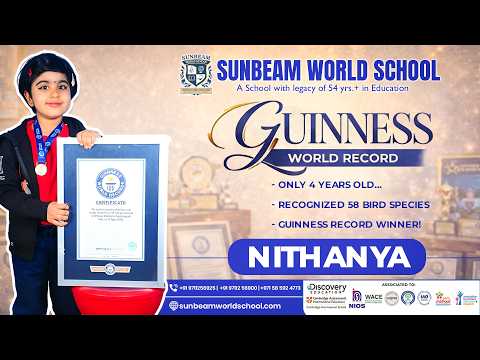
Featured on JioHotstar's Future Schools. Home to a Guinness World Records holder. Founder and student stories below.

Online nursery admissions in Turkey start at age 3. The online primary school covers ages 5 to 10, and the online high school covers Grades 9 to 12. Find your child's age band and the stage it maps to in each pathway, then confirm placement on the eligibility criteria page.
| Age | Indian Curriculum | Cambridge Curriculum (UK) | American Curriculum | Australian Curriculum |
|---|---|---|---|---|
| 3 to 5 | Pre-Primary School | Early Years School | Kindergarten School | Early Years / Kindergarten |
| 5 to 10 | Primary School | Primary School | Elementary School | Primary School |
| 10 to 13 | Middle School | Lower Secondary | Middle School | Middle School |
| 13 to 16 | Secondary School | Upper Secondary School | High School | Lower Secondary / Year 10 |
| 16 to 18 | Senior Secondary | AS and A Levels | High School (Grades 11 to 12) | Senior Secondary (Years 11 to 12) |
NIOS and BOSSE open school pathways are available for Grade 10 and Grade 12 board certification.
Practical answers for families in Turkey: what the compulsory education rules require, how denklik works, when classes run on Turkish time, and what the fee covers.
Education in Turkey is compulsory from age 6 to age 18 under the 4+4+4 structure, and home education is not recognised as a route through it. A child's own residence permit is itself one of the documents a Turkish school asks for at enrolment. Put your family's situation to the Ministry of National Education and to a Turkish education lawyer before enrolling anywhere, including here.
Denklik is the Ministry of National Education certificate that recognises a foreign diploma as equivalent to a Turkish lise diploması. Any family that intends to use the Grade 12 certificate in Turkey will need it, for a Turkish university, for open-education registration, and sometimes to evidence education level in residence or citizenship files. Start reading the requirements in Grade 11, not after results.
Applications go through e-Devlet at denklik.meb.gov.tr, or in person at the Provincial Directorate of National Education in your province. The documents are specific: the diploma and transcript authenticated by Apostille or consular legalisation, a sworn Turkish translation notarised in Turkey, and copies of the passport and residence permit. Build the authentication time into your Grade 12 plan.
It matters a great deal. Denklik assessment expects the schooling behind the diploma to add up to Turkey's twelve-year system, and an application can be refused where the years do not match. Sunbeam World School teaches Grade 1 through Grade 12, so ask the counsellor for a written statement of the grades completed and the years they represent, and check it against what the Directorate expects.
Turkey sits two and a half hours behind the published India timetable and has stayed on a single clock since 2016, so there is no seasonal shift to plan around. Every grade falls between roughly 07:30 and 16:00 local, with Grades 10 to 12 running about 07:30 to 13:00. Confirm your child's exact slot in writing before paying anything.
The timetable follows the Indian academic week, so Monday to Friday broadly lines up with Turkey while the term dates and public holidays do not. Expect teaching days through Turkish national holidays and breaks when local schools are sitting exams. Ask for your grade's teaching days and the term dates together, then set them against the Turkish calendar.
Households that relocated to Turkey without a settled plan for how long they will stay. That covers families who moved since 2022 and may move again, those living on the coast at Antalya, Bodrum or Fethiye with limited choice nearby, Indian professionals in Istanbul and Ankara, and students who need a shorter day. A counselling call settles whether it fits.
Subject specialists, two to a class: a class teacher taking the period and an assistant subject teacher working alongside. On the Cambridge pathway the teacher holds Cambridge certification for the syllabus in front of them. Ask for that certification to be named rather than described, and ask which teacher covers your child's weakest subject, because that is the one that will matter.
In two places, which is why the question is worth asking twice. First, a practical or coursework component affects whether a subject can be examined on your child's route at all. Second, the final transcript is part of a denklik file, so what appears on it matters. Teaching is backed by a learning kit and downloadable content books, and a counsellor confirms the detail per subject.
Those are the right two questions for a Turkish household, since Turkey's own personal data law has made parents here used to asking them. Request the policies in writing and look for where records and class recordings are stored, who inside the school can open them, how long they are kept, and alongside that, who moderates a live classroom and how a concern is escalated.
Any of them can work, and the deciding factor is denklik rather than the curriculum's reputation. A family intending a Turkish university should choose the pathway whose diploma and transcript are most straightforward to authenticate and translate, and should ask the Provincial Directorate that question directly. Cambridge, American, Australian, CBSE-aligned, NIOS and BOSSE are the six; the IB, Edexcel and ICSE are not offered.
The CBSE-aligned pathway keeps a child on NCERT textbooks and CBSE-pattern assessment from Grade 1 to Grade 12, which is what makes a return to India a continuation rather than a restart. Turkey has very few seats of this kind outside the largest cities. NIOS or BOSSE certify Grades 10 and 12, accepted for CUET, JEE and NEET registration.
IGCSE sits in Grades 6 to 10 and AS and A Levels in Grades 11 and 12, with 70+ IGCSE subjects to choose between. For Turkey the useful detail is what happens after: the qualification travels to universities in 135+ countries on its own, and for a Turkish university it goes through denklik first. Plan for whichever of those two routes your family expects.
Usually, and subject availability is the limit rather than willingness. The counsellor reads the previous school's reports, establishes which subjects ran and how far each got, and confirms in writing what continues before any payment. Practical subjects are checked against the examination route at the same time, since that is where a mid-course transfer most often fails.
A Levels run in Grades 11 and 12 with Cambridge certified teachers, timetabled roughly 07:30 to 13:00 Turkish time. Two decisions belong in one conversation before Grade 11: the subject combination, and how the result will be used, because a Turkish university route brings denklik into the picture and an overseas one does not.
Where a family lives stops mattering. A Turkish campus ties the decision to a district and a servis route, and families routinely choose a neighbourhood around a school. A British curriculum online school in Turkey unties the two, on the same Cambridge syllabus. What a campus keeps is its laboratories and the fact that it enters its own pupils for examinations, which counts for a practical sciences student.
Only if the United States is genuinely the plan, and that is worth being honest with yourself about before Grade 9. The pathway runs on US K-12 Common Core standards under Cognia accreditation with continuous assessment, which suits an American application well. If a Turkish university stays on the list too, ask the Provincial Directorate how a transcript of this kind is treated for denklik.
The published ratio is 2:20. The number parents here actually care about is how often their own child speaks, and that does not follow from class size alone. Sit in on a demo, count how many of the twenty are called on by name, and watch whether a quiet student gets drawn in or left alone. That answers it better than the figure does.
Most families arrange Turkish locally and the timetable leaves the hours for it. School finishes in the early afternoon at the latest, which clears the time local courses and tutors actually run, and that matters here because Turkish is what makes daily life and a future denklik file easier. Ask which language subjects your pathway offers.
From online yoga to competitive coding, Nursery through Grade 12.

All grades, certified instructors

Grades 3-12, Python, Scratch and more

All ages, guitar, keyboard, singing

All grades, classical and contemporary

Grades 2-12, beginner to advanced

Grades 5-12, builds confidence

Grades 1-12, DIY lab at home

Grades 5-12, future tech skills
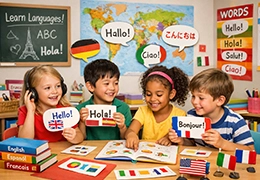
French, Spanish, German and more

Grades 5-12, Canva, illustration
Accreditation, board exams, fees, timings, devices and the questions parents raise on forums. More on our FAQ page.
Two separate questions hide inside this one, and a family in Turkey needs both answered. The school's own credentials are IAO and Cognia accreditation, Cambridge certification for the IGCSE and A Level pathway, and NIOS or BOSSE for the Indian pathways, each verifiable independently. Denklik is the second question, answered by the Provincial Directorate rather than by any school.
Enrolment here does not wait on a permit the way a Turkish school place does. Nursery starts at age 3, admission runs in any month, and a family mid-way through a residence application can start a three-year-old anyway. Sessions are short and activity led, with an adult nearby early on and a learning kit sent out.
For an Indian family in Turkey this is usually the easiest part of the whole move, because the NCERT books are the one thing that does not change when everything else does. Placement starts from the child's last reports rather than a test, and the gaps are written down. Ages 5 to 10 get short live periods with the rest of the work off the screen.
Senior grades sit at roughly 07:30 to 13:00 Turkish time, which is a normal school morning here rather than an evening workaround. Cambridge, the Cognia-accredited American pathway, the Australian Curriculum and the Indian pathways all run to Grade 12. If a Turkish university is the destination, plan denklik alongside the subject choices.
Admission follows the move rather than a September intake, and relocations into Turkey land in every month of the year. The counsellor maps what the child has covered, places them and lists the gaps, and recordings cover what was taught before the join date. No term is lost while a local place or a permit comes through.
Live, in every timetabled period, with a subject teacher present and attendance recorded. Recordings sit behind that for revision and absences. The register matters in Turkey because paperwork does: a live-class attendance record is a far stronger document in any file than a list of videos opened.
One batch slot, finishing in the early afternoon at the latest, with the exact length per grade published beforehand. Turkish families tend to put the freed hours into a course or a club in the late afternoon, which is when most of them run here. Eye exercises run during classes and blue-light guidance is shared.
A laptop, tablet or smartphone and a stable connection, with headphones and a webcam recommended rather than required, and no paid software beyond a browser and a PDF reader. Fixed broadband is widely available in Turkish cities, so the thing worth checking is a quiet room during the class window rather than bandwidth.
Through the same twenty classmates every day, and through Turkey's late-afternoon course culture. Dershane style courses, sports clubs, music schools and municipal youth centres all run after school hours and are where children here already mix. Online clubs, competitions and group projects run alongside across 135+ countries.
SEND trained educators work to an individualised plan covering dyslexia, ADHD, autism and speech, language and sensory processing needs, priced separately from the annual fee. A report already issued in Turkey or abroad is read and built on rather than set aside, which saves a family repeating an assessment it has already paid for.
Language is usually the real issue in Turkey, not the school. A child who cannot yet follow a conversation in the park is often fine in class and struggling outside it, and that gap closes with Turkish lessons and time rather than with anything a school can do remotely. On the school side, the class teacher comes first, then the academic coordinator, then a counsellor.
A parent app and portal update as work is marked, so a parent at the office through the teaching window sees the whole day afterwards. Attendance, assignments and assessment results appear as recorded and teachers raise concerns directly. Keep the records, because they are the easiest way to evidence full-time education in any Turkish file.
It runs its own published calendar, which will not match the Turkish one. Expect teaching days during Turkish national holidays and breaks when local schools are open, including the semester break in late January. Read the calendar before enrolling and set it against your own year, because the mismatch surprises most families.
Parents do no teaching at any stage. Grades 1 to 5 need an adult available to help with logins and keep a young child on task, and in many Turkish households a grandparent covers that rather than a working parent. From the middle grades the student runs the timetable and the adult role narrows to reading the dashboard.
Your position under Turkish compulsory education rules comes first, because it decides whether this is viable. Then the pathway, the class times in Turkish hours, the term dates, what denklik would require if the certificate is used here, and the published fee for the grade. A demo class can be booked in the same call.
Feedback from students and parents across India who trust Sunbeam World School for quality online education. More on our reviews page.
 4.8Trusted by students across 135+ countries

"I really like how teachers encourage us to speak confidently and take part in class. Online school feels so supportive."
"The lessons are engaging, the teachers are responsive, and my daughter feels confident learning from home."
"The flexibility here is a blessing. I can revise recorded lectures anytime."
"The virtual activities and projects are my favorite. I made new friends even while studying from home!"
"Online classes are super fun and interactive. I especially love the science experiments and quizzes."
"At first I was nervous about online school, but now I actually enjoy attending classes."
Sunbeam World School has received the Best E-School award from Brainfeed Magazine, the CBSE Chairperson Best School for Skill Education award, the Bharat Vibhushan Puraskar, and awards for Best Contribution in International Education and Best in Online Education.


An academic counsellor reviews your child's grade, subjects, learning needs and goals in a free call and recommends the right pathway and batch for your family in Turkey.
Talk to a CounsellorA free demo class shows you a live lesson, the teacher who would take your child's batch and the learning platform before you enrol.
Book a Free DemoThe same live school, six pathways and three batches, in every city below.
Nursery to Grade 12, live teacher-led classes, six boards, fee published upfront. Book a free demo class or download the brochure.