 Online Education
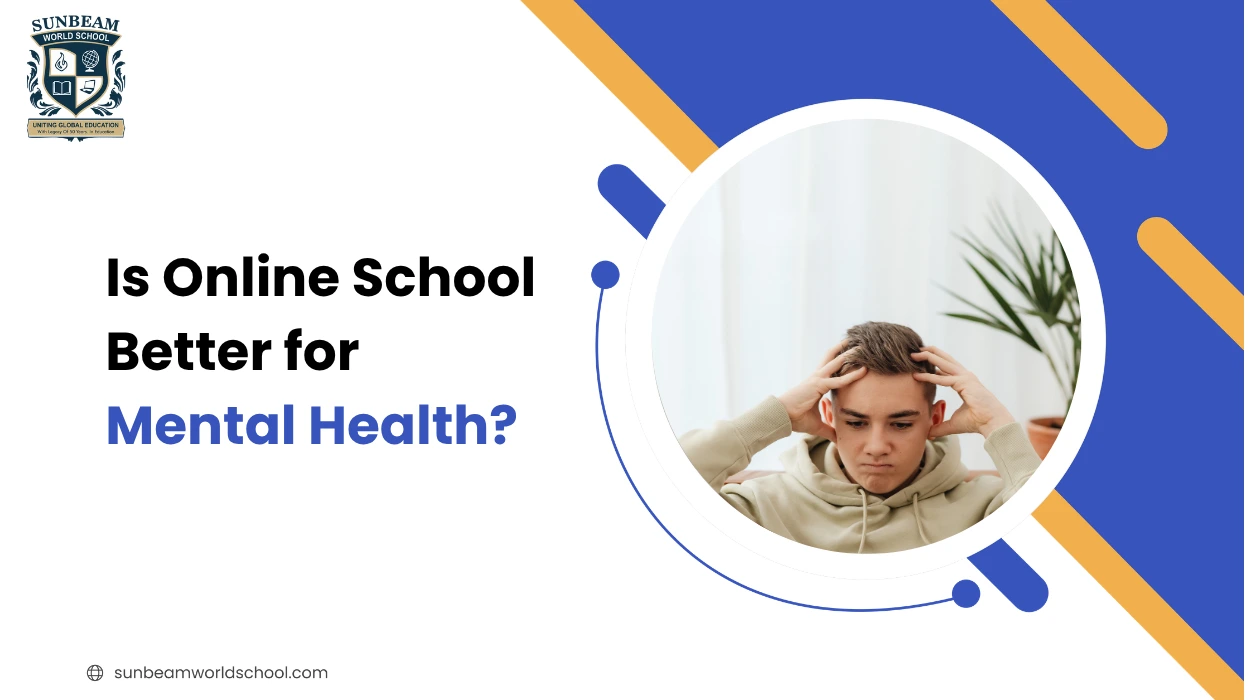
Is Online School Better for Mental Health?
Is online school better for mental health? It can be, for the right child. Online school tends to help when a child struggles with social anxiety, severe bullying, or needs a flexible schedule, because it removes those daily triggers. It can also increase loneliness, especially for more extroverted children, so the impact is highly individual and depends on the child's learning style, social needs, and home environment. It is also not a treatment for any mental health condition. This honest guide covers the mental-health pros and risks, whether switching actually helps, who benefits most, and how to protect your child's wellbeing.
Can online school be better for mental health?
For some children, online school clearly supports better mental health; for others, a physical school is the healthier place to be. The honest answer is that it depends on the child, their circumstances, and how the online routine is run. What online school reliably does is give a family more control over the environment: who your child is around, when they wake, how the day is paced, and how much pressure they carry. For a child whose stress comes from that environment, more control can be a real relief. For a child who thrives on daily in-person contact, it may not be.
It also helps to be clear about what online school is not. It is not a cure for anxiety, depression, or any diagnosed condition, and it should never replace professional care. It is one lever a family can adjust, and for the right child it can be a powerful one.
What are the mental health pros and risks?
The impact on mental health is so individual, it helps to see both sides in brief before the detail.
- Pros for mental health. Online school removes physical threats like bullying, reduces social pressure, and cuts a time-consuming commute. Learning at your own pace greatly lowers academic stress, and a flexible schedule makes room for therapy, treatment, and rest.
- Risks for mental health. Extended isolation can affect mood and low feelings, especially for extroverted children who need constant contact. Too much screen time, too little movement, and blurred boundaries between home and schoolwork can lead to burnout.
What are the mental health benefits of online school?
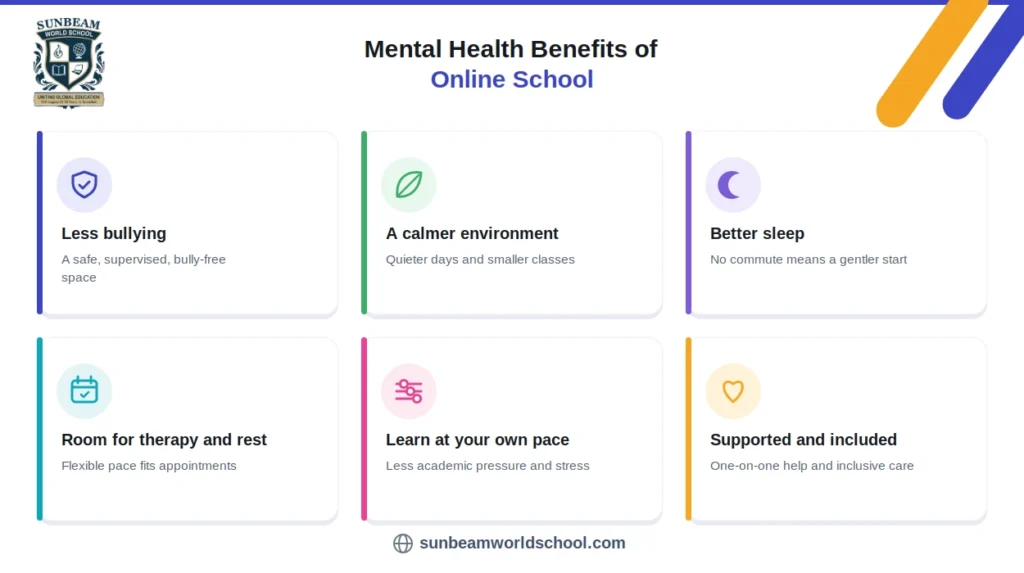
Discover how online school can promote better mental health through flexible learning, a supportive environment, and reduced stress.
When online school helps a child's wellbeing, it usually comes down to the following, and each is worth understanding on its own.
Less bullying and social pressure
For a child who is being bullied or who finds the social politics of a large campus exhausting, learning from home can lift a daily weight. Structured, supervised online classes leave far less room for the corridor and playground dynamics that cause many children real distress. Families often move specifically for this reason, as covered in moving from a regular school to an online school.
A calmer, lower-anxiety environment
A quiet, familiar home setting, smaller class sizes, and the option to participate through chat rather than always speaking aloud can lower the everyday anxiety some children feel in a crowded, noisy classroom. For anxious learners, a calmer setting can mean more energy left for actually learning.
Better sleep and a healthier routine
Cutting a long commute and a very early start can give a child back an hour or two of sleep, and sleep is one of the strongest foundations of good mental health. A gentler morning often means a calmer, more focused day.
Flexibility to manage health, therapy, and rest
Online school makes it far easier to fit in a therapy appointment, a medical treatment, or simply a rest day without falling behind, because lessons are recorded and the pace is flexible. For a child managing a health or mental-health condition, that flexibility removes a major source of stress.
Room to learn at your own pace
Being able to replay a lesson and move at a comfortable pace takes the edge off academic pressure for children who feel overwhelmed by a one-speed classroom. Lower academic stress is a genuine wellbeing benefit, and the wider comparison is in is online school better than in-person.
What are the mental health risks to manage?
An honest guide has to cover the other side, but with an important caveat: none of these risks are inherent to online school. They appear only when the day is left unstructured, and a well-run school, with the right routine at home, designs them out. Each risk below comes with a straightforward way to manage it.
Isolation and loneliness
Without deliberate social contact, a child can feel isolated at home, and loneliness is hard on mental health, especially for extroverted children who draw energy from being around others. The fix is to build connection in: clubs, group activities, meetups, and in-person friendships from sport or hobbies. How this works in practice is covered in will my child make friends in online school.
Too much screen time
A full day on screens, with more screens after, can affect mood, focus, and sleep. Regular off-screen breaks, hands-on work, and clear limits keep this in check, and the realistic picture is in the guide on online school screen time.
Less physical movement
Without the incidental walking of a school day, a child can become too sedentary, which affects both body and mind. Protecting daily physical activity, a sport, a walk, or outdoor play, is essential, not optional.
Blurred lines between school and home
When home is also school, it can be hard for a child to switch off, and over time that can lead to burnout. A defined workspace and a clear end to the school day help keep home a place to relax rather than a place of constant study.
Who benefits most from online school for mental health?
Online school tends to help some children's wellbeing more than others, and it is rarely about a label. It is about where a child's stress is coming from. These are the situations where it is most often a genuine fit, and why.
Children facing bullying or social anxiety
When a child is being bullied or worn down by the social pressure of a large campus, the source of the distress is the environment itself. Moving to structured, supervised online classes removes the corridor and playground dynamics and gives a real fresh start, away from the people or situations causing harm. For socially anxious children, smaller classes and the option to take part through chat rather than always speaking aloud lower the daily dread, and many find that once the pressure eases they can join in, and even make friends, in a way they could not before. How that social side works is covered in will my child make friends in online school.
Neurodivergent learners
Many children with ADHD, autism, or sensory sensitivities find a busy, noisy, unpredictable classroom overwhelming, which drains the energy they need to learn. A calmer home environment with a predictable routine, fewer sudden transitions, and some control over light, sound, and movement can make the day far more manageable, and with individual support and a flexible pace these learners often engage more and struggle less. It works best with the right support, which is why Sunbeam's special education and inclusive learning pairs a low-stimulation setting with trained special educators.
Students managing a health condition
For children with a chronic illness, frequent medical appointments, or a condition that makes daily attendance unpredictable, simply keeping up at a physical school can be a constant strain. Online school lets them learn around treatment, fatigue, and recovery, with recorded lessons to catch up on low-energy days, so they stay connected to their education without the added stress of falling behind or having to explain every absence.
Highly sensitive or introverted children
Children who are highly sensitive or strongly introverted often find constant social stimulation and the noise of a large school exhausting rather than energising. Smaller groups, quieter days, and social contact they can plan rather than endure let them recharge and engage on their own terms. This is not about avoiding people; it is about a pace of social contact that suits them, and many such children grow more confident, not less, in a calmer setting. Whether this fits your child is the theme of who online school is best for.
Children who have started avoiding school
When anxiety builds to the point where a child dreads or refuses to go to school, the daily battle takes a toll on the whole family. For some of these children, a calmer online setting removes the specific triggers and offers a gentler way back into learning, without the panic of the school gate. This should sit alongside professional support rather than replace it, but online school can be the environment that makes re-engaging possible.
Students under high-pressure schedules
Young athletes, performers, and children balancing demanding outside commitments often carry real stress from squeezing everything around a rigid school day. The flexibility of online school relieves that pressure and protects both their goals and their wellbeing, as explored in how online school benefits student athletes.
One caveat runs through all of these: the right fit depends on the individual child, and for any diagnosed condition online school works best alongside professional care. If in doubt, talk it through with your child and, where needed, a professional.
Should you switch to online school for anxiety or stress?
This is one of the most common questions families ask, especially when a child's anxiety or stress is high at a regular school. The honest answer is that switching often helps when the stress comes from the school environment itself, such as bullying, social anxiety, or an exhausting commute, because online school removes those triggers directly. It helps less when the anxiety has deeper roots, since changing where a child learns will not by itself resolve an underlying condition. Look closely at where the distress is coming from, get professional input if it is significant, and treat online school as a supportive change of environment rather than a cure. Some families also prefer to ease in gradually rather than switch overnight, and it helps to know the decision need not be permanent, since a child can return to a regular school later if they choose. Whether the model suits your child is explored in who online school is best for.
How can you protect your child's mental health in online school?
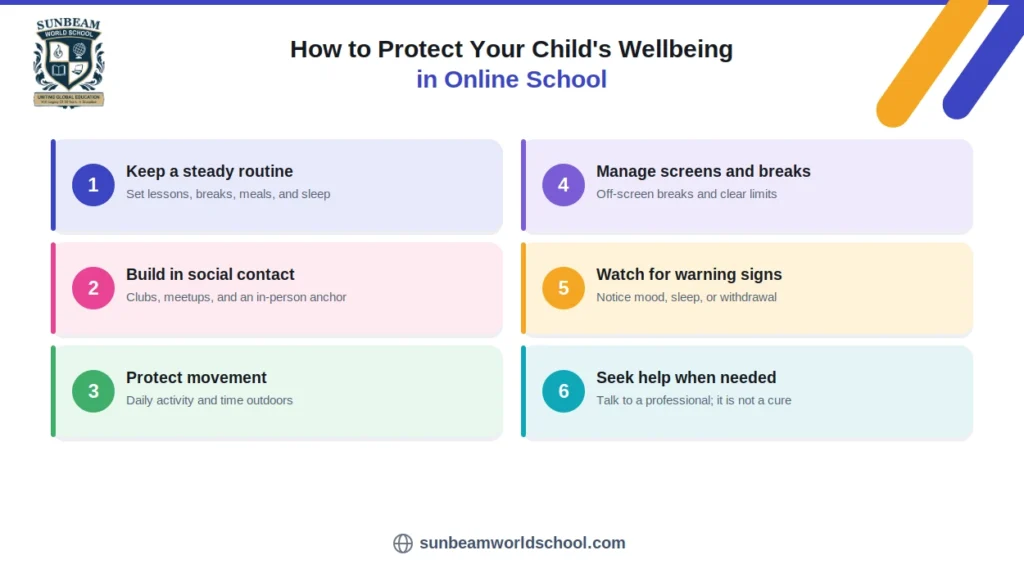
Six practical ways parents can protect their child's mental health and well-being while learning in an online school.
The model works best for wellbeing when a family is intentional about it. These steps consistently help.
- Keep a steady routine. A predictable rhythm of lessons, breaks, meals, and sleep is calming and grounding, as shown in a day in the life of an online school student.
- Build social contact in. Enrol in clubs and activities, arrange meetups, and keep an in-person anchor like a sport or hobby so your child is never socially isolated.
- Protect movement and outdoor time. Make daily physical activity and time outside a fixed part of the day, not an afterthought.
- Manage screens and breaks. Use regular off-screen breaks and hands-on work, and set limits on recreational screen time after school.
- Watch for warning signs. Notice changes in mood, sleep, appetite, or withdrawal from activities, and talk to your child early and openly.
- Get professional help when needed. If your child is struggling, speak to a doctor, school counsellor, or mental health professional. Online school can support a wider plan, but it is not a substitute for care.
Is online school a solution for anxiety or depression?
It is important to be careful here. Online school is not a treatment for anxiety, depression, or any mental health condition, and it should not replace professional care. What it can do is remove some environmental triggers, such as bullying or overwhelming social pressure, and give a child a calmer, more flexible setting in which to recover and learn.
For some families that change makes a real difference. For a child who is genuinely struggling, though, the right first step is professional support, and online school can then be one helpful part of a broader plan rather than the whole answer. If you have serious concerns about your child's mental health, please speak to a qualified professional.
How does Sunbeam World School support student wellbeing?
Sunbeam World School treats wellbeing as part of education, not separate from it. As a global online school, it builds a calm, safe, and connected environment in several deliberate ways.
Small classes and one-on-one support
Class sizes are kept small so teachers actually know their students and can notice when a child is struggling. One-on-one support hours mean no child is lost in a crowd, and quieter learners can ask for help without the pressure of a packed room.
A safe, bully-free environment
Learning happens in a moderated, supervised setting, which removes the corridor and playground dynamics that cause many children distress. For a child who has faced bullying, this alone can lift a daily weight and make school feel safe again.
A warm, supervised community
Clubs, cultural events, house activities, and regional meetups give children real connection and belonging, so they are socially supported rather than isolated. The community is described on the school life page, and how children build friendships is covered in will my child make friends in online school.
Inclusive support for neurodivergent learners
Trained special educators support neurodivergent and differently-abled children through inclusive online education, pairing individual attention with the calmer, more predictable environment many of these learners find easier to manage.
A flexible pace that lowers pressure
Recorded lessons and a flexible pace let a child slow down, rest, or fit in an appointment without falling behind, which eases academic stress and protects wellbeing. The teaching model is on the learning approach page.
Wellbeing alongside professional care
For any diagnosed condition, Sunbeam's support is designed to work alongside professional care, never instead of it. The easiest way to sense the atmosphere for yourself is to book a free demo class and watch a live session.
The bottom line
Is online school better for mental health? For the right child, it genuinely can be. When the stress comes from bullying, social anxiety, or an exhausting school routine, removing those triggers and learning in a calmer, more flexible setting can ease anxiety and lift daily wellbeing. For a very social child, or when the day is left unstructured, it can also add loneliness and burnout, so the impact is individual.
If your child's distress is tied to school, online school is well worth considering, ideally alongside professional input where needed. The easiest way to see whether it feels right is to book a free demo class. If you have serious concerns about your child's mental health, please speak to a qualified professional.

Frequently Asked Questions
Is online school better for mental health?
-For many children, yes. Removing bullying, social pressure, early starts, and a stressful commute can ease anxiety and improve wellbeing, and the flexible pace lowers academic stress. It is not better for every child, though, and it is not a treatment for a mental health condition. Whether it helps depends on the child and on how the day is structured.
Does online school reduce anxiety?
+Should I switch to online school if anxiety and stress are high at a regular school?
+Is online school good for children with depression?
+Can online school make mental health worse?
+Is online school good for autistic or ADHD children?
+
In this article
Share this post:


Press and Blogs
Stay updated with our press releases, educational blogs, and more.

Quick Summary An algebra equation is a maths statement that sets two expressions equal using...

Quick Summary The area of rectangle equals its length multiplied by its width (A =...
Quick Summary Sympathy means feeling sorry for someone from your own point of view. Empathy...