Admissions Open for Academic Year 2026–27 · Limited Seats Available · Nursery to Grade 12 · IND +91 97112 56925 · UAE +971 58 592 4773 · World's First  AI-Powered  Online School · 100K+ Students across 135+ Countries · Admissions Open for Academic Year 2026–27 · Limited Seats Available · Nursery to Grade 12 · IND +91 97112 56925 · UAE +971 58 592 4773 · World's First  AI-Powered  Online School · 100K+ Students across 135+ Countries ·
Sunbeam World School
SW
Sunbeam World School
International Online School
Uniting Global EducationAsia's Largest Online School
Accredited IGCSE Online School

IGCSE Online School for Ages 14 to 16

Sunbeam World School is an IGCSE online school for Grades 9 and 10: live Cambridge IGCSE classes in 18+ subjects, an online international high school that ends in the same Cambridge certificate as a day school, with exams at a centre near home.

Live Online IGCSE Classes 18+ Cambridge IGCSE Subjects Exams at a Centre Near You Grades 9 and 10, Years 10 and 11
4.8 Google rating from parents of 100,000+ learners
18+IGCSE subjects online
2 YearsYear 10 and Year 11
135+Countries
Step 1: Check the Credentials

An Accredited IGCSE Online School, Verified

Sunbeam World School is one of the accredited IGCSE online schools recognised by Cambridge Assessment International Education, with IAO and Cognia accreditation and NIOS and BOSSE pathways for Indian board certificates. Every registration is listed on the affiliations page, so parents can check it with the awarding body before paying a fee. With the credentials settled, the next question is what IGCSE actually is.

Step 2: What IGCSE Is

What Is IGCSE, and Why Do Parents Choose It?

IGCSE, the International General Certificate of Secondary Education, is the Cambridge qualification for 14 to 16 year olds, created more than 30 years ago and aligned with the GCSE taken in England. It is the world's most popular international qualification for this age group, with over 70 subjects, eight grades from A* to G, and exam series in June and November. The IGCSE full form matters less than what it does: it is the exam that opens the door to A Levels, IB and universities worldwide.

1 The IGCSE curriculum

70+ Subjects, Any Combination

The IGCSE curriculum lets a school build a programme from core subjects outward. Students typically take five to seven subjects across English, Mathematics, the Sciences, humanities and languages, and many subjects offer a Core and an Extended tier so the course fits a wide range of abilities.

2 The IGCSE exam

Assessed at the End, by Cambridge

IGCSE exams are set and marked by Cambridge, not the school, with written, oral, coursework and practical components depending on the subject. The IGCSE grading system runs from A* to G, with results issued in August for the June series and January for November.

3 The IGCSE certificate

Same Certificate, Online or On Campus

The IGCSE certificate is issued by Cambridge and does not say where the student studied. Universities, UCAS and the Association of Indian Universities read the grades, not the building, which is why an online IGCSE certificate carries the same weight as one from a physical school.

IGCSE vs GCSE, and Cambridge vs Edexcel

The difference between IGCSE and GCSE is content, not standard: GCSE is the UK's domestic version with UK-centred material, IGCSE is the international version with the same academic level. Two boards award IGCSEs, Cambridge International and Pearson Edexcel, and universities treat them equally. Sunbeam World School teaches the Cambridge IGCSE syllabus, which is why this page is about Cambridge IGCSE online classes. With the qualification clear, the next question is why families choose it for Class 9 and 10.

Read the Cambridge online school page for the full online Cambridge international school pathway, or the British online school page for the UK framework behind it.

Why IGCSE in Grades 9 and 10

Six Advantages of IGCSE in Class 9 and 10

IGCSE is a two-year programme across Class 9 and 10 that serves as the international equivalent of CBSE or ICSE in India and of the IB Middle Years Programme, and families choose it for six reasons: global recognition, conceptual learning, subject flexibility, fair grading through Core and Extended tiers, varied assessment, and a clean bridge to A Level or the IB Diploma.

Global Recognition and Easy Mobility

The syllabus, standards and exams are set centrally by Cambridge, so a grade carries the same credibility in India, the UAE, Singapore or the UK. If the family relocates mid-course, the child continues the same syllabus and sits the same papers wherever they land.

Conceptual Learning, Not Rote Memorisation

IGCSE papers reward critical thinking, problem solving and analytical reasoning rather than memorised answers. Students learn to research, weigh perspectives and build a logical argument, which produces deeper subject mastery than recall alone.

Flexibility in Subject Choice

Students choose five to nine subjects at the start of Class 9. English, Mathematics and Science are the usual core, and the elective menu runs from Economics and Business Studies to Computer Science and Global Perspectives, so the course fits the child's interests and career goals.

Core and Extended: Fair Grading

Most subjects offer two tiers. Core covers the subject essentials for students targeting grades C to G (1 to 5 on the 9 to 1 scale). Extended is the fuller, more demanding track for students aiming at A* to C (5 to 9). The tier is chosen to match the child's ability, so every student is graded fairly.

Multi-Dimensional Assessment

A grade is not decided by one written paper alone. Depending on the subject, it combines written examinations, oral and listening tests, coursework and practical assessment, which suits different learning and testing styles rather than one.

The Bridge to A Level and the IB Diploma

Class 9 and 10 build the exam stamina, time management and independent study habits that Class 11 and 12 demand. Completing IGCSE is the standard preparation for Cambridge International A Level or the IB Diploma Programme, and for Class 11 entry in Indian boards.

Considering a switch from CBSE or ICSE, or unsure which subjects to pick for Class 9? The counsellor maps both on the free demo call. Next: the full subject list.

Step 3: Choose the Subjects

IGCSE Subjects List: 18+ Online IGCSE Courses

Sunbeam World School offers 18+ Cambridge IGCSE subjects online, with the syllabus codes below, and a student usually takes five to seven: English and Mathematics as anchors, at least one Science, and electives chosen for the A Level or university route ahead. The counsellor maps the set so no door closes early.

Core

  • English Language (0500)
  • English Literature (0475)
  • Mathematics (0580), Core or Extended

Sciences

  • Biology (0610)
  • Chemistry (0620)
  • Physics (0625)
  • Combined Science (0653)

Humanities and Business

  • History (0470)
  • Geography (0460)
  • Economics (0455)
  • Business Studies (0450)
  • Accounting (0452)
  • Global Perspectives (0457)

Technology, Languages and Creative

  • Computer Science (0478)
  • ICT (0417)
  • French (0520)
  • Spanish (0530)
  • Art and Design (0400)

Suggested IGCSE subject combinations by goal

Medicine and Life Sciences

English, Mathematics (Extended), Biology, Chemistry, Physics, plus one humanities elective. Leads to A Level Biology and Chemistry.

Engineering and Computing

English, Mathematics (Extended), Physics, Chemistry, Computer Science, plus Economics or ICT. Leads to A Level Mathematics and Physics.

Commerce and Business

English, Mathematics, Economics, Business Studies, Accounting, plus Combined Science or Global Perspectives. Leads to A Level Economics and Business.

Science subjects are taught with live demonstrations, virtual simulations and safe home experiments, and students are prepared for the Alternative to Practical paper where the syllabus offers it. Next: how the classes themselves run.

Step 4: How Classes Run

How Online IGCSE Classes Work at Sunbeam World School

Online IGCSE classes at Sunbeam World School are live and timetabled: a subject-specialist teacher teaches each lesson in real time to a small batch, every session is recorded the same day, and the two-year course runs on a fixed Year 10 and Year 11 plan with mock exams before entry. This is full-time online schooling for Grades 9 and 10, not correspondence or self-paced video.

  1. 1

    Live Lessons with Subject Specialists

    Cambridge IGCSE online classes are taught live on a weekly timetable, with a virtual whiteboard, breakout rooms and the same teacher for each subject all year.

  2. 2

    Small Batches, Three Time Zones

    Batches run for India, the Gulf and the UK and Europe, so a student attends at a normal school hour. A family that moves switches batch at the next term.

  3. 3

    Recordings and Offline Work

    Every live class is saved to the learning portal with its worksheet. Reading, written practice and past-paper work are set offline, so screen time is tied to teaching, not the whole day.

  4. 4

    Mock Exams and Predicted Grades

    Two full mock series per subject, marked to Cambridge grade thresholds, with written feedback and a predicted grade before exam entries are made.

Year 10 (Grade 9), ages 14 to 15

Build the Foundation

  • Subject choices confirmed with the counsellor in the first term
  • Full syllabus coverage begins in every subject
  • Unit tests each term and a first set of mock papers at year end
  • Study skills: exam-style answers, time management, revision planning
Year 11 (Grade 10), ages 15 to 16

Complete and Sit the Exams

  • Syllabus completed by the second term
  • Past-paper practice from Cambridge question papers and mark schemes
  • Second mock series and predicted grades for exam entry
  • Exams sat at an authorised centre in June or November; A Level guidance starts
Step 5: How Exams Work

How Do Online IGCSE Exams Work? Learn Online, Sit in Person

You can do IGCSE completely online for the learning, but the final IGCSE exams are sat in person at an authorised Cambridge examination centre or British Council venue near the student, in the June or November series, and Sunbeam World School's admissions team guides every step of entry.

  1. 1

    Finish the Syllabus and Mocks

    Two years of live classes, past papers and two mock series end in a predicted grade for each subject.

  2. 2

    Find an IGCSE Exam Centre

    Cambridge publishes authorised centres by country. The admissions team shares the IGCSE exam centres in India and abroad nearest to the family, including British Council venues, with the entry deadlines for the chosen series.

  3. 3

    Enter and Sit the Papers

    Entries are made at the centre for the chosen series with the admissions team guiding the forms, subject codes and tier choices; results and certificates are issued by Cambridge on the same dates worldwide.

  • Entry windows close months before the series: usually February for June, August for November
  • Exam entry fees are set by the centre and paid to the centre, separately from tuition
  • Students can spread subjects across two series if that suits the plan
  • Science practicals: Alternative to Practical paper where offered, prepared from past papers

IGCSE Exam Snapshot

Exam boardCambridge Assessment International Education
Exam seriesJune and November
ResultsAugust and January
GradesA* to G
Where exams are takenAuthorised Cambridge centre or British Council near the student
Registration supportGuided by the admissions team
Read: IGCSE vs A Levels after Grade 10
Step 6: Your Questions, Answered

Everything Parents Ask About an IGCSE Online School

Parents choosing an IGCSE online school ask twelve questions, and each is answered point by point below: legal validity, the certificate, switching from CBSE after Class 8, moving back to a physical school, exam registration, subject choice, science practicals, screen time, friendships, support when a child falls behind, and how much a parent has to do. Tap any topic to expand.

Legitimacy and Future Progression

Sunbeam World School's IGCSE online school teaches the Cambridge IGCSE syllabus in 18+ subjects through live online classes for Grades 9 and 10, ages 14 to 16, to students in India, the Gulf and 135+ countries. The two-year course runs on a Year 10 and Year 11 plan with two mock series, and the IGCSE exams are sat in person at an authorised Cambridge centre or British Council venue, with the certificate issued by Cambridge.

Key facts at a glance

  • Recognised and accredited: recognition from Cambridge Assessment International Education, IAO and Cognia accreditation, and NIOS and BOSSE pathways for an Indian board certificate alongside.
  • 18+ Cambridge IGCSE subjects online: English, Mathematics (Core or Extended), the three Sciences and Combined Science, humanities, business, computing, languages and Art, each with its Cambridge syllabus code.
  • Live, not correspondence: timetabled live lessons with subject-specialist teachers in small batches across three time zones, recorded the same day.
  • Exams through Cambridge: June and November series, results in August and January, grades A* to G, sat at a centre near the student.

Who chooses an IGCSE online school

  • Students switching from CBSE or ICSE who want an international Class 10 route and a path to A Level.
  • IGCSE homeschooling families who want teachers, a timetable and exam-entry support rather than self-study.
  • Expat and Gulf families in the UAE, Saudi Arabia and Qatar who want one certificate that travels.
  • Athletes, performers, frequent movers, and late-start or adult learners who need IGCSE on a timetable that fits their life.

An online IGCSE certificate is legally valid because it is issued by Cambridge Assessment International Education, not by the online school, and universities, employers, UCAS and the Association of Indian Universities recognise Cambridge IGCSE regardless of whether the lessons were taken online or on a campus.

  • Who issues it: Cambridge marks the papers and issues the certificate; Sunbeam World School is the teaching provider.
  • Universities: IGCSE is read as the equivalent of GCSE for university entry worldwide, and A Level built on it is the standard UCAS route.
  • India: the AIU treats IGCSE as Class 10 equivalent and Cambridge A Level as Class 12 equivalent, subject to its subject and grade requirements.
  • School accreditation: IAO and Cognia accredit the institution itself, and every registration is listed on the affiliations page for parents to verify.

See all affiliations and accreditations.

A student at Sunbeam World School receives exactly the same Cambridge IGCSE certificate as a student at a physical Cambridge school, because Cambridge issues it from the exam results and the certificate carries no indication of where or how the student studied.

  • Same statement of results: subject, syllabus code and grade, issued by Cambridge on the same date worldwide.
  • Same grading: eight grades from A* to G, with the Core tier capped at grade C in subjects that offer tiers.
  • School documents alongside: Sunbeam World School provides a transcript, termly reports, predicted grades, a reference and a transfer certificate.
  • Indian board option: students who also want an Indian Class 10 certificate can sit NIOS or BOSSE alongside the Cambridge route.

A child who completes IGCSE at Sunbeam World School can move to a physical school for A Level or the IB Diploma, or to an Indian board for Class 11 and 12, because IGCSE is accepted as Class 10 completion and the school provides the transcript and reference the receiving school asks for.

  • To a Cambridge day school: direct entry to A Level with the IGCSE results.
  • To the IB: IB Diploma schools accept IGCSE as the pre-16 qualification.
  • To CBSE, ICSE or a state board: schools admit IGCSE students to Class 11 on an equivalence basis; the counsellor confirms what the specific school requires.
  • Staying online: Cambridge International A Level or NIOS Class 12 at Sunbeam World School, without changing school.

Read IGCSE vs A Levels after Grade 10.

A child who has completed CBSE or ICSE up to Class 8 can join IGCSE at the start of Class 9 at Sunbeam World School, because IGCSE is a fresh two-year programme that begins exactly at Class 9, so the student starts level with everyone else; thousands of students in India and the UAE make this switch every year.

What changes when you move from CBSE to IGCSE

  • Application over memorisation: CBSE papers reward remembering definitions and textbook answers; IGCSE papers test whether a student can apply a concept to a new problem, so the first term includes a bridging plan for exam-style answers.
  • Subject choice: CBSE Class 9 fixes English, Mathematics, Science, Social Science and a second language; IGCSE lets the student build five to seven subjects, so a child who dislikes Chemistry can take Economics or Business Studies instead.
  • English and writing: IGCSE asks for independent writing, data analysis and critical essays, especially in English and the humanities, so comprehension and writing are trained far more rigorously than in Class 8 CBSE.
  • Grades, not percentages: Class 10 results come as international grades from A* to G (or 9 to 1 in some syllabuses) instead of CBSE marks, and universities and the AIU read those grades directly.

Read CBSE vs IGCSE vs American Curriculum, or book a free demo to map the switch.

Exam Logistics and Mechanics

Online IGCSE exams work in two parts: the teaching, mock exams and revision are fully online, and the final Cambridge papers are sat in person at an authorised Cambridge examination centre or British Council venue near the student, in the June or November series, with results from Cambridge in August or January.

  • Two series a year: May to June and October to November; the counsellor confirms which fits the student's course completion.
  • Where: Cambridge publishes authorised centres by country, and British Council offices run series in many cities; the admissions team shares the nearest options.
  • Entry deadlines: usually February for June and August for November; the counsellor tracks them for each student.
  • Exam fees: set by the centre and paid to the centre, separately from tuition.

Sunbeam World School acts as the academic provider for the full Cambridge IGCSE course, and the examination entry is made at an authorised centre in the family's country, with the admissions team guiding the forms, subject codes, tier choices and deadlines so the family is never arranging an exam centre alone.

  • What the school does: teaches the syllabus, runs mock exams, issues predicted grades, identifies centres and walks the family through entry.
  • What the centre does: accepts the entry, invigilates the papers and sends scripts to Cambridge.
  • Private candidate route: where a family enters as a private candidate, the same guidance applies and the certificate is identical.
  • Timing: start six months before the intended series to leave room for the entry window.

Subject Selection and Limitations

A student at Sunbeam World School can combine any of the 18+ IGCSE subjects offered, and the counsellor helps choose five to seven that keep the intended route open, whether that is medicine, engineering, commerce, computing or the humanities.

  • Anchors: English and Mathematics are taken by every student, with Mathematics at Core or Extended tier.
  • Sciences: Biology, Chemistry and Physics separately for medicine or engineering routes, or Combined Science for a broader set.
  • Electives: Economics, Business Studies, Accounting, History, Geography, Global Perspectives, Computer Science, ICT, French, Spanish and Art and Design.
  • Limits to know: five IGCSE passes including English and Mathematics is the usual minimum for A Level entry and AIU equivalence; the counsellor flags any subject with coursework that needs special arrangements.

Sunbeam World School teaches IGCSE Physics, Chemistry and Biology through live demonstrations, virtual simulations and safe home experiments, and prepares students for the Alternative to Practical paper that Cambridge offers in place of a laboratory assessment, while Art and Design is taught through guided portfolio work.

  • Live demonstrations: teachers run experiments on camera and work through method, observations and sources of error exactly as the paper expects.
  • Simulations and home kits: interactive simulations and low-cost household experiments build hands-on confidence.
  • Alternative to Practical: the written paper that assesses practical skills is the route most online candidates take, practised from past papers.
  • Art and Design: portfolio-based guidance with feedback on the portal; the counsellor confirms the exam arrangement for the chosen series.

Screen Time and Socialisation

An IGCSE student at Sunbeam World School spends the live-lesson hours of the timetable on screen and does the rest of the day's reading, written practice and past-paper work offline, so screen time is tied to teaching rather than filling the whole day.

  • Live lessons: a fixed weekly timetable per subject, spaced with breaks rather than back to back.
  • Offline work: worksheets and past papers are set to be done on paper and checked in the next class.
  • Recordings: used for revision and catch-up, not as a second full day of viewing.
  • Parent view: the timetable shared at admission shows the exact live hours for the batch.

Students at Sunbeam World School learn in the same small batch every week, work in breakout rooms and group projects during lessons, and join 50+ co-curricular activities, clubs, assemblies and events outside them, so the social side of school continues from home.

  • A stable batch: the same classmates and teacher each week, where most friendships start.
  • In-lesson collaboration: breakout rooms, debates and group tasks in every subject.
  • Clubs and events: coding, public speaking, art, debating, chess, music, inter-batch competitions and celebration days.
  • A form tutor who notices: attendance and wellbeing are tracked, and parents hear early if a child seems withdrawn.

See media and events from the school year.

Daily Support and Accountability

A student who gets stuck or falls behind at Sunbeam World School gets doubt-clearing sessions with the subject teacher, targeted practice on the portal, and a form tutor who reviews unit-test scores each term and flags a trend early, so support starts within the term rather than after a mock result.

  • Doubt-clearing hours: scheduled time with the subject teacher outside the main lesson.
  • Remedial practice: extra tasks and recordings on the specific topic, checked before the next class.
  • Early flag: the form tutor reviews scores each term and speaks to parents when a pattern appears.
  • Specialist support: the special education team adapts the plan for students who need a different pace or format.

See the learning approach and special education support.

A parent at Sunbeam World School does not need to teach, mark or plan lessons, because the timetable, teaching, marking, mock exams and exam-entry guidance are the school's job; parents receive termly progress reports, attendance records and a parent-teacher meeting each term.

  • What parents do: provide a quiet desk, a laptop, a stable connection and a headset, and attend the termly meeting.
  • What parents receive: termly reports with unit-test and mock scores, teacher remarks and attendance.
  • What the portal shows: timetable, recordings, set work and submission status, visible to parents.
  • When the school calls: if attendance drops, a trend appears in scores, or a wellbeing concern is raised by the form tutor.

See the essential requirements for home setup.

Beyond the Classroom

50+ Co-Curricular Activities for Every Age & Interest

From online yoga to competitive coding - Sunbeam nurtures every child's unique talent, Nursery through Grade 12.

Online yoga class for school students
Wellness
Online Yoga
All grades · Certified instructors
Kids online coding class
STEM
Online Coding & Programming
Grades 3-12 · Python, Scratch & more
Student in an online vocal music class - Sunbeam World School co-curricular activities
Performing Arts
Music & Vocals
All ages · Guitar, keyboard, singing
Student painting and doing art
Arts & Crafts
Painting & Visual Art
Nursery-Grade 12 · Creative expression
Kids dance class online
Performing Arts
Dance & Choreography
All grades · Classical & contemporary
Chess class online for kids
Strategy
Chess
Grades 2-12 · Beginner to advanced
Public speaking and debate
Leadership
Public Speaking & Debate
Grades 5-12 · Builds confidence
Online fitness for kids
Sports & Fitness
Fitness & Sports Training
All grades · Home-friendly workouts
Science experiment for kids
STEM
Science Experiments
Grades 1-12 · DIY lab at home
Creative writing for kids
Language Arts
Creative Writing & Storytelling
Grades 2-12 · Sparks imagination
Online drama and theatre for kids
Performing Arts
Drama & Theatre
Grades 4-12 · Script & performance
Kids robotics and AI class
STEM
Robotics & AI
Grades 5-12 · Future tech skills
Meditation and mindfulness for students
Wellness
Meditation & Mindfulness
All grades · Mental wellbeing
Culinary arts for kids
Life Skills
Culinary Arts
Grades 4-12 · Fun & practical
Foreign language classes online
Language
Foreign Languages
French, Spanish, German & more
Photography and film making class
Creative
Photography & Film Making
Grades 6-12 · Digital storytelling
Karate and martial arts for kids
Sports
Karate & Martial Arts
All grades · Discipline & strength
Environmental science project for kids
Science
Environmental Science
Grades 1-12 · Eco awareness
Poetry and journaling for kids
Language Arts
Poetry & Journaling
All grades · Self-expression
Digital art and design class for students
Creative Tech
Digital Art & Design
Grades 5-12 · Canva, illustration
50+Activities
K-12All Age Groups
100%Online & Live
CertifiedInstructors
Explore All Activities
Step 7: Families Like Yours

Who Joins Our IGCSE Online School in India and Abroad

Students join Sunbeam World School's IGCSE online school from five situations, and each tab shows how the school supports one of them: students switching from CBSE or ICSE, IGCSE homeschooling families, expat and Gulf families in the UAE and Saudi Arabia, athletes and performers who need IGCSE distance learning with structure, and late-start or mature students.

Perfect for

Students Switching from CBSE or ICSE to Online IGCSE

Families in Delhi, Mumbai, Bengaluru, Hyderabad and smaller cities asking whether IGCSE or CBSE is better for Class 10. IGCSE is not harder than CBSE so much as different: fewer subjects studied in more depth, exams marked externally by Cambridge, and papers that reward application over recall. Switching from CBSE to online IGCSE works best at the start of Grade 9, with a placement assessment and a bridging plan.

How Sunbeam World School supports them

  • Live classes in Indian Standard Time batches, as an IGCSE online school India families can join from any city
  • A first-term bridging plan for extended writing, application questions and practical skills
  • Honest guidance on JEE and NEET: IGCSE is recognised by the AIU, but entrance-exam preparation is extra, and the NIOS route is available alongside
Step 8: What Comes Next

After IGCSE: A Levels, University and Indian Equivalence

Online IGCSE is recognised by universities because the certificate comes from Cambridge, and for A Levels after IGCSE or any other route a student has three options after Grade 10: Cambridge International A Level at Sunbeam World School, the IB or another board elsewhere, or an Indian board such as NIOS for Class 11 and 12. The AIU treats IGCSE as Class 10 equivalent and Cambridge A Level as Class 12 equivalent.

Cambridge International A Level

Three or four subjects in depth over Years 12 and 13, the standard UCAS route into UK universities and accepted across the US, Europe, Australia and Singapore. Continue at Sunbeam World School without changing school.

Indian Universities and Entrance Exams

IGCSE is accepted as Class 10 completion by Indian boards and schools for Class 11 entry. Students targeting JEE or NEET can take NIOS Class 12 alongside, with entrance-exam coaching planned separately.

Moving Back to a Physical School

Because the certificate is Cambridge's, a student can rejoin a Cambridge day school for A Level, enter an IB Diploma programme, or move to an Indian board, with the school's transcript and reference provided for the transfer.

Step 9: Why This School

Best Online School for IGCSE? Compare the Options

Families searching for the best online school for IGCSE compare IGCSE schools that teach live, IGCSE online tuition and self-paced courses on eight points, and Sunbeam World School meets all eight: accreditation, Cambridge board, 18+ subjects, small batches, subject-specialist teachers, pastoral care, two mock series, and an all-inclusive tuition with exam fees stated separately.

Comparison of Sunbeam World School with IGCSE online tuition and self-paced IGCSE courses
What to compare RecommendedSunbeam World School IGCSE Online Tuition Self-Paced IGCSE Courses
AccreditationCambridge, IAO, Cognia, NIOS, BOSSEUsually none (tutoring only)Course certificate only
Teaching modelLive timetabled classes, recorded same day1:1 or small group, by the hourPre-recorded videos
Subject range18+ IGCSE subjects, full timetableSubject by subjectSubject by subject
Mock exams and predicted gradesTwo mock series, predicted grades for entryDepends on tutorSelf-marked practice
Exam entry supportGuided entry at an authorised centreParent arrangesParent arranges
Pastoral care and reportingForm tutor, counsellor, termly reportsNoneNone
Cost structurePublished tuition per stage; exam fees paid to the centrePer hour, per subjectPer course
Section: AS SEEN IN

Sunbeam World School in the News - Featured Online School

Real stories, real recognition - from national television to world records.

GUINNESS WORLD RECORDS
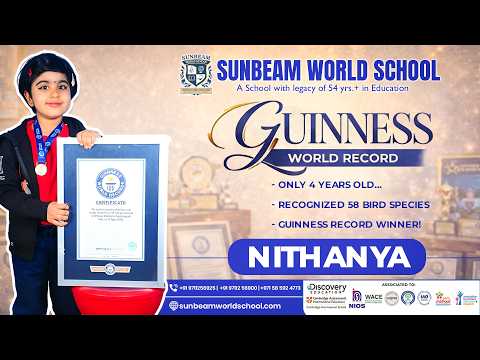
4-Year-Old Record Holder Nithanya - Our Student - Sunbeam World School video thumbnail
4-Year-Old Record Holder Nithanya - Our Student
Check Nithanya Video →
JIOHOTSTAR - FUTURE SCHOOLS
Sunbeam World School Featured on India's Biggest Streaming Platform - Sunbeam World School video thumbnail
Sunbeam World School Featured on India's Biggest Streaming Platform
Jio Hotstar Streaming Platform Video →
Dr. Alisha Madhok Walia
What Every Parent Must Know! - Sunbeam World School video thumbnail
What Every Parent Must Know!
Parent Must Know - Video From Founder →
CEO, Sunbeam World School
Dr. Alisha Madhok Walia, CEO of Sunbeam World School - Sunbeam World School video thumbnail
Dr. Alisha Madhok Walia, CEO of Sunbeam World School
A Message from our Founder & CEO →
CEO, Sunbeam World School
Building Confident & Curious Children | Sunbeam World School - Sunbeam World School video thumbnail
Building Confident & Curious Children | Sunbeam World School
Building Confident Video from CEO
CEO, Sunbeam World School
Dr. Alisha Madhok Walia, CEO - Sunbeam World School - Sunbeam World School video thumbnail
Dr. Alisha Madhok Walia, CEO - Sunbeam World School
A Message from our Founder & CEO →
CEO, Sunbeam World School
AI-Powered Learning for Global Success - Sunbeam World School video thumbnail
AI-Powered Learning for Global Success
Watch the Story →
Young Achiever
Young Talent from Sunbeam World School - Sunbeam World School video thumbnail
Young Talent from Sunbeam World School
Watch the Story →
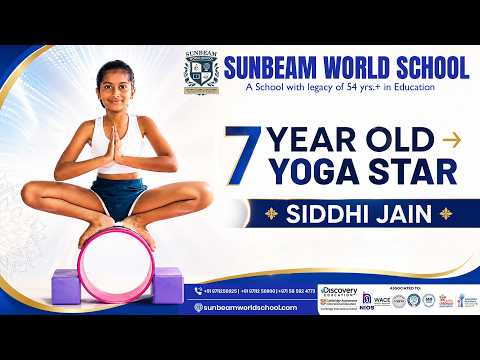
Yoga Star!
7 Year Old → Yoga Star!💫 You Won’t Believe Her Story - Sunbeam World School video thumbnail
7 Year Old → Yoga Star!💫 You Won’t Believe Her Story
Watch the Story →
Future-Ready Education
Future-Ready Education Starts Here - Sunbeam World School video thumbnail
Future-Ready Education Starts Here
Watch the Story →
Step 10: Get Started

IGCSE Online School Fees and Admission

Admission to Sunbeam World School takes three steps: a counselling call to confirm Year 10 or Year 11 and the subject set, a free live demo class, and online enrolment. IGCSE online school fees are published by stage on the fee structure page, tuition is all-inclusive of classes, recordings, the portal and mock exams, and Cambridge exam entry fees are paid separately to the exam centre.

Step 1: Confirm the Year and Subjects

Share your child's age, current board and goals. A counsellor confirms Year 10 or Year 11 entry, maps five to seven IGCSE subjects, and sets the batch for your time zone.

Step 2: Book a Free Online Demo Class

Sit in on a live IGCSE class with your child and meet a subject-specialist teacher, so you see the teaching style, the batch size and the learning portal before deciding.

Step 3: Enrol Online and Start Learning

Complete enrolment online in minutes. Choose your batch time, pay securely through the published fee structure, and your child begins from the very next session.

FAQ

IGCSE Online School FAQs

These answers cover the questions parents raise most about an IGCSE online school, the ones that show up in IGCSE online school reviews and forums: IGCSE meaning, Core vs Extended, how many subjects, IGCSE vs ICSE, JEE and NEET, free IGCSE options, mid-year entry and adult learners.

IGCSE stands for International General Certificate of Secondary Education, the Cambridge qualification for 14 to 16 year olds taken at the end of Grade 10, created more than 30 years ago, aligned with the GCSE in England and accepted by universities worldwide as the standard pre-16 qualification.

  • IGCSE meaning: the international version of the UK GCSE, written for students outside the UK with international rather than UK-only content.
  • Who awards it: Cambridge Assessment International Education, a department of the University of Cambridge; Pearson Edexcel awards its own International GCSE.
  • What it leads to: Cambridge International A Level, the IB Diploma, or an Indian board for Class 11 and 12.
  • At Sunbeam World School: the Cambridge IGCSE syllabus, taught live online in 18+ subjects.

The difference between IGCSE and GCSE is content rather than standard: GCSE is the domestic qualification in England with UK-centred material, while IGCSE is the international version with the same academic level and international examples, and Cambridge aligns the two so universities treat them as equivalent.

  • Same level: both are the qualification for ages 14 to 16 and both lead to A Level.
  • Different content: IGCSE avoids UK-specific case studies and is written for an international student body.
  • Assessment: IGCSE is mostly assessed at the end of the course, with coursework in fewer subjects than GCSE.
  • Grading: Cambridge IGCSE uses A* to G, or 9 to 1 in some syllabuses; GCSE in England uses 9 to 1.

The difference between Cambridge IGCSE and Edexcel International GCSE is the exam board: both award IGCSE qualifications of equal standing accepted by the same universities, but each publishes its own syllabus, paper structure and exam dates, and Sunbeam World School teaches the Cambridge IGCSE syllabus.

  • Equal recognition: UCAS, universities and the AIU treat the two boards on the same basis.
  • One board per subject: a student follows one syllabus per subject; mixing boards across subjects is possible but each subject sits with its own board.
  • Exam series: Cambridge runs June and November; Edexcel runs January and June.
  • Why Cambridge here: the school's recognition, teacher training and mock exams are all built on the Cambridge pattern.

See the Cambridge online school page.

IGCSE can be done online for the entire course of teaching, revision and mock exams, and the only part that happens in person is the final Cambridge examination, which the student sits at an authorised centre or British Council venue near home in the June or November series.

  • Online: live lessons, recordings, worksheets, unit tests, mock exams and predicted grades.
  • In person: the final Cambridge papers, usually over three to four weeks in the chosen series.
  • Certificate: issued by Cambridge, identical to a day-school certificate.
  • Support: the admissions team guides centre selection and entry.

Sunbeam World School is an IGCSE online school in India, teaching the Cambridge IGCSE syllabus through live classes in Indian Standard Time batches to students in every state, with exams sat at authorised Cambridge centres in Indian cities and recognition from the Association of Indian Universities.

  • Live in IST: school-hour batches for students across India, plus Gulf and UK batches for families abroad.
  • Exam centres in India: Cambridge has authorised centres in most major cities, and British Council venues run series too.
  • Recognition: IGCSE is Class 10 equivalent for Indian boards and the AIU.
  • Alongside NIOS: students can add NIOS Class 10 or 12 for an Indian board certificate.

See online Class 10 options.

IGCSE is not harder than CBSE or ICSE so much as different: IGCSE assesses fewer subjects in more depth with papers marked externally by Cambridge and a focus on application, while CBSE and ICSE assess a wider prescribed syllabus with internal marks, so the better fit depends on how a student learns and where they plan to study.

  • Depth over breadth: five to seven IGCSE subjects versus a larger fixed set in Indian boards.
  • No internal marks: IGCSE grades rest on the Cambridge papers, which some students find clearer and others find higher-stakes.
  • Question style: IGCSE rewards reasoning and written explanation; Indian boards reward thorough coverage of the text.
  • Switching: the start of Grade 9 is the cleanest point, with a bridging plan in the first term.

Read CBSE vs IGCSE vs American Curriculum.

IGCSE students can sit JEE and NEET because the AIU recognises Cambridge qualifications, but the IGCSE and A Level syllabuses are not designed around Indian entrance examinations, so a student targeting IIT or medical entrance in India needs separate coaching for those papers and often takes NIOS Class 12 alongside.

  • Eligibility: Cambridge A Level is Class 12 equivalent for the AIU; the specific entrance body sets its own subject rules.
  • Syllabus gap: JEE and NEET draw on the NCERT syllabus, which differs from Cambridge in scope and emphasis.
  • Practical route: IGCSE for Grade 10, then NIOS Class 12 plus entrance coaching, or Cambridge A Level for international universities.
  • Counselling: the admissions team maps the route at entry so the choice is made with open eyes.

See NIOS Class 12.

An IGCSE student should take five to seven subjects, always including English and Mathematics, with at least one Science and electives chosen for the A Level or university route ahead, because five passes including English and Mathematics is the usual benchmark for A Level entry and for Indian equivalence.

  • Minimum: five IGCSEs including English and Mathematics.
  • Typical: six or seven, which keeps medicine, engineering and commerce routes open.
  • More is not always better: strong grades in seven count for more than mixed grades in ten.
  • At Sunbeam World School: the counsellor builds the set from 18+ subjects at entry.

Core and Extended are the two tiers Cambridge offers in many IGCSE subjects, including Mathematics and the Sciences: the Core tier covers the essential syllabus and is graded C to G, while the Extended tier covers the full syllabus and is graded A* to E, so the tier is chosen to match the student's ability and A Level plans.

  • Core: grades C to G; suitable for students who need the subject for breadth rather than progression.
  • Extended: grades A* to E; required for students who plan to take the subject at A Level.
  • Decided when: usually by the end of Year 10, based on unit-test and mock results.
  • Changed if needed: the tier can be adjusted before the exam entry deadline.

Online IGCSE is recognised by universities because the certificate is issued by Cambridge from externally marked papers, so universities in the UK, the US, Europe, Australia, Singapore and India read the Cambridge grades and never see or ask where the lessons were taken.

  • UK: IGCSE English and Mathematics meet the usual Level 2 requirements; A Level built on IGCSE is the UCAS route.
  • US and Canada: accepted as the Grade 10 record alongside A Level or IB for admission.
  • India: the AIU treats IGCSE as Class 10 equivalent and Cambridge A Level as Class 12 equivalent.
  • Documents: Sunbeam World School provides predicted grades, a reference and a transcript for every application.

Read about the AIU equivalence certificate.

There is no free IGCSE online school that provides live Cambridge-trained teachers, a timetable, marked work, mock exams and exam-entry support, because those cost money to run; free resources such as past papers and revision sites supplement a course but do not replace a school, and Sunbeam World School offers a free demo class so families can see the classroom before paying.

  • Free and useful: Cambridge past papers and mark schemes, revision websites, recorded lectures.
  • Not free: live teaching, marking, mock exams, predicted grades, references and exam-entry guidance.
  • Try before you decide: the free demo class and the counselling call cost nothing.
  • Fees: published by stage on the fee structure page, with exam fees paid separately to the centre.

See the fee structure.

IGCSE online school fees at Sunbeam World School include live timetabled classes, same-day recordings, the learning portal, digital worksheets, unit tests, two mock series and termly progress reports, with the full breakdown on the fee structure page and Cambridge exam entry fees paid separately to the examination centre.

  • Included: every live class, recordings, portal access, worksheets, unit tests, mock exams and reports.
  • Paid separately: Cambridge exam entry fees, set by the centre per subject.
  • Learning kit: the learning kit page lists books and materials and whether they are supplied or purchased.
  • Before you decide: attend the free demo class, then take the counselling call.

See the fee structure and learning kit.

Families can enquire at any time of year, and the admissions team confirms the next entry point for Year 10 or Year 11 and whether the time left before the chosen exam series is realistic; students aged 17 or older are admitted case by case with a placement assessment and a subject plan that may spread exams across two series.

  • Mid-year: a catch-up plan built on recordings and portal tasks, with a form tutor checking progress in the first weeks.
  • Exam-year timing: the counsellor checks the entry date against the next series so no student is entered too early.
  • Age 17+ and adults: Cambridge sets no upper age limit; the school admits mature students case by case.
  • Smaller start: a student can begin with fewer subjects and add more in a later series.

See the academic year calendar or book a free demo.

Sunbeam World School's IGCSE programme is designed for homeschooling families, because it provides the timetable, live teachers, marking, mock exams and exam-entry guidance that a homeschooling IGCSE curriculum otherwise leaves to the parent, while the certificate at the end is issued by Cambridge like any other.

  • Why IGCSE suits homeschooling: end-of-course assessment and little mandatory coursework.
  • What the school adds: structure, subject specialists, feedback and a form tutor.
  • Exam entry: guidance for entry at a centre or British Council, including as a private candidate.
  • Documents: enrolment letters and attendance records for families who need to show a structured programme.

Explore online homeschooling.

The difference between an IGCSE online school and IGCSE online tuition is that a school provides the full programme, a timetable across all subjects, subject-specialist teachers, mock exams, pastoral care, reports and exam-entry guidance, while tuition supplements a subject by the hour and leaves the rest to the family.

  • School: accredited, full timetable, reports, references and a form tutor.
  • Tuition: useful for one weak subject, priced per hour, no accreditation or transcript.
  • Correspondence courses: materials by post or download, no live teaching; a dated model for a 15-year-old facing two exam years.
  • At Sunbeam World School: the school model, with tuition-style doubt-clearing hours built in.
Admissions Open

Start Your IGCSE Journey from Anywhere in the World

Book a free demo to see a live Cambridge IGCSE class, meet the admissions team and map the right subjects, batch and exam series for your child.

  • Live IGCSE classes in your time zone
  • 18+ Cambridge IGCSE subjects
  • Exams at a centre near you, certificate from Cambridge
Trusted Worldwide
100K+Learners
135+Countries
4.8Google rating
54Years of legacy
View Fee Structure
Book A Free Demo
WhatsApp
Admission counselor
Kajal Online