
 Online Education
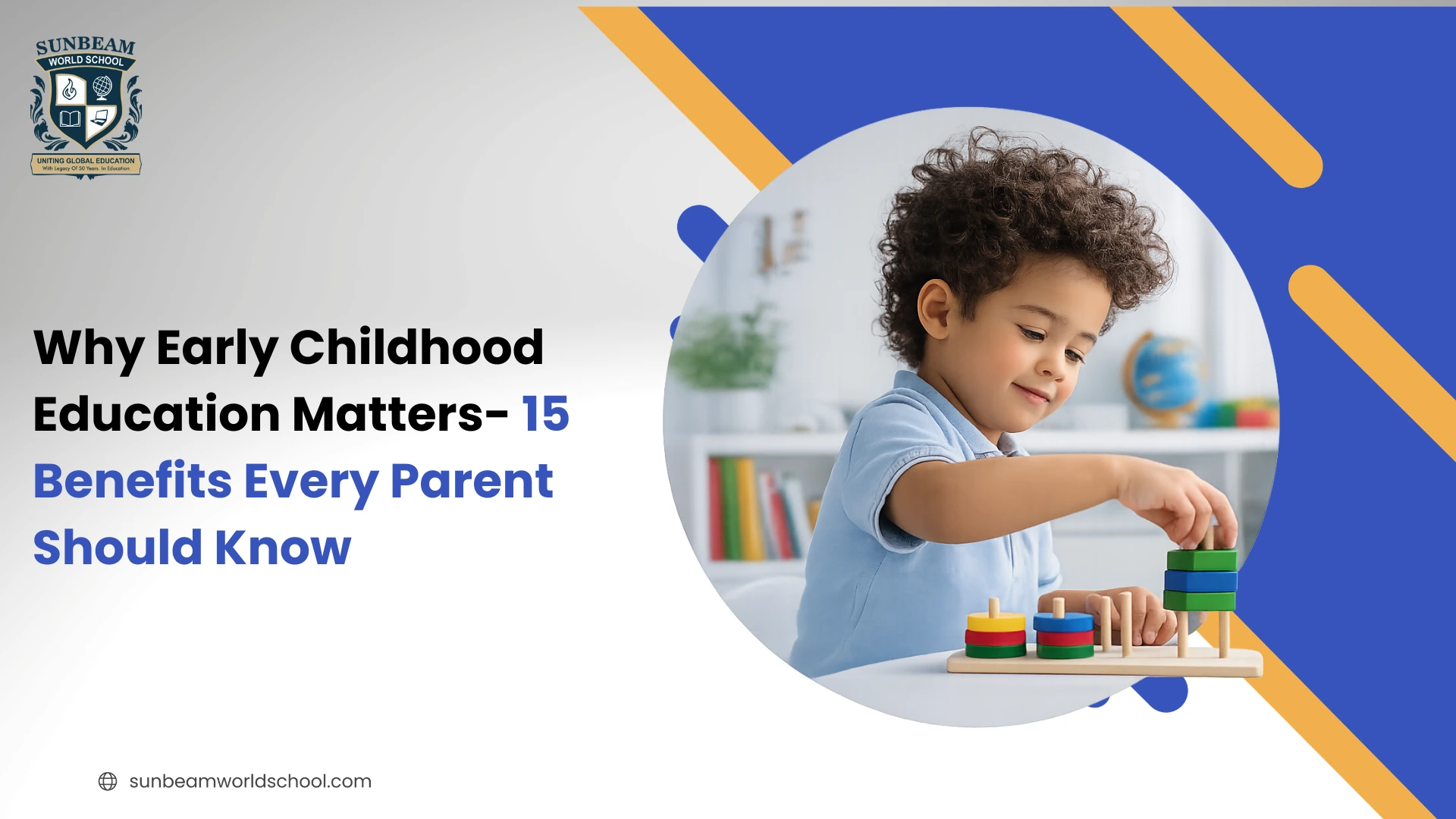
Why Early Childhood Education Matters: 15 Benefits Every Parent Should Know
Early Childhood Education (ECE)Early childhood education (ECE) refers to structured, play-based learning for children from birth to age 8, with a strong focus on ages 3–6 when brain development is most rapid. It supports cognitive, social, emotional, and physical growth, helping children build essential skills like language, problem-solving, and self-confidence. Why Early Childhood Education Matters
|
Some things in life can wait. Learning a new skill, switching careers, even going back to school, adults do it all the time.
But there is one phase of life that doesn’t wait. A phase where learning happens faster, deeper, and more permanently than at any other time.
That phase is early childhood.
Between birth and age five, your child’s brain is building the foundation for everything, how they think, speak, learn, and interact with the world. This isn’t just “early learning.” It’s brain architecture in real time.
And the experiences children have during these years don’t just shape their future; they become their future.
This is why early childhood education isn’t optional or “nice to have.” It’s one of the most important decisions you will ever make as a parent.
In this guide, we break down 15 powerful, research-backed benefits of early childhood education — and why getting these years right can change everything that follows.
What Is Early Childhood Education?
Early childhood education (ECE) refers to structured and intentional learning experiences designed for children from birth through approximately age eight, with particular emphasis on the pre-primary years (ages 3–6).
It encompasses programs like:
- Pre-nursery and Nursery (ages 2–3)
- KG-1 and KG-2 / LKG and UKG (ages 3–5)
- Kindergarten and early primary (ages 5–8)
- Foundation courses that combine literacy, numeracy, and holistic development
ECE is not "keeping children busy while parents work." It is not finger-painting and naptime. Done properly, it is a carefully designed, research-backed environment that provides children with the cognitive stimulation, social interactions, emotional scaffolding, and structured play that their developing brains need to build the foundations for a lifetime of learning.
The difference between a child who received quality early education and one who didn't is not always visible at age five. But it becomes increasingly visible at age eight, twelve, and twenty — in academic achievement, emotional resilience, social confidence, and professional potential.
What Happens in a Child's Brain Before Age 5
Before exploring the benefits, it's worth understanding why they exist. The answer lies in neuroscience.
During the first years of life, as many as a million synapses — the connections between brain cells — are formed every single second. These synaptic connections form the neural pathways that govern everything from language comprehension to emotional regulation to logical reasoning.
The critical insight for parents is this: neural pathways that are formed early are formed more efficiently and more permanently than those formed later. A child who experiences rich language interactions before age three builds language-processing pathways that are architecturally stronger than those built by a teenager studying vocabulary lists.
During early childhood, the brain develops faster than at any other stage of life. By age five, nearly 90% of brain development is complete. This growth is driven by both genetics and experiences. Neural pathways are formed through everyday interactions — talking, playing, exploring, and observing. Positive experiences strengthen these pathways, while a lack of stimulation can limit their growth.
This is the fundamental argument for early childhood education — and it is backed by decades of neuroscience research:
The brain is most receptive, most plastic, and most efficiently shaped during the years before formal schooling begins.
A child who enters an enriched early education environment at age three is not "getting a head start." They are using their brain at its peak developmental capacity. A child who doesn't access this kind of environment isn't behind — but they are missing the most efficient window to build the foundations that everything else will rest on.
Nobel Laureate economist James Heckman and colleagues found that high-quality birth-to-five programs can deliver a 13% per child, per year return on investment through better outcomes in education, health, social behaviors, and employment. This figure — cited in economic policy discussions globally — underscores that early education is not just a developmental investment for families. It is the most efficient human capital investment that exists.
15 Benefits of Early Childhood Education
Learn how early education builds confidence, communication skills, and a strong academic foundation for your child.
1. Cognitive Development and Critical Thinking
The first and most widely studied benefit of early childhood education is its impact on cognitive development — the ability to think, reason, remember, and problem-solve.
It provides a strong foundation for later academic, social, and emotional growth. During these formative years, a child's brain is like a sponge, absorbing new information and experiences at a remarkable rate. Engaging in well-designed ECE programs equips children with the essential tools and skills they will need throughout their academic journey and life.
In a structured early learning environment, children are exposed to numbers, letters, shapes, patterns, and cause-and-effect relationships through guided play. They learn to classify objects, predict outcomes, and make connections between concepts like rhyming words, the very cognitive skills that underpin mathematics, science, and reading in primary school.
The difference between a child who spent three years in a quality early education program and one who didn't is not in what they've memorised. It's in how they think, their comfort with abstraction, their patience with complex problems, and their instinct to ask "why."
2. Language and Communication Skills
Language is the most time-sensitive developmental window in human childhood. The years between birth and age five are when children's brains are maximally receptive to language acquisition — not just vocabulary, but grammar, syntax, narrative structure, and the social dynamics of conversation.
Preschool education enables children to express themselves fluently. Activities including reading, storytelling, and group discussions enhance learners' vocabulary, comprehension, and spoken abilities. Teachers guide children to express what they think and feel, boosting their confidence levels.
Children in early education programs are exposed to far richer and more varied language environments than most home settings can provide. They hear stories read aloud. They describe their drawings. They negotiate with peers. They ask questions and receive answers. Each interaction builds the neural language infrastructure that reading comprehension, writing, and communication will depend on for the rest of their lives.
Research consistently shows that children who participated in quality preschool programs demonstrate larger vocabularies, stronger reading comprehension, and better written expression in primary school — advantages that persist well into secondary education.
3. Social Skills and Emotional Intelligence
For many children, preschool is their first sustained experience outside the family. It is where they learn — sometimes painfully, always meaningfully — how to exist among peers.
Children's social abilities are greatly influenced by the quality of the relationships they forge with early childhood educators. These relationships serve as the basis for a child's sense of security and emotional well-being. A child who feels supported and cared for is more inclined to develop trust, empathy, and effective communication. Healthy relational dynamics allow children to practice cooperation, conflict resolution, and emotional regulation — building a strong foundation for future interpersonal interactions.
The social skills built in early childhood — sharing, turn-taking, listening, respecting boundaries, resolving disagreements — are not peripheral to education. They are foundational to it. A child who cannot work cooperatively with others will struggle in group projects at age ten, in team environments at age twenty-five, and in leadership roles throughout their career.
Emotional intelligence — the ability to identify, understand, and manage emotions — is also largely shaped in the early years. Children who develop emotional vocabulary and self-regulation skills in preschool handle frustration, transition, and failure significantly better than those who don't.
4. School Readiness and Academic Head Start
School readiness is not about knowing the alphabet before Class 1. It is about arriving at primary school with the cognitive, social, emotional, and physical skills needed to engage with structured learning — and to thrive in it.
Children who attended quality preschool programs consistently demonstrate:
- Stronger pre-literacy skills (phonemic awareness, print awareness, storytelling)
- Stronger pre-numeracy skills (number sense, pattern recognition, basic operations, recognizing animal names)
- Better attention and listening skills in classroom settings
- Greater comfort with structured routines and teacher-led activities
- Reduced anxiety about new environments and peer groups
This school readiness advantage is not trivial. Children who attend high-quality ECE programs are better prepared for school, exhibiting improved literacy, numeracy, and language skills which form the foundation for academic success. Studies tracking children from preschool through secondary school consistently show that early education participants score higher on standardised tests, have lower dropout rates, and are more likely to pursue higher education.
5. Confidence and Self-Esteem
Watch a child who has never been in a group setting walk into a classroom for the first time at age six. Then watch a child who spent two years in preschool do the same. The difference in confidence is immediately visible.
Early childhood education builds self-esteem through a very specific mechanism: it gives children the experience of trying things, succeeding, and being celebrated for their effort — in a safe, supportive environment where failure is a learning tool, not a source of shame.
A child who successfully presented a drawing to the class, who solved a puzzle independently, who negotiated a disagreement with a classmate and came out of it with the friendship intact — that child has a reservoir of positive self-referencing experiences to draw on when academic challenges arise later.
Children with strong self-esteem ask more questions, take more intellectual risks, recover faster from setbacks, and engage more enthusiastically with new material. It is arguably the most undervalued outcome of quality early education.
6. Creativity and Curiosity
Young children are born scientists. They hypothesize, test, observe, and conclude, all through play. The tragedy is that unstructured, unsupported environments often suppress this curiosity rather than nurture it.
A quality early education environment keeps curiosity alive through structured exploration. Art, music, nature walks, building blocks, storytelling, dramatic play — these aren't entertainment. They are the environments in which creativity is practiced, strengthened, and systematized.
With the introduction of art, music, science, and nature into early learning, imagination is fostered. Manipulative play or the use of blocks and outdoor activities keeps children curious and supports problem-solving development.
Creativity built in the early years becomes intellectual agility in the middle years and innovation capacity in adulthood. In a world where adaptability and original thinking are increasingly valued above rote knowledge, early childhood education's investment in creativity is an investment in future-readiness.
7. Fine and Gross Motor Skills Development
Physical development is inseparable from cognitive development in early childhood. The neural pathways that govern fine motor control — holding a pencil, cutting with scissors, manipulating small objects — are built through physical practice in these years, and they directly support academic skills like writing.
Preschool programs build motor skills deliberately through:
- Fine motor activities: drawing, coloring, threading beads, playdough, puzzles
- Gross motor activities: running, jumping, climbing, dancing, balancing
- Hand-eye coordination: catching, stacking, pouring, sorting
A child who enters primary school with well-developed fine motor skills writes more easily, tires less quickly during writing tasks, and experiences less physical frustration with academic work. Children who enter without this foundation frequently struggle — not because of cognitive limitations, but because the physical infrastructure for academic tasks hasn't been built.
8. Attention Span and Concentration
One of the defining challenges for children transitioning into primary school is the demand to sit, focus, and attend to one thing at a time — for extended periods. For children who have never practiced this, the transition is difficult.
Early childhood education develops attention span through progressive engagement: short, focused activities with clear beginnings and ends, gradually increasing in duration and complexity. Children learn to finish what they start, to maintain engagement through difficulty, and to re-focus after distraction.
This seemingly simple skill, sitting still and concentrating, is foundational to every academic activity from reading a paragraph to completing a mathematics problem to listening to a teacher explain a concept. It is built in the early years, or it is built later with significantly more effort.
9. Problem-Solving Ability
Preschool classrooms are, at their best, environments of structured challenge. A block tower that keeps falling. A puzzle with a piece that doesn't fit where you expect. A conflict with a classmate over who had the toy first. A drawing that doesn't look the way you imagined.
Each of these is a problem. And each time a child works through one, with support but without having the solution handed to them, they develop the problem-solving toolkit that will serve them in mathematics, science, social situations, and professional contexts for the rest of their lives.
Quality early education teaches children that problems are normal, that effort precedes solution, and that there is almost always more than one way to approach a challenge. Children who learn this before age six approach academic difficulties in primary school with fundamentally more resilience than those who don't.
10. Emotional Regulation
Emotional regulation, the ability to manage one's own emotional responses, especially in challenging situations, is one of the strongest predictors of long-term academic and social success. It is also overwhelmingly developed in early childhood.
Children between the ages of three and six experience powerful emotions: joy, frustration, jealousy, fear, pride, and anger. A quality early education environment does not suppress these emotions — it gives children the vocabulary, the models, and the safe practice space to experience and process them constructively.
Preschool teachers who name emotions, who create space for children to express feelings without judgment, and who model calm problem-solving under stress are directly building the emotional architecture that will determine how a child handles examination pressure at sixteen and workplace conflict at thirty.
11. Respect for Routine and Structure
Routine is deeply comforting to young children, and it also builds something more lasting: the ability to function within structured systems. Every classroom has rules. Every workplace has norms. Every family has rhythms. Children who have practiced existing within structured routines in early education adapt to new structured environments far more naturally than those who haven't.
Preschool routines, arrival rituals, circle time, learning activities, snack time, outdoor play, story time, goodbye rituals — teach children that time has structure, that transitions are manageable, and that predictability is something to rely on rather than fear. This foundational security makes the transition to Class 1 significantly smoother.
12. Independence and Responsibility
From putting on their shoes to cleaning up after an activity, early childhood education environments are designed around age-appropriate independence. Children are expected — with support — to do things for themselves.
ECE focuses on the comprehensive development of a child, fostering not only academic skills like literacy and numeracy, but also emotional resilience, social skills, and physical health.
Every small act of independence in a preschool classroom — tying a shoelace, pouring their own water, putting away their mat — is a brick in the wall of self-efficacy. Children who develop age-appropriate independence early arrive at primary school with a fundamentally different relationship to effort and self-sufficiency than children who have been managed rather than supported.
13. Cultural Awareness and Empathy
Preschool, particularly in diverse urban and semi-urban Indian settings, is often a child's first sustained exposure to children from different family backgrounds, linguistic communities, and cultural traditions. This is not incidental to early education — it is one of its most valuable dimensions.
Children who learn alongside peers who are different from them — whose parents speak different languages at home, who celebrate different festivals, who eat different foods — develop a natural ease with difference. They build the cultural flexibility and empathic capacity that is increasingly essential in an interconnected world.
These early lessons in "other people are different, and that's interesting, not threatening" shape attitudes that a teenager or adult will find enormously difficult to learn from scratch.
14. Long-Term Academic and Career Outcomes
The benefits of early childhood education are not just visible in the preschool classroom. The data on long-term outcomes are striking.
Using longitudinal data, researchers find that children entering preschool before the age of four have better cognitive achievement and subjective well-being when they reach the age of twelve in India. Further research from an Indian birth cohort study found that structured ECE of 18 to 24 months was significantly associated with higher cognition scores at both age five and age nine — even after adjusting for socioeconomic status, maternal education, and home environment.
Nobel Laureate economist James Heckman estimated that every dollar invested in early childhood programs yields a return of $7 to $13 in economic benefits long term. ECE enhances cognitive and social skills such as emotional regulation and logical reasoning that are essential for productivity in the workforce.
The arc of these outcomes is clear: quality early education correlates with better academic performance throughout schooling, higher rates of higher education completion, lower rates of dropout, and stronger long-term career and income outcomes. The return on the decision to prioritise early education begins in preschool and compounds for decades.
15. Better Health and Wellbeing Habits
This is the benefit that surprises many parents — but quality early education programs actively promote physical health alongside cognitive and social development.
Early education promotes healthy habits and behaviors. Children learn about nutrition, physical activity, and hygiene, contributing to their overall health and well-being.
Children who develop regular physical activity habits, understand the importance of nutritious food, and practice basic health hygiene — hand-washing, oral care — from an early age build habits that shape their relationship with their bodies and health for life. The daily outdoor play, structured physical activity, and health-focused routines of a quality early education program contribute to better physical development and a healthier developmental trajectory overall.
India's NEP 2020 and the New Priority on Early Education
India's National Education Policy 2020 represents a landmark shift in the country's approach to early learning. For the first time, early childhood education is officially recognized as the critical foundation of the entire educational arc.
NEP 2020 introduces a 5+3+3+4 curriculum structure that fundamentally restructures schooling, the first five years (ages 3–8) are now designated as the Foundational Stage, encompassing pre-primary through Class 2. This stage is explicitly prioritized for foundational literacy and numeracy, play-based learning, and holistic development.
Key NEP 2020 commitments on early education include:
- Strong emphasis on foundational literacy and numeracy for children aged 3–8
- Recognition that quality ECE "is perhaps the most critical investment that can be made for India's future."
- The NIPUN Bharat mission: ensuring basic reading and arithmetic competency for every child by the end of Grade 3
- Requirement that all teachers working with the Foundational Stage receive specialized early childhood training
NEP 2020 does not just recommend early education; it recognizes that India's educational quality gap begins in the early years, and that closing it requires deliberate investment from families, schools, and government alike.
For parents in India today, NEP 2020 makes one thing unambiguous: the government's own educational framework now treats ages 3–8 as the most foundational, and most investment-worthy, years of a child's schooling.
What Parents Often Get Wrong About Preschool
Despite the evidence, several misconceptions persist about early childhood education in India. Let's address the most common ones directly.
Myth 1: "My child is too young for structured learning."
The reality is the opposite. Ages 3–5 are precisely when the brain is most receptive to structured learning — provided that "structured" means play-based, experience-driven, child-paced learning. It does not mean rote memorization of syllables or pressure-based academics. Quality early education is structured in its environment and intention, not in the kind of pressure adults associate with competitive examinations.
Myth 2: "My child learns plenty at home — preschool isn't necessary."
Home environments, even rich and loving ones, rarely replicate the peer interaction, diversity of experience, structured routine, and intentional developmental activities that a quality preschool provides. Most crucially, home environments cannot replicate what other children provide: the social negotiation, the collaboration, the friction, and the connection that children learn from and with peers.
Myth 3: "Starting school early will stress my child out."
Quality early education is designed around a child's developmental stage. It does not impose adult-style academic pressure. Children who are anxious or withdrawn in preschool are almost always in environments that are misaligned with their developmental needs — not because preschool itself is stressful, but because the particular program isn't right. The right program creates security, curiosity, and joy.
Myth 4: "The academic learning doesn't start until Class 1 anyway, so it doesn't matter."
This misunderstands what early education is building. It is not building academic knowledge — it is building the cognitive, social, emotional, and physical infrastructure that makes academic learning possible and effective. A child entering Class 1 with well-developed attention, language, social skills, and emotional regulation will learn faster, retain more, and enjoy learning more than one who hasn't had this foundation.
How to Choose the Right Foundation Program for Your Child
Not all early childhood programs are equal. Here is what to look for when choosing a foundation course or preschool:
- Play-Based Learning Philosophy The program should use play as the primary vehicle for learning — not just as a reward for completing academic work. Look for programs that integrate structured and unstructured play across the day.
- Qualified and Caring Teachers Early childhood teachers need specific training in child development — not just general teaching qualifications. Look for low child-to-teacher ratios (ideally 8:1 to 12:1 for preschool age).
- Holistic Development Focus The best programs address cognitive, social, emotional, physical, and creative development simultaneously — not just literacy and numeracy.
- Safe, Stimulating Physical Environment For young children, the environment is the curriculum. Look for clean, safe, appropriately-scaled spaces with diverse materials — books, art supplies, building materials, outdoor play, music.
- Parent Communication and Involvement Quality early education programs treat parents as partners. Regular communication, parent workshops, and clear explanations of what and why children are learning are signs of a program that knows what it's doing.
- Alignment with NEP 2020 Foundational Stage Look for programs explicitly aligned with the NEP 2020 foundational literacy and numeracy framework — this ensures the curriculum is current, evidence-based, and nationally recognised.
- Continuity Into Primary Years Ideally, the early childhood program is part of a school that continues through primary and beyond. Continuity of educational philosophy across the early years significantly strengthens developmental outcomes.
How Sunbeam World School Approaches Early Childhood Education
At Sunbeam World School, early childhood education is not a preliminary stage before "real" schooling begins. It is the foundation on which everything else is built — and we treat it accordingly.
Our Foundational Stage Curriculum (Pre-Nursery to KG-2)
Our Foundation Prep+ Program covers Pre-Nursery, Nursery, KG-1, and KG-2 — ages 2 to 5. The program is designed around five interconnected developmental domains:
- Literacy and Language — phonemic awareness, storytelling, reading readiness, expressive vocabulary
- Numeracy and Logical Thinking — number sense, pattern recognition, basic computation, spatial reasoning
- Social and Emotional Learning — peer interaction, emotional vocabulary, empathy, conflict resolution
- Physical Development — fine and gross motor skills, sensory exploration, health and hygiene habits
- Creative Expression — art, music, drama, imaginative play, design thinking
Play-Based, NEP 2020-Aligned Teaching
Every activity in our foundational curriculum has a developmental purpose — but children experience it as play. We do not drill phonics. We build language through stories, songs, rhymes, and conversation. We do not drill counting. We build number sense through sorting, building, measuring, and pattern games. The learning is real and rigorous. The experience is joyful.
Our curriculum is fully aligned with the NEP 2020 Foundational Stage framework and NIPUN Bharat's foundational literacy and numeracy goals — ensuring that our children not only enjoy the early years but arrive at Class 1 ready to meet national learning benchmarks with confidence.
Small Groups, Qualified Teachers, Individual Attention
Our early childhood classrooms maintain low child-to-teacher ratios. Every child in our foundation program is seen as an individual — with their own developmental timeline, their own strengths, and their own pace. Our teachers are trained specifically in early childhood development, and they bring the patience, attentiveness, and professional knowledge that this critical phase demands.
Seamless Transition Into Primary School
Because our Foundation Program is part of a complete K–12 school, our children do not experience the jarring transition of moving between institutions at age five or six. The teachers, the environment, the values, and the expectations evolve with the child — creating a developmental continuity that produces measurably better primary school outcomes.
What Our Parents SayParents who enrol their children in Sunbeam World School's Foundation Program consistently report the same thing after the first year: their child is not just learning more than they expected, they are loving learning in a way that nothing had prepared them for. Confidence. Curiosity. Social ease. Language development. These are the outcomes our families see, and they are the outcomes the science of early childhood development predicts. |
Final Thoughts
Early childhood education is not just the beginning of schooling; it is the foundation of a child’s entire life journey. The cognitive abilities they build, the confidence they develop, the way they communicate, solve problems, and relate to others, all of it begins here.
Parents often focus on future milestones, board exams, college admissions, and careers. But the truth is, those outcomes are built on decisions made much earlier, during the first five years of life.
Choosing the right early education environment means giving your child more than a head start. It means giving them the tools to thrive: academically, socially, and emotionally, for years to come.
At Sunbeam World School, this foundational stage is treated with the importance it deserves. With a NEP 2020-aligned, play-based curriculum, experienced educators, and a focus on holistic development, the school ensures that children don’t just learn early, they learn right.
Because when the foundation is strong, everything built on it stands taller.

Frequently Asked Questions
At what age should a child start early childhood education?
-Research suggests that quality early learning environments are beneficial from age two to three onwards. Pre-nursery programs for children aged 2–3 build social readiness, language, and basic cognitive skills. Nursery and KG programs (ages 3–5) are typically where the core foundational development happens. The critical window for most developmental benefits is ages 3–6, aligning with India's NEP 2020 foundational stage framework.
Is early childhood education necessary if my child already learns a lot at home?
+What is the difference between a playschool and a proper foundation program?
+How do I know if my child is benefiting from early childhood education?
+Does starting preschool early put too much pressure on young children?
+What does NEP 2020 say about early childhood education in India?
+Is online early childhood education effective?
+
In this article
Share this post:


Press and Blogs
Stay updated with our press releases, educational blogs, and more.
Quick Summary Student success motivational quotes are short, memorable lines that can help students stay...
Quick Summary The area of a square is A = s² (side × side). A...

Quick Summary The Hindi alphabet, known as Varnamala, is written in the Devanagari script and...