
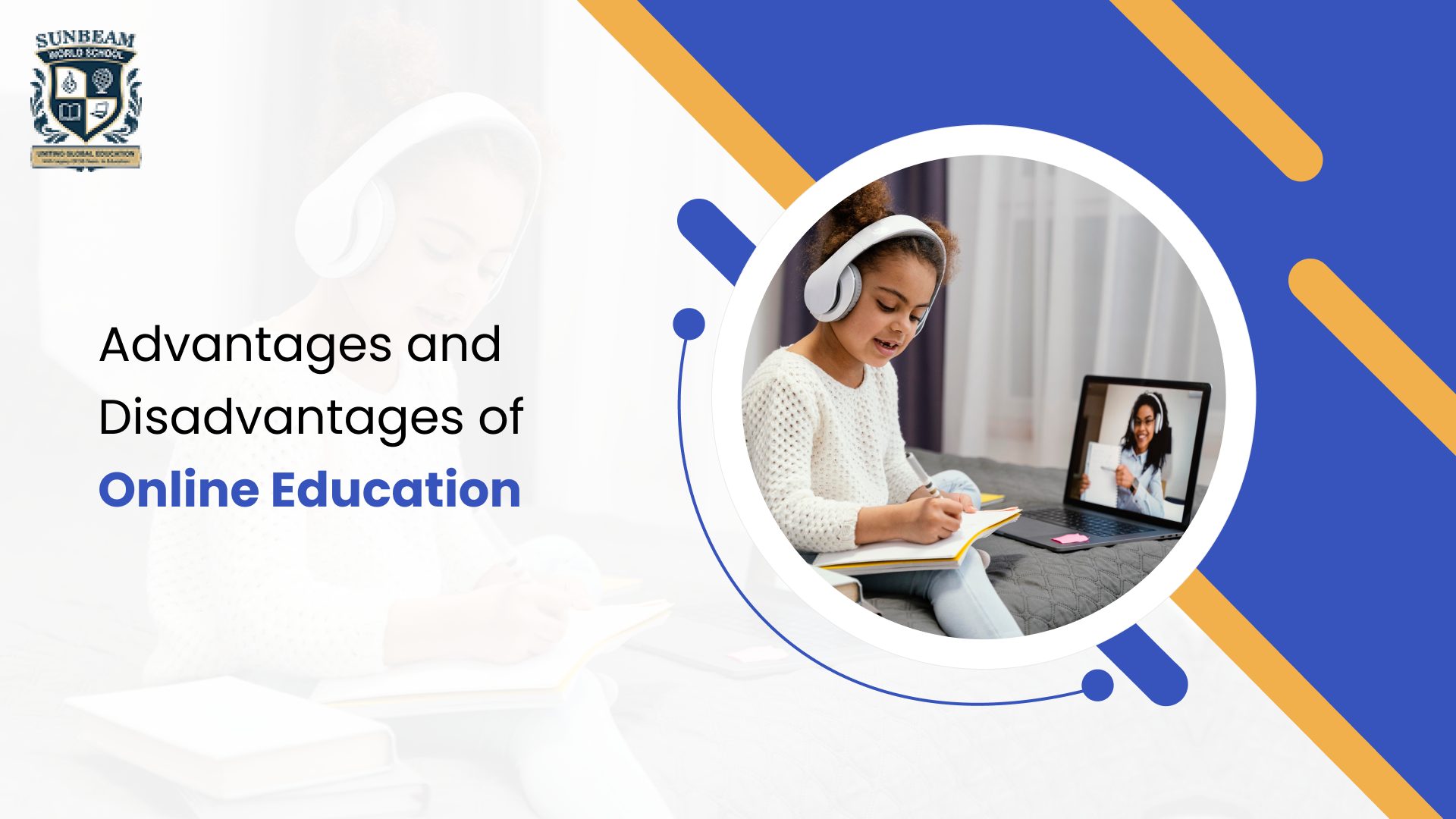
 Online Learning
Advantages And Disadvantages Of Online Education
Advantages and Disadvantages of Online EducationOnline education offers flexibility, affordability, and access to global learning through digital platforms, making it a popular choice for students today. Key benefits of online education include personalized learning, improved time management, and uninterrupted learning during disruptions. However, there are also notable disadvantages of online education, such as increased screen time, limited social interaction, and dependence on technology. The pros and cons of online learning show that while remote learning benefits students with convenience and accessibility, challenges like maintaining focus, managing time, and reduced hands-on experience still exist. The impact of online education on students depends largely on how structured and interactive the learning environment is. Overall, online education is effective when supported by strong teaching methods, reliable digital learning platforms, and a balanced approach to student engagement. |
Online education has moved well beyond a pandemic workaround — today, it is a fully structured, accredited learning model that millions of students across India and the world rely on for their primary schooling. But like any system, it comes with real strengths and genuine limitations.
This guide covers the key online education advantages and disadvantages in detail, including the merits and demerits of online classes that parents and students most commonly ask about, the pros and cons of online education for school-going children, and an honest verdict on whether virtual schooling works for long-term academic growth.
Whether you are a parent weighing online school against a traditional classroom, or a student writing an essay or preparing for a group discussion on this topic, you will find what you need here, written from the perspective of educators who run a full-time accredited online school.
Let’s get started with online education benefits and disadvantages
Merits and Demerits of Online Education at a Glance
Understand the benefits and drawbacks of online education in a snapshot, covering everything from cost-effectiveness to potential learning gaps.
For a quick comparison, here is a side-by-side summary of the merits and demerits of online classes:
| Factor | Merit (Advantage) | Demerit (Disadvantage) |
| Flexibility | Learn from anywhere, any city or country | Requires self-discipline to stay on schedule |
| Cost | No transport, uniform, or infrastructure fees | Requires device and reliable internet |
| Teacher access | Smaller batches, more individual attention | No spontaneous after-class interaction |
| Social development | Global peer exposure, moderated interaction | Less organic socialisation than a physical campus |
| Learning continuity | Unaffected by local disruptions | Screen fatigue over long school days |
| Content access | Recorded lectures available for revision | Labs and sports cannot be fully replicated |
| Assessment | Digital submissions, fast feedback | Integrity monitoring is more complex |
| Parental role | Parents stay informed and involved | Younger children need parental support during class |
Advantages of Online Education
Here are some of the benefits of online classes, you can have if you want to start online learning, have a look:
More Flexibility & Accessibility
Remote learning is a great option for people who want to actively participate in other co-curricular activities or work from a young age. With the option of virtual classrooms open to them, they can learn while following their own personal schedules.
Through this, they can also receive the best education themselves, even if they live in remote areas of the world. They get the flexibility and the right to education just like any student sitting in a traditional classroom.
Affordable For All
In most countries, education is still expensive, but digital learning platforms help students save more. From transportation to buying textbooks, school uniforms, and hostel essentials, a student can save a lot more money and actually spend it on their education.
Apart from this, you will also find that the online classroom costs for many schools and universities are much cheaper than regular tuition.
Improved Student Attendance
Many schools and colleges often see students either arriving late or not attending early morning or late evening classes. Due to this, their attendance is really low and can lead to them not having the eligibility to appear in the final exams.
However, remote learning benefits students as the classes can be taken from home or from their chosen location at any time of the day. This reduces the chances of students missing out on lessons.
Personalized Learning
Students who can’t focus in traditional classrooms might benefit from virtual learning. They get the choice to work from their own choice of environment and self-paced learning.
It's beneficial for students to choose their time to complete readings and assignments. Also, since the course is available online, it can be completed anywhere there is an internet connection.
Increased Collaboration
Online students have better opportunities to collaborate with classmates through group activities. They can collaborate through message boards and grouping tools that allow students to post feedback on readings and assignments to respond to the customers.
Also, students get to have more one-on-one time with the teachers through virtual learning. It allows students to openly communicate with the teachers and upload assignments for review.
Quick Feedbacks
By integrating education and technology, you don;t really need to wait for feedback from your teacher on exams and assignments in no time.
Apart from this, students can also ask questions to their teachers and receive answers. This accelerates the speed of learning for students.
Repeated Access To Education Material
In a traditional classroom, if a student misses out a day or any important lecture it becomes impossible to get your basics cleared. However, with the courtesy of virtual learning, you can go back to recorded education material prepared by your teachers.
The students no longer need to wait for their teachers to revise a particular topic or complete an assignment, they can just go back to the recorded lectures and complete their projects or prepare for their exams on time.
Enhances Time Management Skills
Since students have the flexibility to complete their school projects and daily assignments as per their schedule, they learn time management skills from a very early stage.
How? Because these students need to manage their time and interact with the educational material rather than just attending school to complete the attendance.
Technology Fluency as a Core Skill
One of the major advantages of online school is that online students use learning management systems, digital whiteboards, collaborative tools, and submission portals as part of their daily routine. By the time they reach higher education or the workforce, they are not learning these tools for the first time — they have been using them for years.
Continuity During Disruptions
Floods, air quality emergencies, political situations, or health crises do not interrupt an online school's academic calendar, this is one of the most underrated benefits of online courses.
The school continues without a gap. For families who experienced the chaos of COVID-era offline school closures, this continuity is not a minor benefit — it is a fundamental argument for online schooling.
Disadvantages of Online Education
You must be wondering that, if there are so many advantages of online education, then why do parents and guardians still send their children to traditional schools? Thus, here we are reflecting on the challenges of online learning due to which parents still hesitate:
Inability to Focus On Screens
Many students are unable to concentrate on screens for an extended period of time, which can easily distract them and lead them to other social media platforms.
Thus, in this case, teachers need to make special efforts and keep their online classes interactive and engaging. This helps the students to participate in the class actively.
Technology Issues
At times, you might be taking classes from remote areas where your internet connection is not working properly or your network is down. In these cases, it becomes difficult to attend special live sessions or exams.
Thus, before starting your online classes, check if your device is fully charged, your wifi is working properly, and sit at a place that has a good internet connection so that there is no buffering in between and you can concentrate on your education.
Sense of Isolation
In an offline class, a student gets more chances to collaborate, interact, and learn the art of sharing things with their peers. However, with minimal interactions between students and teachers, a child can feel isolated and may lack communication skills.
Alas, it’s important for teachers to have more face-to-face interactions with their students through video conferencing, live classes, and online messages.
Manage Screen Time
Long online classes lead to increased screen time and many health hazards for the students. It leads to a bad impact on a child’s eyesight, sitting posture, lack of physical activities, and other health problems due to sitting in front of screens for a long time.
Therefore, online schools should schedule classes with enough break time so that the child can relax. They can also include a few co-curricular activities in their online learning so that they can have some fresh breathers in between.
To better understand how online learning impacts students in real life, let’s look at a structured essay on online education that highlights its key advantages and challenges.
Essay on Online EducationOnline education has become an essential part of modern learning, especially with the rise of digital platforms. As discussed in the pros and cons of online classes, students can now learn from anywhere, breaking geographical barriers and making education more inclusive. One of the biggest advantages highlighted in any online classes essay is flexibility. Students can manage their schedules efficiently and revisit recorded lectures. Additionally, a benefits of online education essay often emphasizes affordability, as learners save on travel and accommodation costs. However, as covered in the pros and cons of online education essay, there are also drawbacks. In an online vs offline classes essay, many argue that traditional classrooms provide better interaction, discipline, and hands-on experience. Similarly, an essay on experience of online classes often reveals that students may feel isolated and distracted in a home environment. In conclusion, while online learning is convenient and accessible, it also reflects the pros and cons of online learning essay, requiring discipline and the right technological support to be truly effective. |
How to Make Online Classes More Interesting
With the growing shift toward digital learning, many educators and parents are exploring how to make online classes more interesting and engaging for learners. While online learning offers flexibility, keeping students attentive and motivated requires the right strategies.
At Sunbeam World School, we believe that effective online learning goes beyond just screens—it’s about creating an engaging and interactive experience for every learner.
1. Use Interactive Teaching Methods
Instead of one-way lectures, teachers can include quizzes, polls, and live discussions. This makes online classes for students more dynamic and encourages participation.
2. Incorporate Multimedia Content
Videos, animations, and visual presentations can simplify complex topics. When taking online classes, students are more likely to stay focused when lessons are visually engaging.
3. Encourage Student Participation
Group activities, breakout rooms, and peer discussions help recreate a classroom-like environment. This improves communication and makes learning more enjoyable.
4. Gamify the Learning Experience
Adding rewards, points, or leaderboards can boost motivation. Gamification is one of the most effective ways to make online classes for students exciting and competitive in a healthy way.
5. Keep Sessions Short and Focused
Long sessions can lead to fatigue. Breaking lessons into smaller, engaging segments helps students stay attentive while taking online classes.
6. Provide Regular Feedback and Support
Timely feedback keeps students motivated and helps them improve. It also creates a strong connection between teachers and learners.
Is Online Education Good or Bad?
The honest answer is: online education is neither universally good nor universally bad. Its value depends entirely on how it is delivered.
A self-paced video course with no teacher, no fixed schedule, and no accountability is a very different product from an accredited online school with live daily classes, trained subject teachers, a recognised board curriculum, and regular assessments. Calling both "online education" is like calling a correspondence course and a private school the same thing because both happen off-campus.
When online education is structured like a school — with fixed class timings, live interaction, teacher-led instruction, and board recognition — research consistently shows that academic outcomes are comparable to, and in some cases better than, traditional offline schooling. The flexibility removes logistical barriers. The recorded content supports retention. The digital environment builds skills that offline schooling does not.
Where online education underperforms is in social breadth, physical activities, and for students who genuinely need in-person supervision to stay engaged. These are real limitations, and any honest educator will say so.
The bottom line: For families who want accredited, quality schooling without the constraints of geography, commuting, or fixed-city living, a structured online school is not a compromise. It is a deliberate, effective choice.
Conclusion
Finally, to decide whether online learning is right for you, check all the pros and cons of online learning and how a student can benefit from it. You should also search for the best online schools for yourself to get the best online learning experience.
At Sunbeam World School, we provide online education to every student who wants to learn and grow in life. From our curriculum to the faculty, we have provided our best to every student.
So, if you want to get the top education from the remotest areas of the world, then reach out to us today!

Frequently Asked Questions
What are the main advantages of online education?
-The main advantages of online education include flexibility in learning location, lower costs compared to traditional schools, access to recorded lectures for revision, smaller class sizes for more personalised attention, and continuity of learning during disruptions. For students in remote areas or those who relocate frequently, online school also removes the geographical barrier to quality education.
What are the disadvantages of online classes?
+What are the merits and demerits of online classes?
+Is online education better than offline education?
+Is online school effective for children?
+What are 10 disadvantages of online classes?
+What are 10 advantages of online classes?
+Is online education good or bad for students?
+
In this article
Share this post:


Press and Blogs
Stay updated with our press releases, educational blogs, and more.

Quick Summary There are 25 prime numbers from 1 to 100: 2, 3, 5, 7,...

Quick Summary An algebra equation is a maths statement that sets two expressions equal using...
Quick Summary The area of rectangle equals its length multiplied by its width (A =...