
 Kids Learning
22 Powerful Short Stories in English to Teach Valuable Life Lessons to Children
Looking for the best short stories in English for children? The right story can do more than entertain; it can teach valuable life lessons, build character, and encourage emotional growth.
From classic moral tales and Panchatantra stories to inspiring stories about kindness, honesty, and determination, this collection of 22 powerful short stories offers meaningful lessons for children of all ages.
Let’s get started!
Short Stories In English For Kids
| S.No. | Name of Story | Age Group |
| 1 | The Thirsty Crow | Ages 3–5 |
| 2 | The Lion and the Mouse | Ages 3–5 |
| 3 | The Hare and the Tortoise | Ages 3–5 |
| 4 | The Ant and the Grasshopper | Ages 5–8 |
| 5 | The Boy Who Cried Wolf | Ages 5–8 |
| 6 | The Fox and the Grapes | Ages 5–8 |
| 7 | The Bundle of Sticks | Ages 5–8 |
| 8 | The Goose and the Golden Egg | Ages 8–12 |
| 9 | The Fox and the Stork | Ages 8–12 |
| 10 | The Wooden Bowl | Ages 8–12 |
| 11 | A Glass of Milk | Ages 8–12 |
| 12 | The Praying Hands | Ages 8–12 |
| 13 | The Blue Jackal | Ages 5-10 |
| 14 | The Monkey and the Crocodile | Ages 5-10 |
| 15 | The Stork and the Crab | Ages 5-10 |
| 16 | The Lion and the Hare | Ages 6-10 |
| 17 | Birbal’s Khichdi | Ages 7-12 |
| 18 | Birbal Counts the Crows | Ages 6-12 |
| 19 | Tenali Raman and the Three Dolls | Ages 8-12 |
| 20 | Krishna and the Butter Pot | Ages 3-8 |
| 21 | Hanuman Lifts the Mountain | Ages 5-10 |
| 22 | Rama and the Squirrel | Ages 5-10 |
Why Short Stories for Kids in English Matter
A well-told story does more for a child than a worksheet. It widens vocabulary, builds emotional reasoning, and gives children a way to think through a moral choice before they have to make one in real life. Five things short moral stories for kids in English do particularly well:
Language and Vocabulary Development: Stories introduce new words in meaningful situations, helping children understand and remember vocabulary more effectively than memorization alone.
Empathy and Emotional Growth: By following a character's journey, children learn to recognize feelings, understand different perspectives, and develop compassion for others.
Cognitive Thinking and Problem-Solving: Stories encourage children to connect ideas, identify patterns, understand cause-and-effect relationships, and think through challenges before reaching conclusions.
Critical Thinking Skills: Stories encourage children to predict outcomes, identify problems, and think about the consequences of different choices.
Moral Reasoning: The lessons within moral stories help children distinguish right from wrong and provide a framework for making thoughtful decisions in everyday life.
How to Tell Stories to Kids in English Effectively
Storytelling for kids in English is a skill, not a script. The same story lands differently depending on how it is read aloud .Three habits make the biggest difference.
1. Use Your Voice
Always change pitch for different characters, slow down at the turning point. Also, pause for two full seconds before revealing what happens next. Children remember the parts you slowed down on, not the parts you rushed through.
2. Ask Predictive Questions
Stop midway and ask, "What do you think the lion will do?" The act of guessing turns a passive listener into an active reader. It is also the best preparation for a school storytelling competition, because it forces a child to think about the story's logic.
3. End with the Moral, Then a Discussion Question
The moral is the answer. The discussion question is the assignment. After "Slow and steady wins the race," ask your child, "When have you finished something by sticking with it?" That second step turns a story into a lesson a child remembers.
Short Stories for Kids in English by Age
Discover short moral stories for kids in English, from simple bedtime tales for early readers to engaging Panchatantra and inspiring stories for older children.
1. The Thirsty Crow: Where There's a Will, There's a Way
Best for: Ages 3-5 | Read time: 1 minute
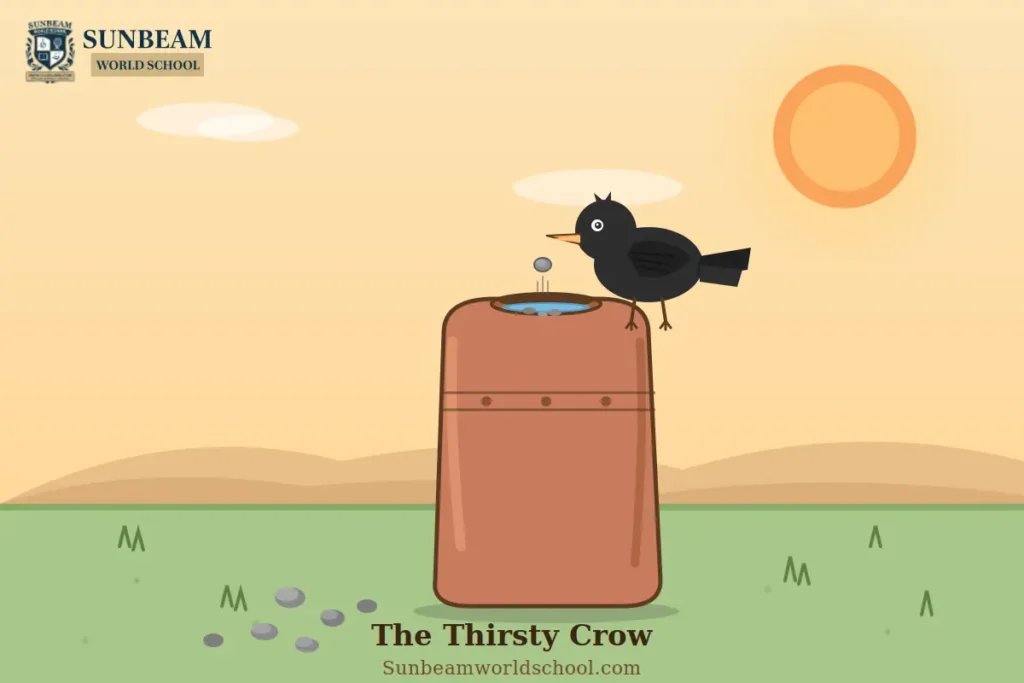
The thirsty crow uses intelligence and perseverance to solve a problem and quench its thirst.
On a hot summer day, a crow flew long and far in search of water. Every pond he passed had dried up, and his throat was burning with thirst. At last, he spotted a pitcher near a garden and flew down with hope. But when he peered inside, the water sat at the bottom, far below his beak.
He thought for a moment, then noticed some small pebbles on the ground. One by one, the crow picked them up in his beak and dropped them into the pitcher. With each pebble, the water rose a little higher. He kept going until at last the water reached the top, and the thirsty crow drank his fill.
Moral: "Where there's a will, there's a way."
2. The Lion and the Mouse: Kindness Always Returns
Best for: Ages 3-5 | Read time: 1 minute
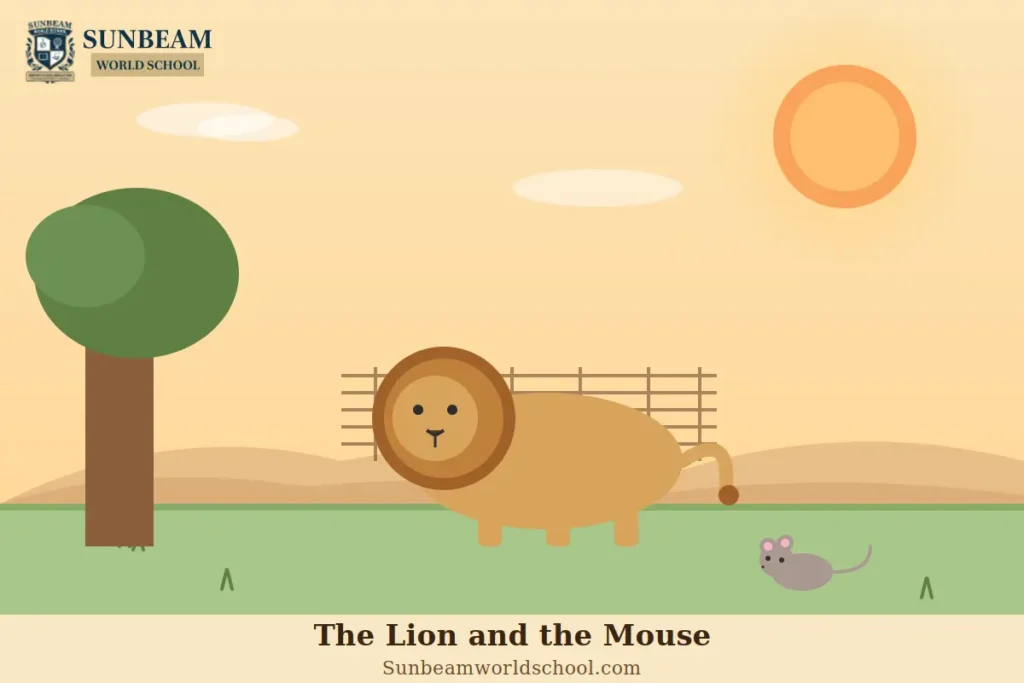
The Lion and the Mouse teaches children that kindness and friendship can come from the most unexpected places.
One afternoon, a mighty lion lay sleeping under a tree. A tiny mouse, scurrying past, ran across his paw and woke him up. The lion roared and pinned the little mouse beneath his paw, ready to eat him."Please spare my life!" squeaked the mouse. "If you let me go, one day I may help you in return." The lion laughed at the idea that a tiny mouse could ever help a king of the jungle, but he was in a good mood and let the mouse go.
A few days later, the lion was caught in a hunter's net. He roared and struggled but could not break free. The little mouse heard him and rushed over. With his sharp teeth, he chewed through the ropes until the lion was free.
Moral: "No act of kindness, no matter how small, is ever wasted."
3. The Hare and the Tortoise: Slow and Steady Wins
Best for: Ages 3-5 | Read time: 1 minute
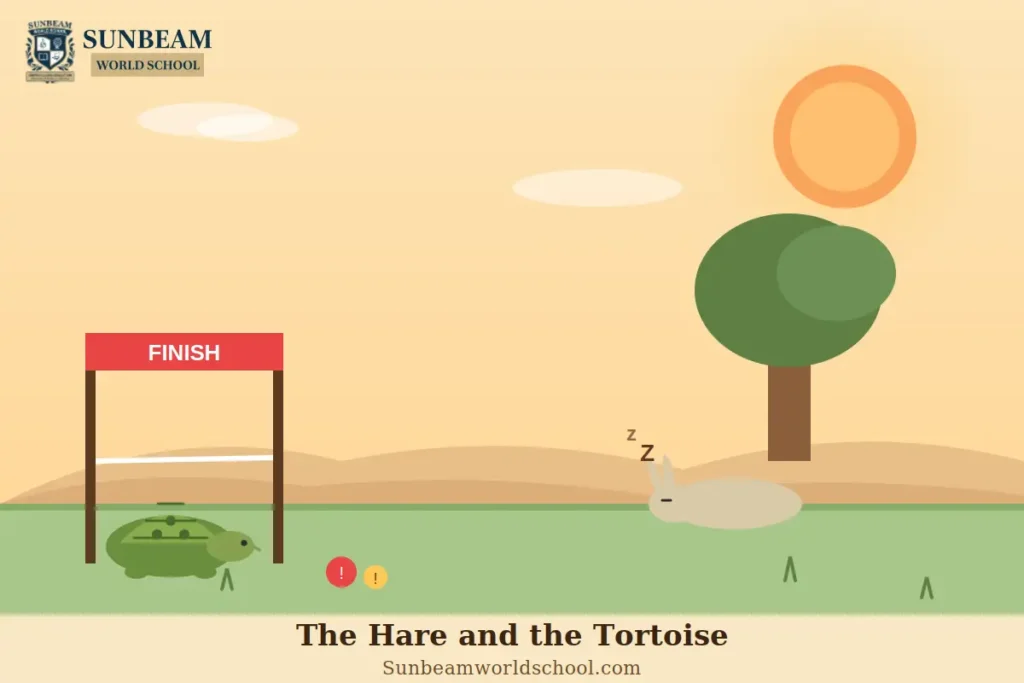
The Hare and the Tortoise teaches children that consistency and determination lead to success.
In a quiet forest, a hare loved to brag about how fast he could run. One day, he laughed at a tortoise walking slowly along the path. "Why do you bother moving at all?" he teased. "You will never reach anywhere." The tortoise looked up calmly and said, "Let us have a race and see." All the animals gathered to watch. The hare shot ahead and was soon out of sight. Sure that the tortoise was far behind, he decided to rest under a tree and take a nap.
The tortoise kept walking. Slowly, steadily, he made his way past the sleeping hare and on toward the finish line. When the hare finally woke up and ran with all his might, it was too late. The tortoise had already won.
Moral: "Slow and steady wins the race."
4. The Ant and the Grasshopper: Plan for Tomorrow
Best for: Ages 3-5 | Read time: 1 minute
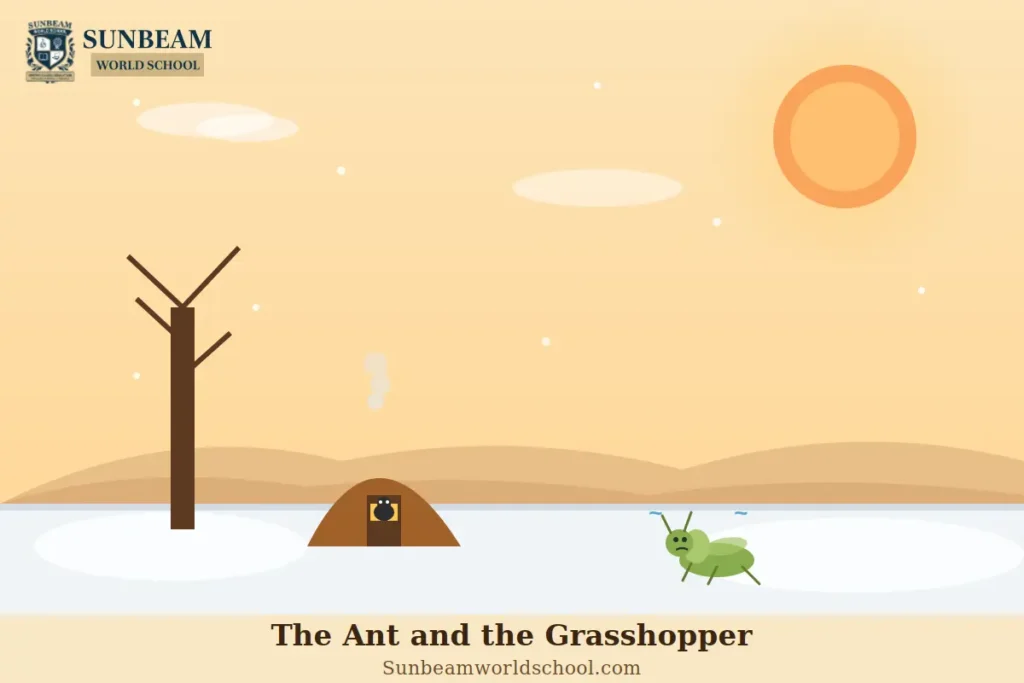
The Ant and the Grasshopper teaches children the importance of hard work, planning, and responsibility.
All through the warm summer, a grasshopper sang and played in the meadow. Nearby, an ant worked hard, carrying grains of wheat back to her nest. "Come and play with me!" the grasshopper called. "Why do you work on such a beautiful day?"
The ant did not stop. "I am storing food for winter," she said. "You should do the same." But the grasshopper only laughed and went on singing.
When winter arrived, snow covered the ground and there was no food to be found anywhere. The hungry grasshopper went to the ant's door and asked for something to eat. The ant looked at him kindly but firmly. "I worked all summer while you played," she said. "Now you must learn to plan ahead."
Moral: "Hard work today prepares you for tomorrow."
5. The Boy Who Cried Wolf: The Cost of Lying
Best for: Ages 5-8 | Read time: 1 minute
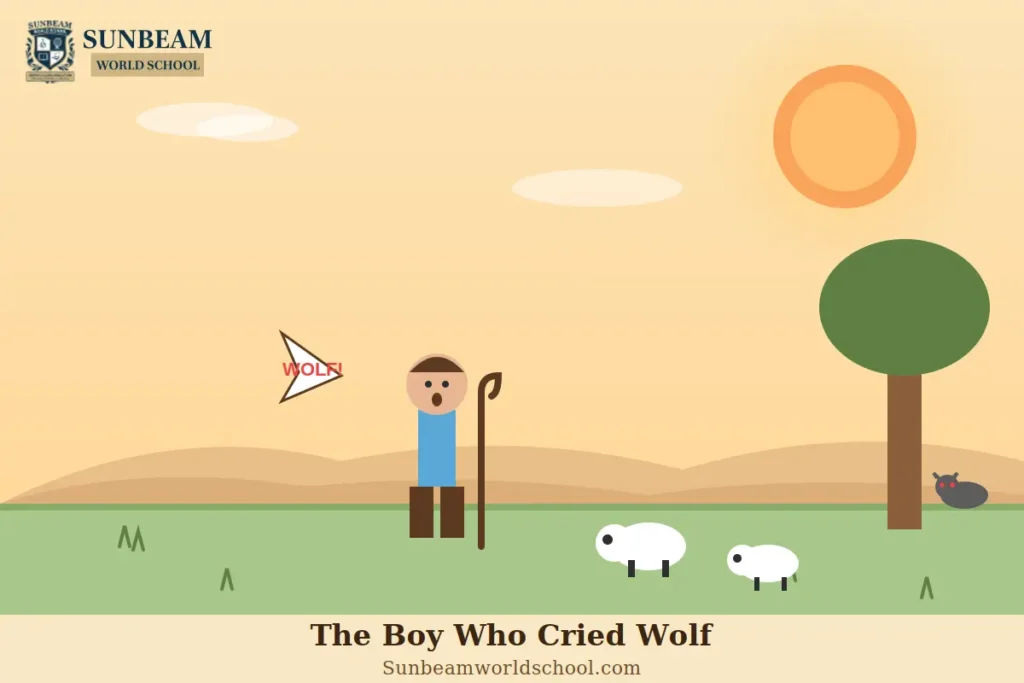
The Boy Who Cried Wolf teaches children that honesty builds trust, while lies can have serious consequences.
A young shepherd boy spent his days watching over the village sheep on a hillside. One afternoon, bored and looking for fun, he shouted, "Wolf! Wolf! A wolf is attacking the sheep!" The villagers dropped their work and came running, only to find the boy laughing. There was no wolf. A few days later, he played the same trick. Again the villagers came running. Again, there was no wolf at all.
Then one evening, a real wolf appeared and began chasing the flock. The terrified boy cried out, "Wolf! Wolf! Please help me!" But this time, no one came. The villagers thought he was lying again. The wolf scattered the sheep, and the boy lost his entire flock that day.
Moral: "A liar is not believed, even when he tells the truth."
6. The Fox and the Grapes: Don't Dismiss What You Cannot Reach
Best for: Ages 5-8 | Read time: 1 minute
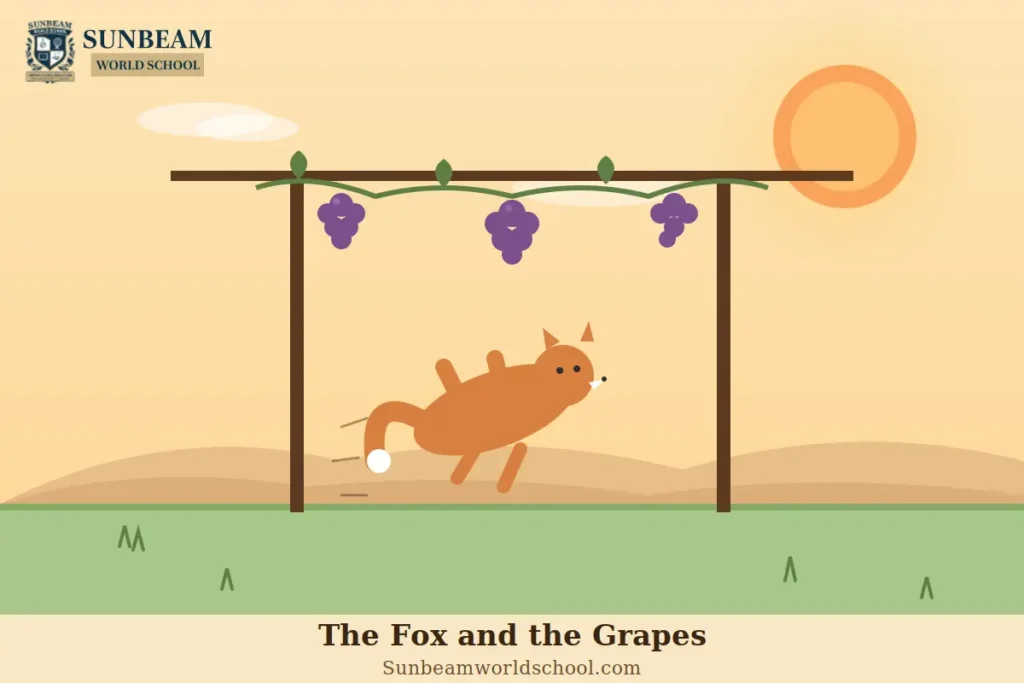
"The grapes are probably sour anyway." — A fox learns the art of self-deception in Aesop's timeless fable.
One warm afternoon, a hungry fox was walking through an orchard when he spotted a bunch of plump, juicy grapes hanging high on a vine. His mouth watered at the sight, and he leaped up to grab them. But the grapes hung just out of reach.
The fox tried again, jumping higher. He missed. He stepped back, took a running start, and leaped again, but the grapes were still too high. He tried again and again until he was tired and out of breath. Finally, he gave up and walked away. As he went, he muttered to himself, "Those grapes were probably sour anyway. I did not really want them." But deep down, he knew the truth. He simply could not reach them.
Moral: "It is easy to dislike what we cannot have."
7. The Bundle of Sticks: Unity is Strength
Best for: Ages 5-8 | Read time: 1 minute
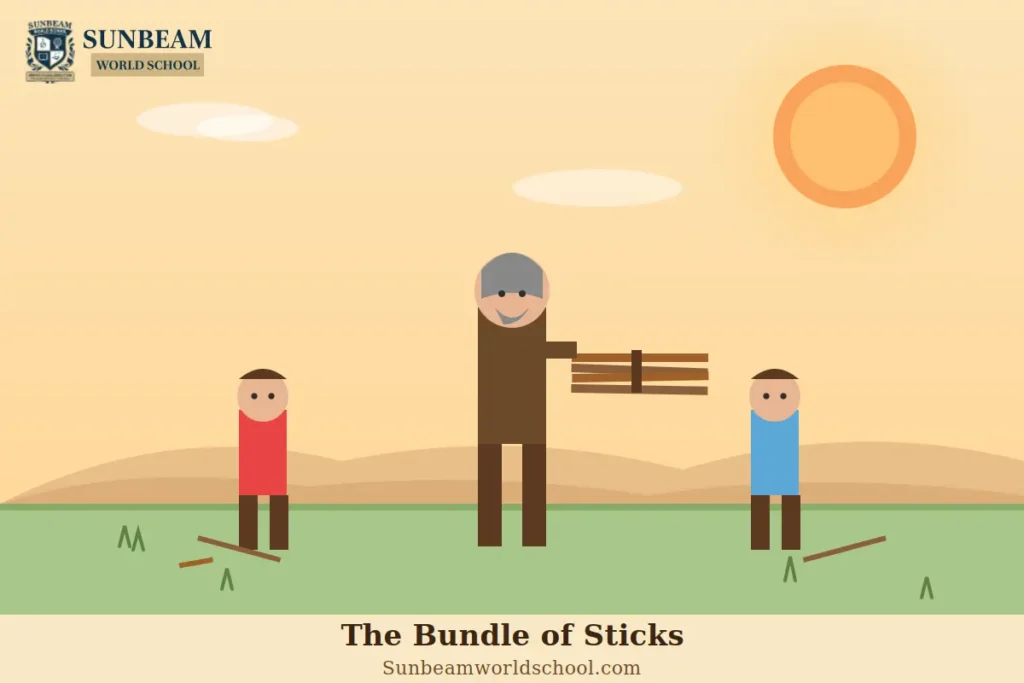
The Bundle of Sticks teaches children that working together makes people stronger and more successful.
An old farmer had three sons who quarreled with each other every day. He worried about what would happen to them after he was gone. So one morning, he called them together and held out a bundle of sticks tied tightly with rope.
"Whoever can break this bundle in two will receive a reward," he said. The first son tried with all his strength and could not break it. The second son tried, then the third. None of them could break the bundle.
The father then untied the rope and gave each son a single stick. "Now break these," he said. Each son snapped his stick easily. The father looked at his sons and smiled. "Together you are strong like the bundle. Apart, you break easily."
Moral: "Unity is strength."
8. The Goose and the Golden Egg: Greed Loses Everything
Best for: Ages 5-8 | Read time: 1 minute

The Goose and the Golden Egg teaches children that patience and gratitude are more valuable than greed.
A poor farmer once owned a wonderful goose. Every morning, the goose laid one shining golden egg. The farmer would take the egg to the market, sell it, and use the money to feed his family. Day by day, the farmer grew richer. But soon, one egg a day was not enough for him. "If there is gold inside this goose," he thought, "I should have it all at once and become rich today." So he killed the goose and cut her open, hoping to find a treasure inside.
But there was no gold. The goose was just like any other goose. The farmer sat down with his head in his hands. In his greed, he had lost the one thing that had made him rich.
Moral: "Greed often loses the very thing it hopes to gain."
9. The Fox and the Stork: Treat Others as You Want to Be Treated
Best for: Ages 5-8 | Read time: 1 minute
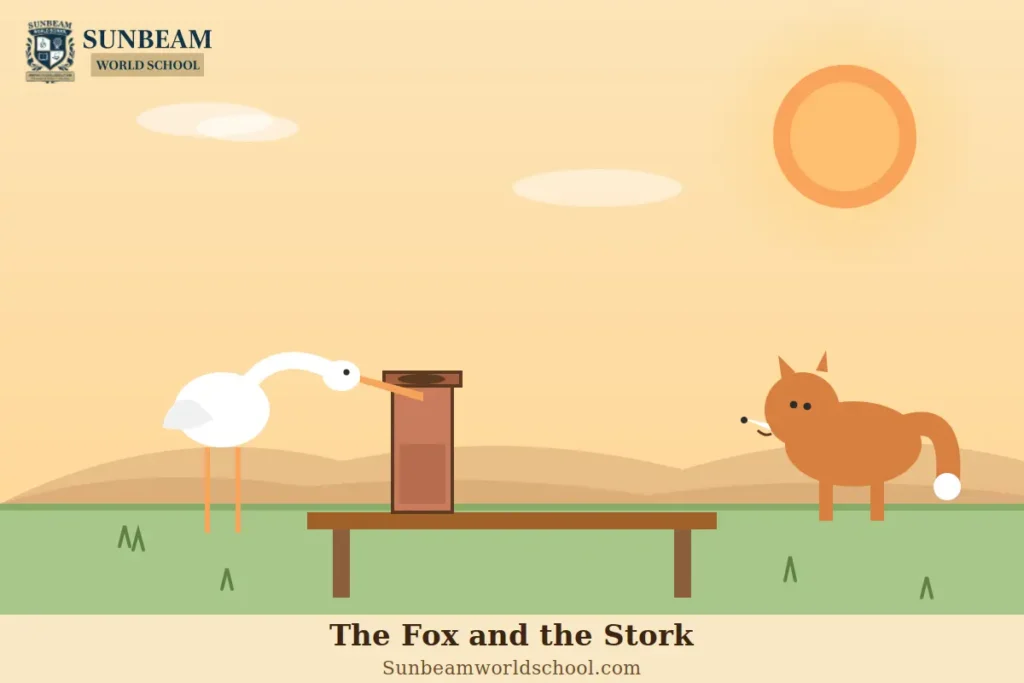
The Fox and the Stork teaches children the importance of empathy, kindness, and treating others fairly.
A fox once invited a stork over for dinner. When the stork arrived, she found the fox had prepared soup. But instead of a proper bowl, he served it in a wide, flat dish. The fox lapped up his soup happily, while the stork could only dip the tip of her long beak in. She left hungry but did not say a word.
A week later, the stork invited the fox to her home for dinner. She also served soup, but this time in a tall, narrow jar with a long thin neck. The stork dipped her long beak in and drank with ease. The fox could only sniff at the top, unable to reach a single drop. He went home hungry and finally understood how the stork had felt.
Moral: "Treat others the way you would like to be treated."
10. The Wooden Bowl: How We Treat Our Parents
Best for: Ages 8-12 | Read time: 1 minute
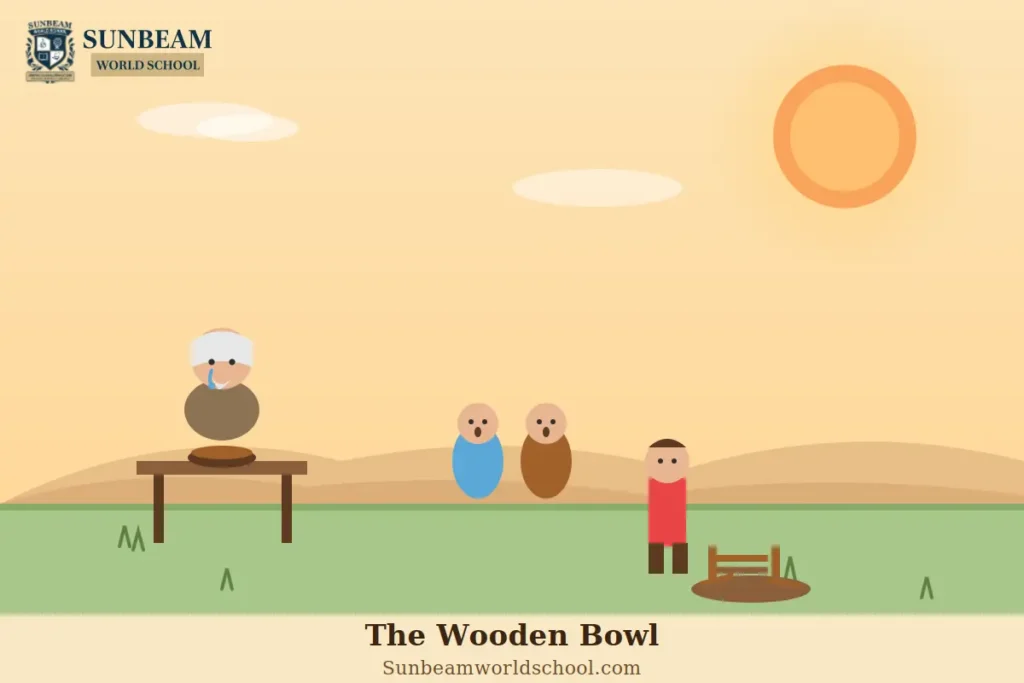
The Wooden Bowl teaches children that kindness, respect, and care for parents should never be forgotten.
In a small village, an elderly grandfather went to live with his son's family. His hands trembled with age, and he often spilled food at the dinner table. Frustrated with the mess, his son and daughter-in-law made him sit alone at a small wooden table. They gave him a wooden bowl instead of china, in case he broke it.
Some evenings, tears would slide down his cheeks as he ate alone. But still, his son and daughter-in-law scolded him whenever he spilled anything. Their four-year-old boy watched everything in silence. One day, the father found him gathering small bits of wood in the yard. "What are you making?" he asked. The boy smiled and said, "A wooden bowl for you and mommy, for when you grow old." That evening, the grandfather was brought back to the family table.
Moral: "How we treat our parents is how our children will treat us."
11. A Glass of Milk: Kindness Comes Back
Best for: Ages 8-12 | Read time: 1 minute

A Glass of Milk teaches children that acts of kindness often return when we least expect them.
Many years ago, a poor boy was selling newspapers door-to-door to pay for school. He had not eaten all day. Tired and hungry, he knocked on a house and asked for a glass of water. A kind young girl answered the door, and seeing how weak he looked, she brought him a large glass of cold milk instead.
The boy drank slowly. When he finished, he asked, "How much do I owe you?" The girl smiled. "You owe me nothing. My mother taught me never to charge for a kindness."
Years later, the young girl, now grown, fell seriously ill. She was taken to a city hospital, where a famous doctor treated her for many weeks. When she finally received the bill, expecting a large amount, she found a note written across the page. It read: "Paid in full with one glass of milk."
Moral: "Good deeds always find their way back to you."
12. The Praying Hands: Sacrifice and Gratitude
Best for: Ages 8-12 | Read time: 1 minute
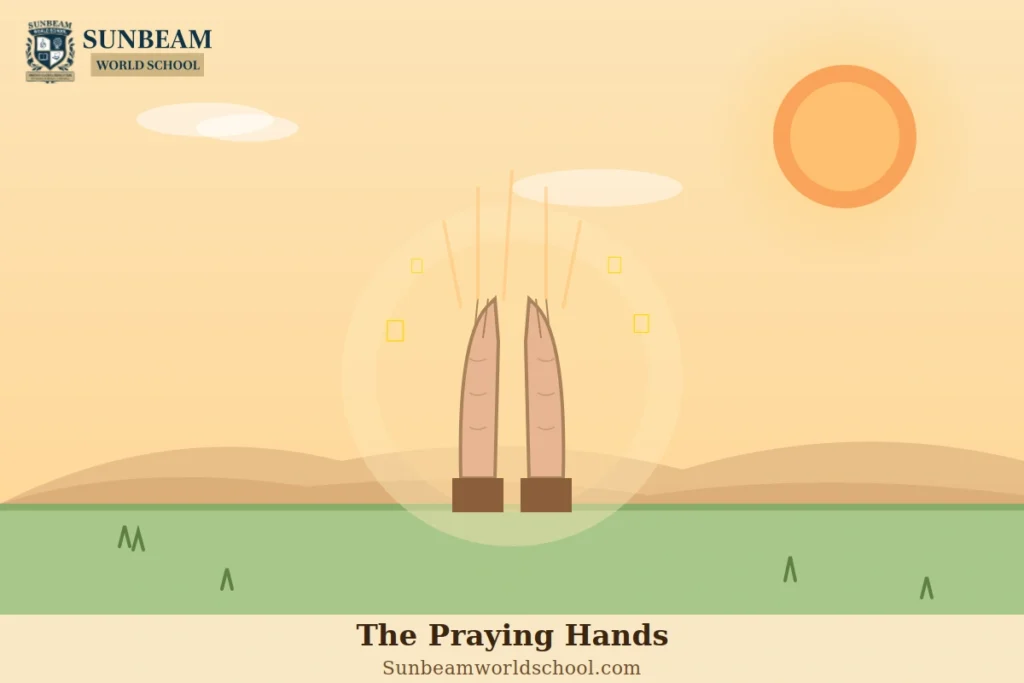
The Praying Hands teaches children the importance of gratitude, selflessness, and recognizing the sacrifices made by loved ones.
Long ago in Germany lived two brothers who both dreamed of becoming artists. Their family was too poor to send both of them to art school, so the brothers made a pact: one would study art while the other worked in the mines to pay for it. After four years, they would switch. Albrecht won the toss and went to the city to study. He worked hard and became a famous artist. His younger brother Albert went into the dangerous mines and worked there for four years, saving every coin.
When Albrecht returned home, ready to send Albert to school, he saw what the mines had done to his brother's hands. The bones had been broken and the fingers twisted with hard labour. Albert could no longer hold a brush. With tears in his eyes, Albrecht promised never to forget. He painted his brother's worn hands folded in prayer, a masterpiece the world now knows as "The Praying Hands."
Moral: "No one rises alone."
13. The Blue Jackal: The Truth Always Comes Out
Best for: Ages 5-10 | Read time: 1 minute
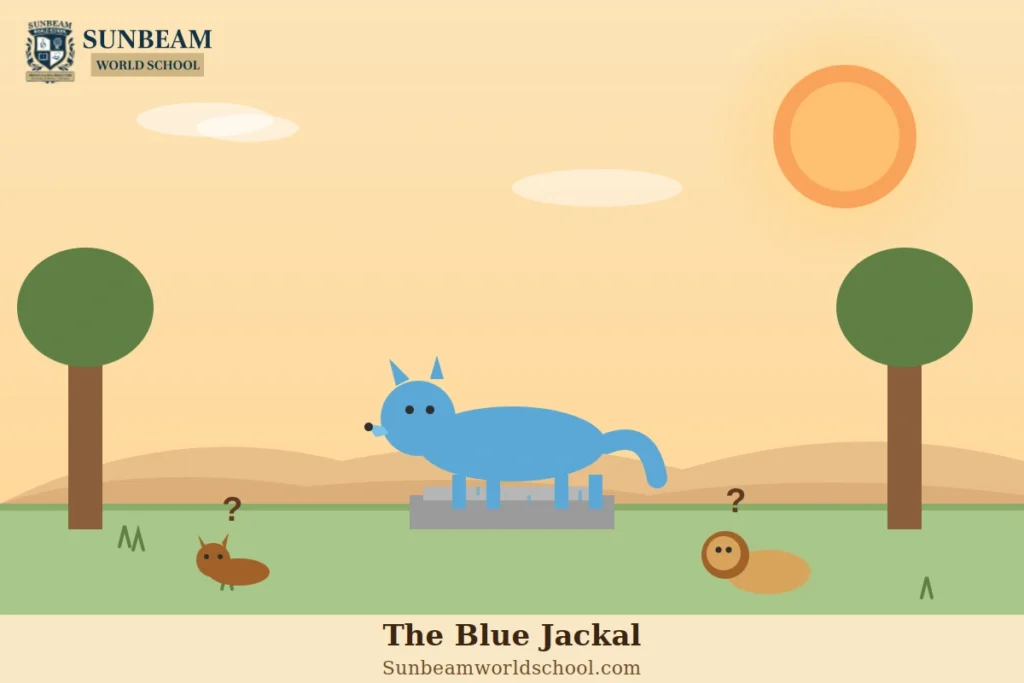
The Blue Jackal teaches children that pretending to be someone else can never hide the truth forever.
One night, a hungry jackal wandered into a village in search of food. A pack of street dogs chased him through the lanes. In his panic, he leaped over a wall and landed in a dyer's vat full of bright blue dye.
When the jackal climbed out and ran back to the forest, all the animals stopped in their tracks. They had never seen a creature like him, blue from head to tail. The clever jackal saw his chance and said, "I have been sent by the gods to be your king."
The animals believed him and bowed down. They brought him food and treated him like royalty. The jackal grew proud and selfish. One evening, he heard a pack of jackals howling in the distance. Without thinking, he howled back. The animals heard his true voice and chased him out of the forest at once.
Moral: "The truth always finds its way out."
14. The Monkey and the Crocodile: Quick Thinking Saves the Day
Best for: Ages 5-10 | Read time: 1 minute
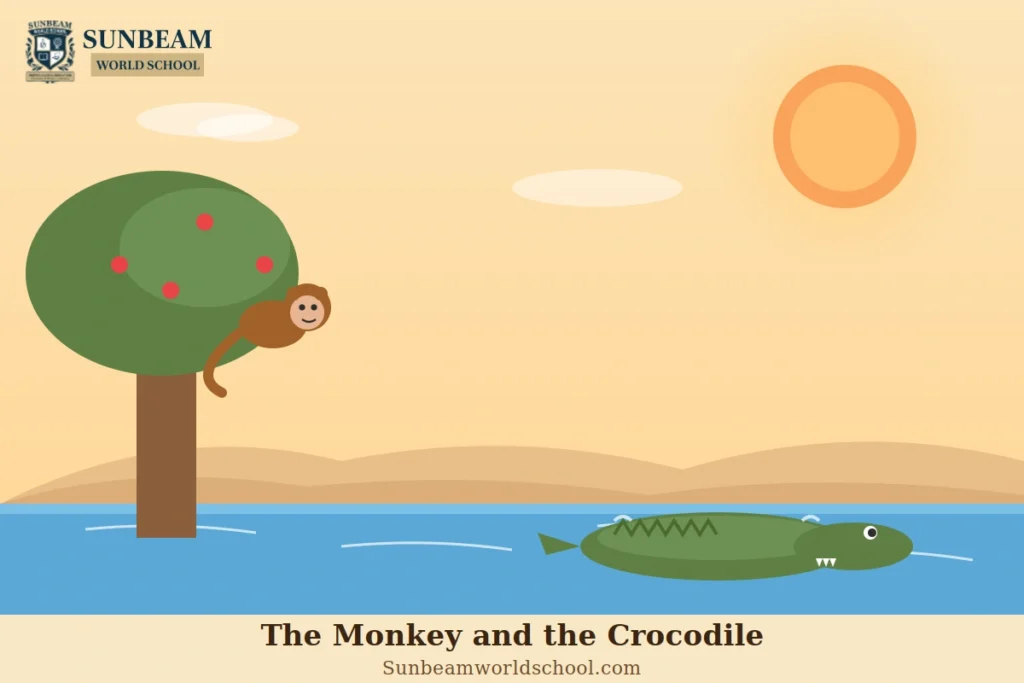
The Monkey and the Crocodile teaches children how wisdom and presence of mind can help overcome difficult situations.
On a riverbank stood a tall mango tree, home to a friendly monkey. Every day, the monkey tossed sweet mangoes down to a crocodile in the water below. The two became close friends, and the crocodile carried some mangoes home each evening to his wife.
His wife loved the mangoes but soon had a wicked thought. "If the monkey eats such sweet fruit every day," she said, "his heart must be the sweetest thing of all. Bring it to me." The crocodile was torn but agreed. He invited the monkey for a ride on his back across the river. Halfway across, he told the monkey the truth. The monkey thought quickly. "Oh dear friend, why did you not tell me before? I left my heart hanging on the tree. Take me back and I will fetch it." The crocodile turned back. The moment they reached the bank, the monkey leaped onto the tree and never came down again.
Moral: "Quick thinking can save you from any danger."
15. The Stork and the Crab: Cleverness Defeats Cunning
Best for: Ages 6-10 | Read time: 1 minute
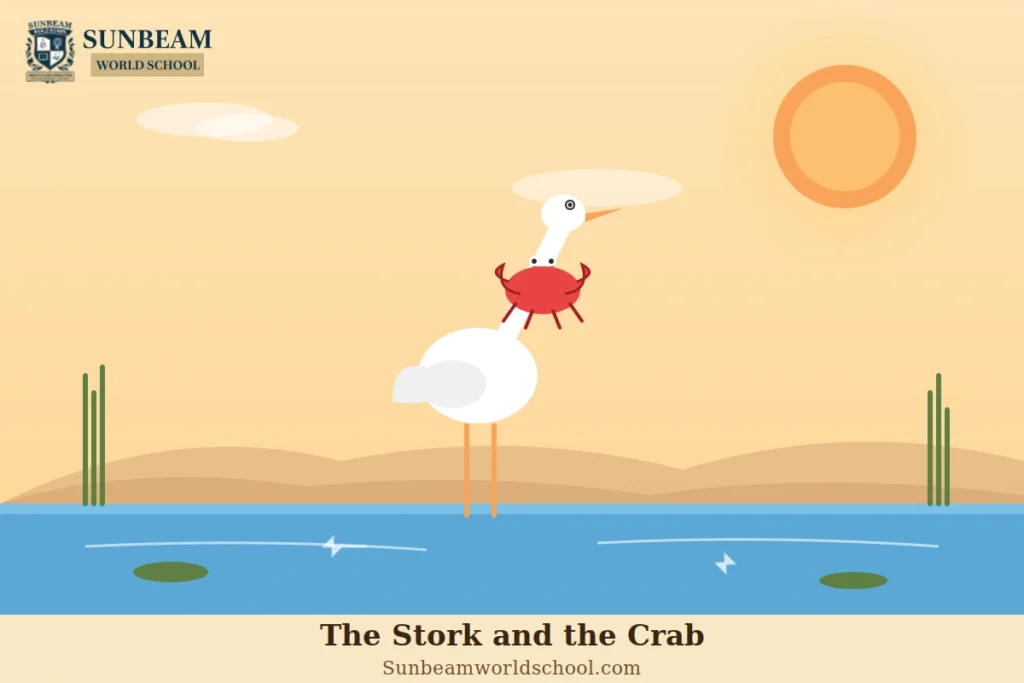
The Stork and the Crab teaches children that wisdom and alertness can protect them from trickery.
An old stork lived by a pond full of fish and crabs. He had grown too weak to catch them himself, so he came up with a wicked plan. He sat at the pond's edge and pretended to weep. "A fisherman is coming tomorrow," he said. "This pond will soon be empty. But I know of a safe pond nearby. I can carry you there, one by one."
The fish believed him. The stork carried them off, but instead of taking them to a new pond, he dropped each one on a rock and ate them.
A clever crab also asked for a ride. As they flew, the crab looked down and saw a pile of fish bones on the rocks below. He understood at once. He squeezed the stork's neck tightly with his strong claws until the stork fell from the sky. The crab climbed safely back to the pond and warned the others.
Moral: "A sharp mind can defeat the cruellest trick."
16. The Lion and the Hare: Wit Beats Strength
Best for: Ages 6-10 | Read time: 1 minute
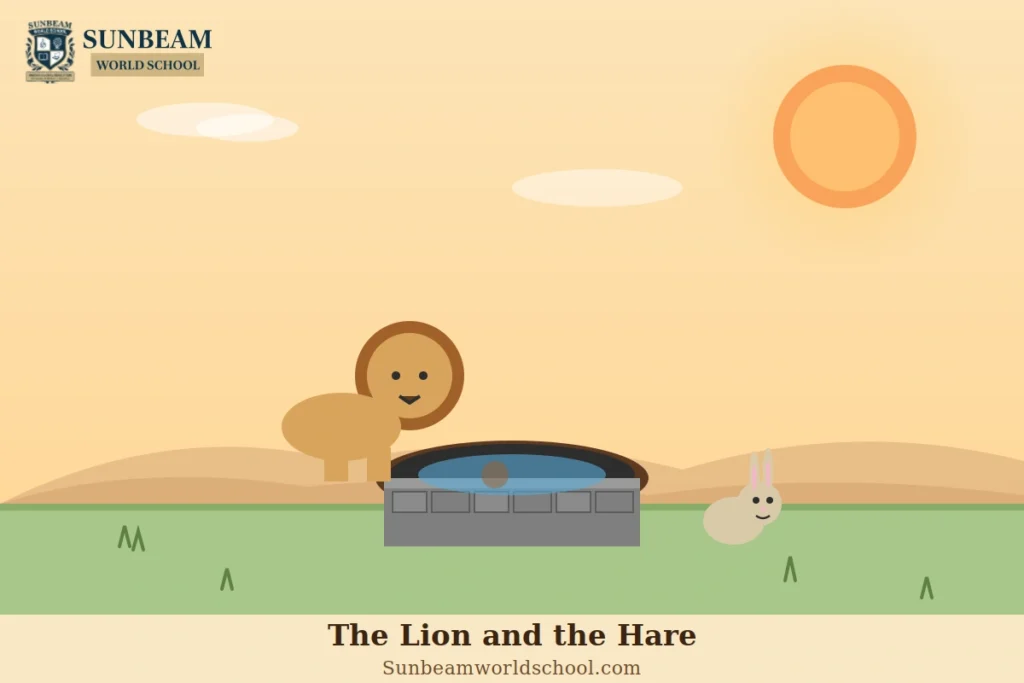
The Lion and the Hare teaches children that wisdom and quick thinking can overcome even the greatest challenges.
A fierce lion lived in a forest and killed many animals each day. The animals were terrified and went to him together. "O King," they said, "soon there will be none of us left. Let us send you one animal each day, and you will never go hungry." The lion agreed.
For weeks, the animals took turns. One day, the lot fell on a small, clever hare. The hare set off slowly, thinking all the way. When he reached the lion, the king was furious for being kept waiting. "Forgive me, my lord," said the hare. "On my way, another lion stopped me and said he was the true king of this forest."
The lion roared with rage. "Take me to him at once!" The hare led him to a deep well and pointed inside. The lion looked down and saw his own reflection in the water. Mistaking it for the other lion, he leaped in to attack and was never seen again.
Moral: "Wit can defeat even the greatest strength."
17. Birbal's Khichdi: Fair Judgement Wins
Best for: Ages 7-12 | Read time: 1 minute
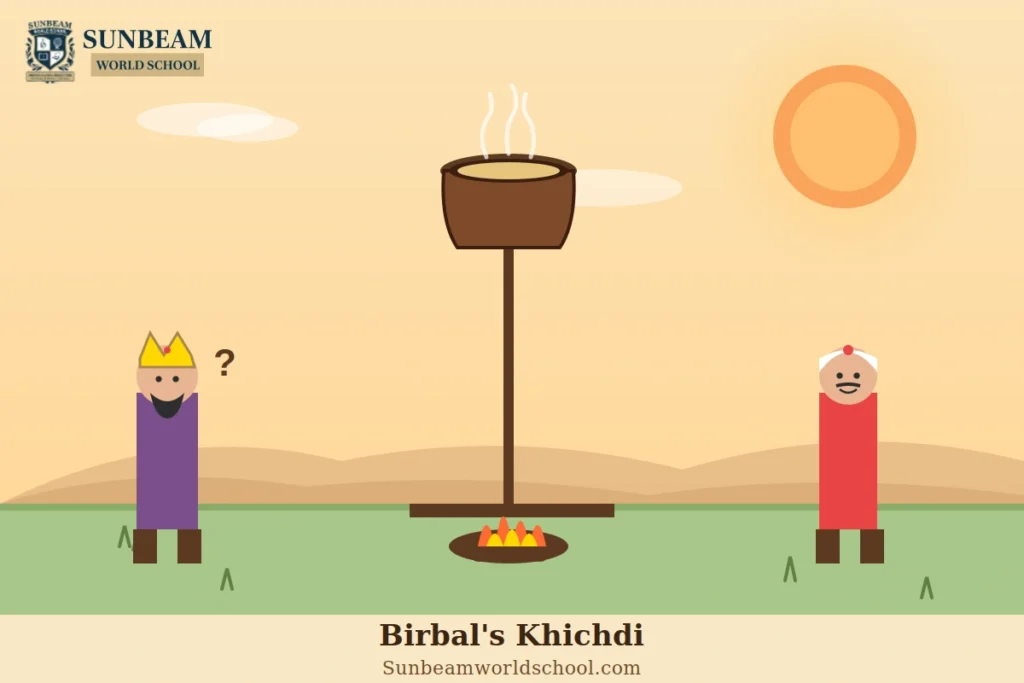
Birbal's Khichdi teaches children that justice, patience, and fair judgment always prevail.
One cold winter night, Emperor Akbar challenged anyone to stand all night in the freezing Yamuna river. The reward was a hundred gold coins. A poor man came forward and stood in the icy water through the night, his eyes fixed on a small oil lamp burning on a distant tower.
In the morning, when the man came to claim his reward, Akbar refused. "You stayed warm by looking at that lamp," he said. "You do not deserve the gold."
The poor man went to Birbal for help. The next day, Birbal did not come to court. Akbar visited his home and found Birbal sitting beside a fire with a pot of khichdi hanging six feet above the flames. "I am cooking khichdi, my lord," said Birbal. "How will it cook from so far?" Akbar asked. Birbal smiled. "The same way the man stayed warm from a distant lamp."
Moral: "Fairness means treating everyone by the same rule."
18. Birbal Counts the Crows: A Quick Mind Finds an Answer
Best for: Ages 6-12 | Read time: 1 minute
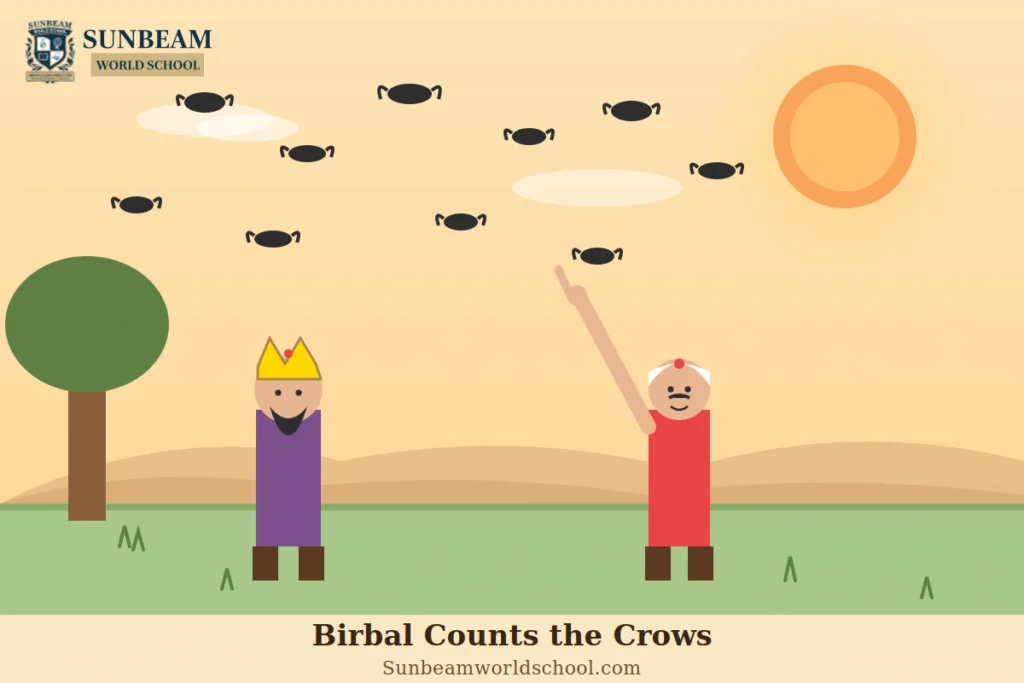
Birbal Counts the Crows teaches children the value of intelligence, creativity, and thinking on their feet.
One sunny afternoon, Emperor Akbar and Birbal were walking in the palace garden. Akbar saw a flock of crows on a tree and asked, "Birbal, how many crows are there in my kingdom?”. The courtiers around them were stunned. How could anyone know? But Birbal answered at once. "There are exactly ninety-five thousand, four hundred and sixty-three crows in your kingdom, my lord." Akbar laughed. "And what if I count them and find more than that?"
Birbal smiled. "Then some crows must be visiting from another kingdom, my lord." "And if there are fewer?" "Then some of our crows must be visiting their relatives in other kingdoms."Akbar was delighted. He could not find a fault in the answer, and he rewarded Birbal with a chain of pearls.
Moral: "A quick mind always finds an answer."
19. Tenali Raman and the Three Dolls: The Power of Listening
Best for: Ages 8-12 | Read time: 1 minute
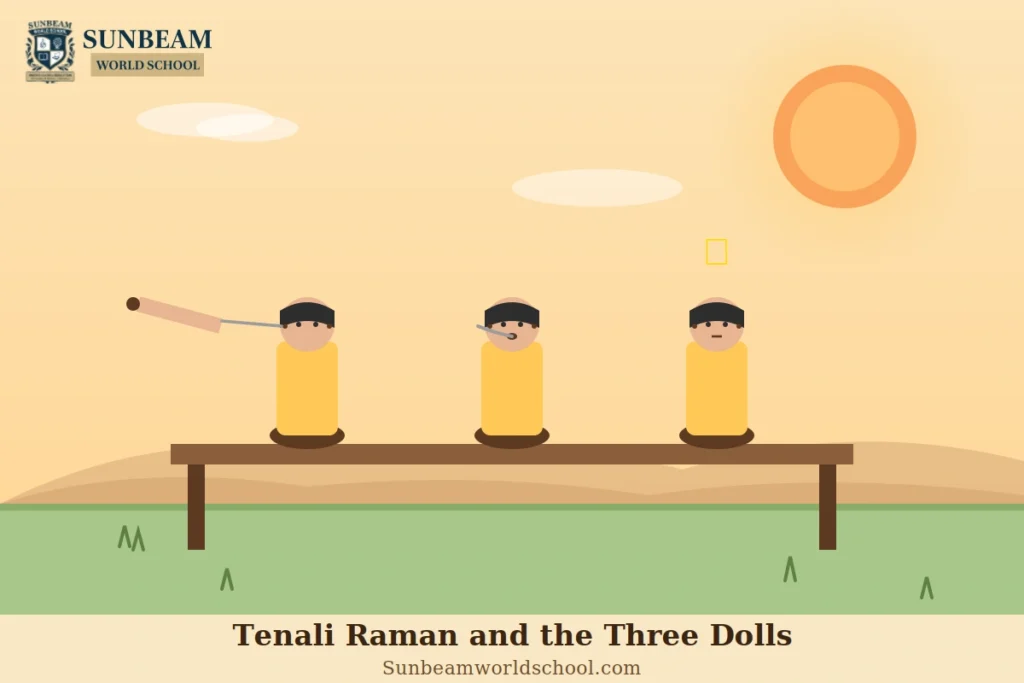
Tenali Raman and the Three Dolls teaches children that listening attentively is a key part of wisdom and good judgment.
A neighboring king once sent three dolls to the court of King Krishnadevaraya, asking which of them was the most valuable. The three dolls looked exactly alike. The wisest minister in court could not tell them apart.
The King turned to Tenali Raman. Tenali examined each doll closely and found a tiny hole in the ear of each. He took a thin wire and pushed it into the first doll's ear. The wire came out of the other ear. He tried the second doll. The wire came out of its mouth. With the third doll, the wire went in and stayed inside the head. Tenali looked up and said, "The third doll is the most valuable. The first one listens and lets everything pass through. The second listens and speaks at once. The third listens, keeps the words, and thinks before speaking."
Moral: "A wise person thinks before speaking."
20. Krishna and the Butter Pot: Love Forgives More Than It Scolds
Best for: Ages 3-8 | Read time: 1 minute
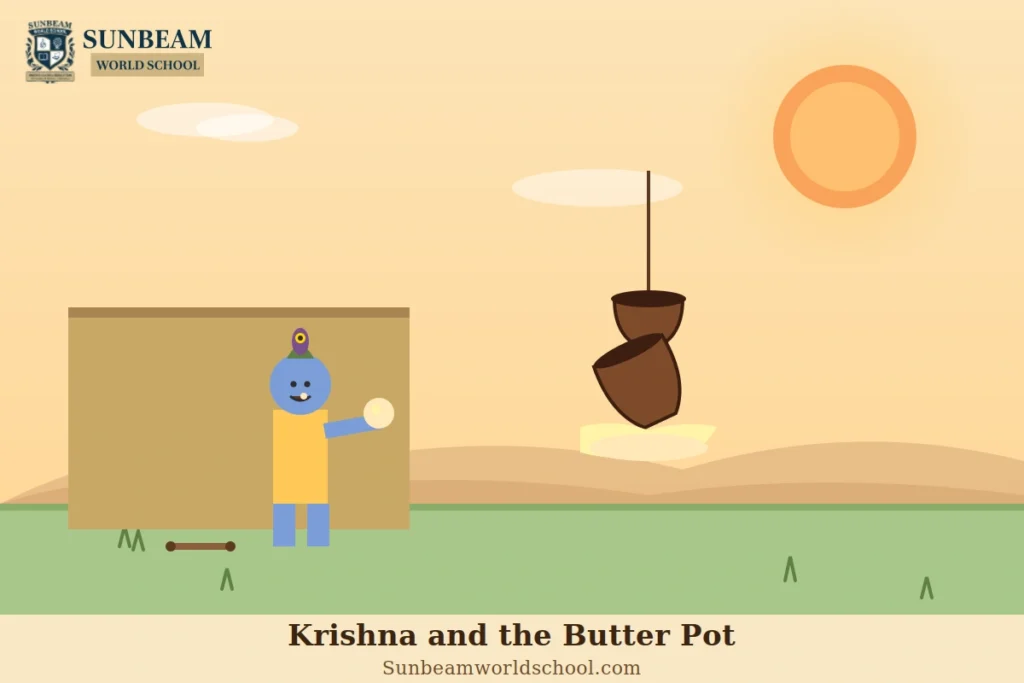
Krishna and the Butter Pot teaches children that love, understanding, and forgiveness are stronger than anger.
As a child, Lord Krishna loved butter more than anything else. He and his friends often crept into the homes of neighbours to steal pots of fresh butter that hung from the ceilings. Krishna's friends would lift him up so he could reach. The neighbouring women came to complain to Krishna's mother, Yashoda. "Your son is stealing our butter again," they said.
Yashoda promised to scold him. When little Krishna came home, his face smeared with butter, she tried to be stern. But when Krishna looked up with his big, innocent eyes and asked, "Mother, can I have some more butter?" she could not stay angry. She laughed and hugged him close, then gave him a fresh bowl from her own kitchen.
The neighbours never minded for long either, because Krishna's playful smile filled their homes with joy.
Moral: "Love forgives more than it scolds."
21. Hanuman Lifts the Mountain: Devotion Can Lift Any Mountain
Best for: Ages 5-10 | Read time: 1 minute
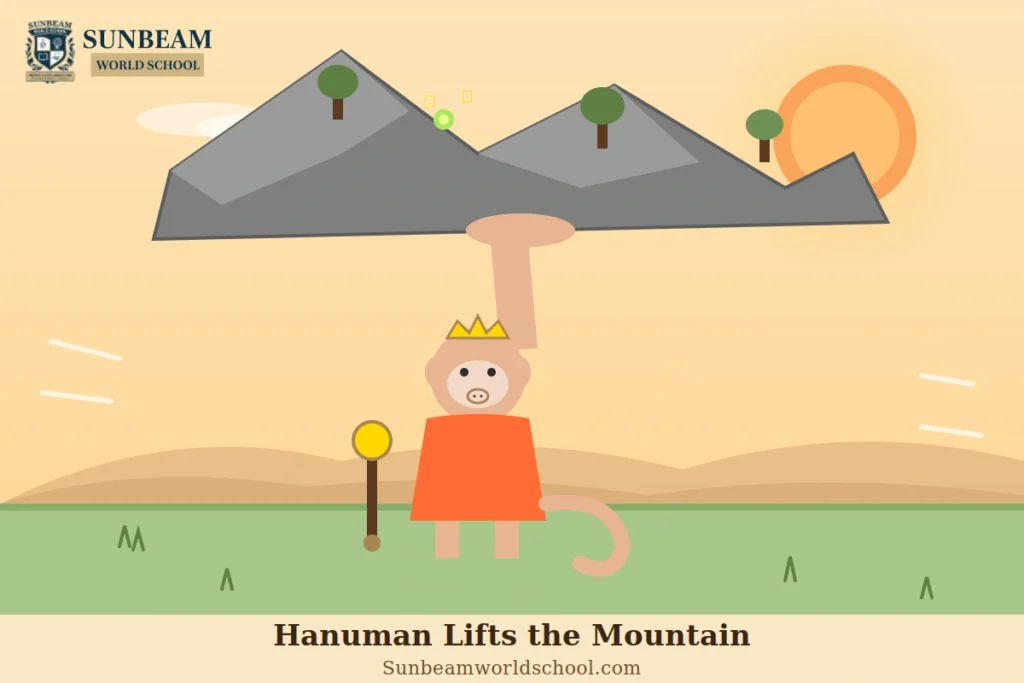
Hanuman Lifts the Mountain teaches children that faith, devotion, and determination can overcome any obstacle.
During the great war against Ravana, Lord Rama's brother Lakshmana was struck down by a deadly arrow. The royal physician said only one herb could save him, a magical plant called Sanjeevani that grew on a mountain far away in the Himalayas. There was no time to lose. The army turned to Hanuman.
Hanuman flew across the land with all his strength and reached the mountain. But when he looked for the herb, he could not tell which plant was Sanjeevani. Every herb on that mountain seemed special. He thought for only a moment, then made up his mind.
With a mighty roar, Hanuman lifted the entire mountain on the palm of his hand. He flew back to the battlefield carrying it. The physician found the Sanjeevani at once, and Lakshmana's life was saved.
Moral: "Devotion can lift any mountain."
22. Rama and the Squirrel: Every Small Help Matters
Best for: Ages 5-10 | Read time: 1 minute
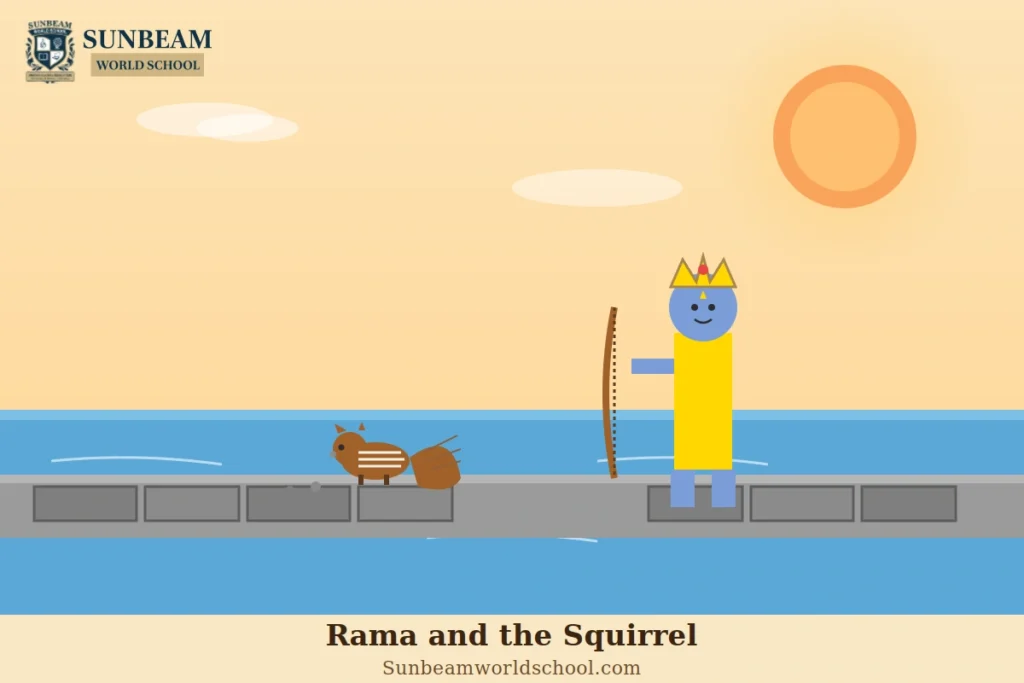
Rama and the Squirrel teaches children that even the smallest efforts can make a big difference.
When Lord Rama was building a great bridge across the ocean to reach Lanka, mighty monkeys and bears worked day and night, lifting heavy boulders into the sea. A tiny squirrel watched them and wanted to help. She ran to the seashore, rolled in the sand, and shook her body so the grains fell into the water. Then she ran back for more. Again and again she did this, working as hard as she could.
The big monkeys laughed at her. "What can a little squirrel do?" they said. "Step aside." Rama saw the squirrel and gently lifted her in his palm. "Every effort matters, no matter how small," he said. He stroked her back tenderly with his three fingers. From that day, every squirrel has three white stripes on its back, as a mark of Rama's blessing.
Moral: "Every effort matters, no matter how small."
Conclusion
The best short stories in English stay with children long after the final sentence is read. A thirsty crow teaches perseverance, and a clever hare proves that wisdom can overcome strength. While these stories may seem simple, the lessons they carry often shape how children think, act, and treat others throughout their lives.
At Sunbeam World School, we believe stories are more than a learning approach; they are a bridge between knowledge and character. Through interactive storytelling and discussion-based learning, we help children develop confidence, communication skills, empathy, and a lifelong love of reading.

Frequently Asked Questions
What are the best short stories for kids in english?
-The best short stories for kids in english are classic tales like The Thirsty Crow, The Lion and the Mouse, and The Hare and the Tortoise. They are short and end with a clear moral that children can remember and discuss.
Which short moral stories for kids in english are best for storytelling competitions?
+What are good bedtime stories for kids in english?
+What are the best panchatantra short stories for kids in english?
+What are good short stories for kids in english for kindergarten?
+
In this article
Share this post:


Press and Blogs
Stay updated with our press releases, educational blogs, and more.

Quick Summary Animal sounds are the noises animals make to communicate, warn of danger and...

Quick Summary The area of rectangle equals its length multiplied by its width (A =...
Quick Summary Sympathy means feeling sorry for someone from your own point of view. Empathy...