
 Online Education
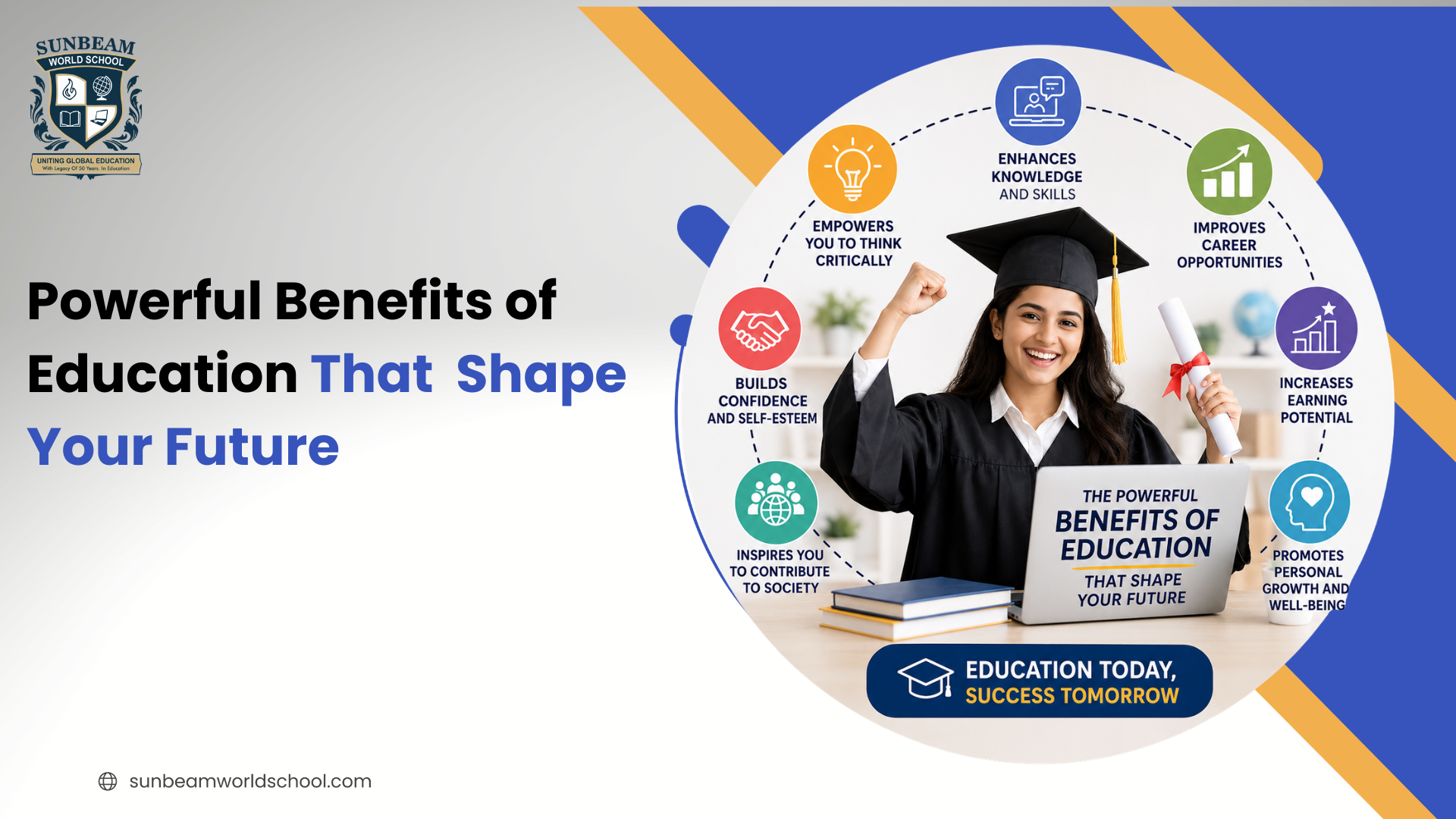
15 Powerful Benefits of Education That Shape Your Future
15 Powerful Benefits of Education That Shape Your Future
Education is about much more than grades and degrees. It shapes how we think, communicate, solve problems, and grow throughout life. In a fast-changing world driven by technology and constant learning, education gives people the skills and confidence to adapt and succeed.
Whether you're a student, a parent, or simply curious about the value of learning, understanding the real benefits of education can change the way you see its impact. Here are 15 meaningful ways education helps shape a better future.
What Is Education?
Education is the process of gaining knowledge, skills, values, habits, and ways of thinking that help individuals grow intellectually, emotionally, socially, and professionally. It goes beyond textbooks, classrooms, and examinations. True education teaches people how to think independently, make informed decisions, communicate effectively, and contribute positively to society.
Education can take many forms and different levels, through schools, universities, online learning platforms, practical experiences, mentorship, reading, and everyday life. While formal qualifications and degrees are important, education’s greatest value lies in shaping character, developing curiosity, and preparing individuals to adapt to an ever-changing world.
An educated person is not simply someone with academic achievements. It is someone who understands how to learn continuously, solve problems thoughtfully, respect different perspectives, and use knowledge responsibly.
15 Benefits of Education That Truly Matter
Discover how education shapes careers, confidence, critical thinking, health, financial stability, and personal growth, empowering individuals to build a successful and meaningful future.
1. Critical Thinking
Critical thinking is the ability to evaluate evidence, question assumptions, and arrive at reasoned conclusions. It sounds abstract until you realize it's what stops you from sharing misinformation, making impulsive financial decisions, or being manipulated by poor arguments.
Education — especially when it encourages debate, questioning, and problem-solving — is the primary training ground for this skill. Students who learn to think critically don't just do better in exams; they make better decisions for the rest of their lives.
2. Achieves Gender Equality
When girls and boys receive equal access to education, something remarkable happens: wage gaps narrow, birth rates stabilize, and communities become more prosperous and peaceful. Research consistently shows that educating girls in particular delivers some of the highest returns of any development investment.
Education equips every learner — regardless of gender — to articulate their rights, pursue any career, and participate fully in civic life. It dismantles the idea that opportunity should be determined by anything other than effort and ability.
3. Career Advancement
The jobs market has changed dramatically, but education's role in unlocking career progression hasn't. Formal education opens doors — to entry-level roles, promotions, professional networks, and international opportunities. But beyond credentials, it provides the technical fluency, adaptability, and communication skills employers actively look for.
In a world increasingly shaped by AI and automation, the most resilient careers belong to people who can learn continuously — a habit education instills from day one.
4. Develops Communication Skills
Communication is far more than speaking clearly. It's about listening with intent, writing with precision, adapting your tone to different audiences, and navigating disagreement constructively. These skills are built — not born — and education is where the building happens.
Through classroom discussions, group projects, essays, and presentations, students learn to translate complex ideas into understandable language. That skill — whether in a job interview, a difficult family conversation, or a leadership meeting — is priceless.
5. Accelerates Personal Development
Personal development means growing as a human being — becoming more self-aware, more resilient, more capable of forming meaningful goals and pursuing them. Education provides the structure, feedback, and challenge needed for this growth.
Every exam you prepare for, every project you push through, every mentor who challenges your thinking — these experiences compound into a stronger sense of self, a richer value system, and a clearer personal identity.
6. Better Employability
Employability is not just about what you know — it's about being able to demonstrate your value quickly and reliably. Education builds the blend of technical knowledge, soft skills, and professional credibility that makes you competitive across industries.
Teamwork, problem-solving, deadline management, logical reasoning — employers consistently cite these as priorities. Schools and universities, when done well, train all of them. A well-educated candidate doesn't just apply for jobs; they create opportunities.
7. Long-Term Health & Well-being
Educated individuals tend to live longer, healthier lives. This isn't a coincidence. Education improves health literacy — the ability to understand medical information, navigate healthcare systems, and make informed choices about diet, exercise, and mental health.
Beyond knowledge, education also reduces stress through financial stability, gives a sense of purpose, and builds social networks that protect against isolation. Physical education and school-based wellness programs create healthy habits that often last decades.
8. Cognitive Development
Learning new things doesn't just add information — it physically changes the brain. Education stimulates neuroplasticity: the brain's ability to form new connections throughout life. Students who engage in intellectually demanding subjects — mathematics, science, languages — develop stronger memory, sharper attention, and better reasoning capacity.
These cognitive gains pay forward. People with higher levels of education have lower rates of cognitive decline in later life, suggesting that a habit of learning protects the brain well into old age.
9. Discovering True Passions
Many people drift through life unsure of what truly excites them — not because passion is rare, but because they've never been introduced to the right fields. Education is a structured form of exploration. It exposes you to history, science, art, literature, technology, sports, and more.
That exposure matters. The student who stumbles into astronomy and becomes obsessed, or the one who discovers their voice through school theatre — education gives passion a place to ignite. Extracurricular opportunities amplify this even further.
10. Financial Security
Across almost every country and profession, higher levels of education correlate with higher and more stable incomes. Beyond earning power, education teaches financial reasoning — budgeting, investment thinking, entrepreneurship, and planning for the future.
Financial security changes everything: access to healthcare, housing, leisure, and peace of mind. It also breaks cycles of poverty across generations. A family with an educated income earner is statistically far more likely to send the next generation to school, too.
11. Drives Productivity
Productivity isn't about working harder; it's about working smarter. Education provides the frameworks, knowledge, and analytical tools that let people accomplish more with less effort and fewer mistakes.
At a macro level, countries with higher educational attainment consistently outperform others in GDP growth and innovation. At the individual level, educated workers innovate more, waste fewer resources, and produce higher-quality output — making them invaluable to any organization.
12. Social Experiences
School and university are the original networking environments. They bring together people from different backgrounds, beliefs, and life experiences under a shared pursuit. These connections — classmates, teachers, mentors, alumni — become lifelong professional and personal networks.
Beyond networking, shared learning environments build empathy. When you spend years studying alongside people different from you, you leave with a more nuanced understanding of the world and a greater capacity to collaborate across differences.
13. Global Awareness
An educated person doesn't just understand their own neighborhood — they understand the forces shaping economies, governments, ecosystems, and societies globally. Education makes sense of complexity: why inflation happens, how climate change works, and what historical events created today's borders.
This awareness isn't passive. It leads to more informed voting, more ethical consumption, and more engaged citizenship. In a world flooded with information, education provides the filter to identify what's true, what matters, and what to do about it.
14. Confidence
Every skill you gain, every challenge you overcome, every presentation you survive adds to a mental ledger of competence. Confidence built through real achievement is the most durable kind — far more stable than confidence born from praise alone.
Education creates hundreds of these moments: solving a difficult problem, earning a good grade after hard work, speaking up in class and being heard. Over time, these experiences shape people who believe in their own ability to learn and adapt — a belief that carries them through life's hardest moments.
15. Discipline and Time Management
The daily rhythm of education, attending class, meeting deadlines, preparing for exams, and balancing competing demands, is itself a master class in self-discipline. These habits, built over years of schooling, don't disappear after graduation.
Disciplined learners become disciplined professionals and disciplined people. They show up on time, follow through on commitments, manage stress productively, and build the kind of reliable character that earns long-term trust in both personal and professional contexts.
Conclusion
Education is far more than academic achievement; it is the foundation for confidence, creativity, critical thinking, and lifelong success. It empowers students to discover their strengths, pursue meaningful goals, and adapt to a rapidly evolving world. From building communication skills and discipline to creating better career opportunities and global awareness, the impact of education extends into every aspect of life.
At Sunbeam World School, education is designed to go beyond traditional learning by nurturing curiosity, innovation, and future-ready skills in every student. Through a flexible and globally connected learning environment, Sunbeam World School helps students develop the knowledge, mindset, and confidence needed to thrive academically and personally.
As the future of education continues to evolve, one thing remains constant: quality education has the power to transform lives, unlock potential, and shape a brighter future for individuals and communities around the world.

Frequently Asked Questions
Why is education considered the key to economic growth?
-Education produces a skilled, adaptable workforce — the engine of any economy. It drives innovation, enables technology adoption, and reduces inequality by giving individuals the tools to create and capture value. Countries that invest in education consistently see stronger long-term GDP growth and greater economic resilience.
What role does education play in promoting gender equality?
+How does education help develop critical thinking skills?
+What are the 4Cs in education?
+Can education really improve health outcomes?
+Is formal education still relevant in the age of the internet?
+
In this article
Share this post:


Press and Blogs
Stay updated with our press releases, educational blogs, and more.
Quick Summary Activity-Based Learning (ABL) is a teaching approach in which children learn concepts through...
Quick Answer Computers are used in daily life for education, communication, banking and payments, shopping,...

Quick Summary The 12 months name in English are January, February, March, April, May, June,...