
 Kids Learning
Sun-Kissed Summers: Fun Summer Activities for Kids
| Summer activities for kids can support creativity, confidence, emotional development, and life skills when they combine play, exploration, and hands-on learning. For children aged 3–8, sensory play activities like rainbow rice bins, slime making, foam painting, and outdoor treasure hunts help improve fine motor skills, imagination, and problem-solving. Weekly skill-building activities such as baking, beginner yoga, photography, bird watching, and simple science experiments also encourage curiosity and independence.
For older children aged 9–15, passion projects like coding games, starting a podcast, creating digital art, fashion sketching, or running a mini online business help develop communication, creativity, leadership, and entrepreneurial thinking. Activities focused on budgeting, volunteering, first aid, and robotics further strengthen practical life skills and confidence. Experts suggest that meaningful summer experiences do not need to be expensive. Simple, engaging activities at home or outdoors often create stronger emotional connection, resilience, and long-term learning than over-scheduled programs. |
What if this summer became the one your child never forgot? The season of muddy hands, creative messes, backyard adventures, and proud little “I made this!” moments. Summer is more than just a school break — it’s the perfect time for kids to explore new interests, build confidence, and learn through play. From sensory activities and outdoor fun to coding, art, and passion projects, these summer activities for kids combine creativity, learning, and life skills in the most enjoyable way possible.
Best Summer Activities for Kids Ages 3–8
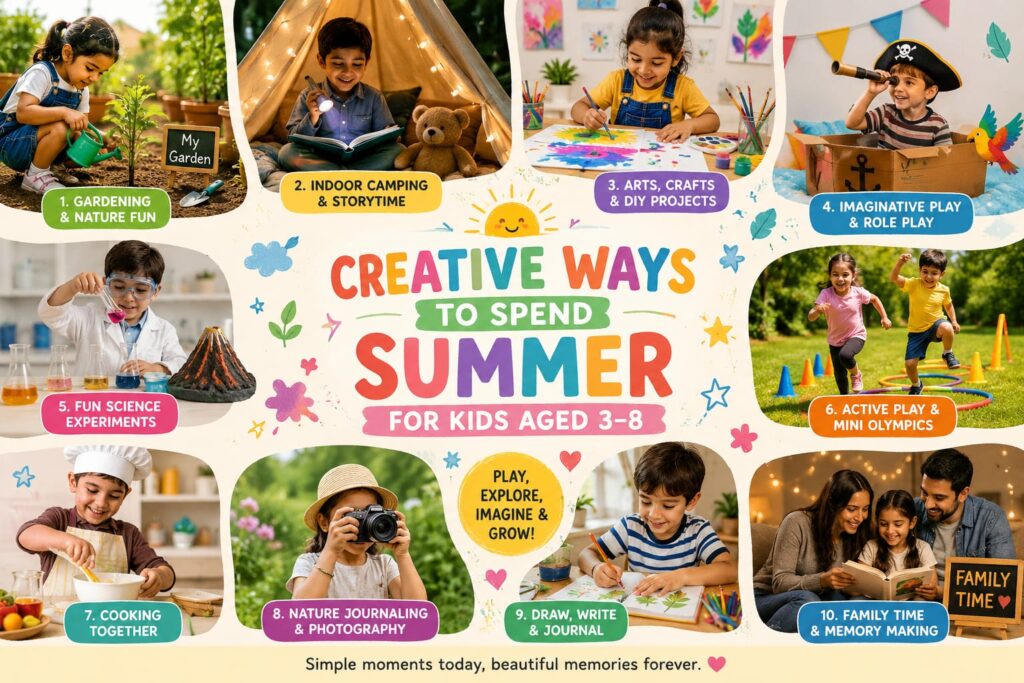
The best summers for young children aren't the most expensive or the most planned. They're the ones where the back garden becomes an enchanted forest, the living room transforms into a cosy campsite, and a pile of cardboard boxes becomes tomorrow's rocket ship.
Summer activities for kids with Sunbeam World School
For children between three and eight years old, every activity you create becomes a quiet building block for confidence, creativity, and emotional resilience.
Sensory & motor play — let them get messy
Sensory play directly supports brain development, fine motor skills, and emotional regulation. When children squish slime, sift through rainbow rice, or rescue toys from frozen ice cubes, they're exercising focus, patience, and problem-solving.
You can also turn sensory activities into early learning opportunities by introducing fruits name and vegetable sorting games, pretend grocery setups, or color-based food identification activities that help children learn fruit and vegetable names in a fun, hands-on way.
| Activity | Description | Benefits |
| Rainbow Rice Bins | Dyed rice with scoops and figurines for imaginative play. | Encourages sensory exploration, creativity, and fine motor skills. |
| Ice Treasure Rescue | Freeze toys in ice — kids excavate with warm water. Science meets adventure. | Builds problem-solving skills, patience, and sensory awareness. |
| Foam Painting | Shaving foam mixed with paint for a dreamy, tactile canvas. | Supports creativity, sensory play, and hand coordination. |
| Slime Making | Classic science-meets-craft activity that teaches cause and effect. | Enhances sensory development and introduces basic science concepts. |
| Marble Run Painting | Roll paint-dipped marbles across paper in a box. Physics and joy. | Improves hand-eye coordination and understanding of motion. |
| Water Bead Play | Squishy, calming beads perfect for sensory-seeking children. | Promotes relaxation, tactile learning, and focus. |
| Parenting tip: Don't correct their creations. A "robot" made from a cereal box is a triumph of imagination. Ask: "What does it do? Where does it live? What's its name?" |
Fun Outdoor Summer Activities for Kids To Build Real Skills
Simple outdoor adventures that encourage creativity, teamwork, problem-solving, physical activity, and emotional growth through play.
Backyard treasure hunt — hide clues and tiny rewards around the garden. Children experience problem-solving with a real payoff.
Mini Olympics — sack races, egg-and-spoon, hula hoops. Award everyone a hand-drawn certificate.
Gardening challenge — give each child their own pot. Tending something alive builds responsibility over weeks.
Evening dance festival — a summer playlist, moved furniture, the whole family dancing. Movement regulates emotions beautifully.
Nature journaling walks– press leaves, sketch insects, write about the weather. Observation as a lifelong habit.
Weekly Summer Skill-Building Activities For Kids At Home
A fun “skill of the week” approach that helps children explore new hobbies, develop independence, and learn practical life skills during summer break.
Week 1: Baking
Simple biscuits. Measuring, mixing, waiting, tasting.
Week 2: Beginner yoga
Animal poses and breathing exercises for body awareness.
Week 3: Photography
Old phone or camera. What do they choose to capture?
Week 4: Bird watching
A notebook and patience. The world slows down.
Week 5: Science experiments
Volcano eruptions, rainbow jars, growing crystals.
Week 6: Bug hunting
Magnifying glass, sketch pad, and genuine curiosity.
Best Summer Activities for Kids Ages 9-15
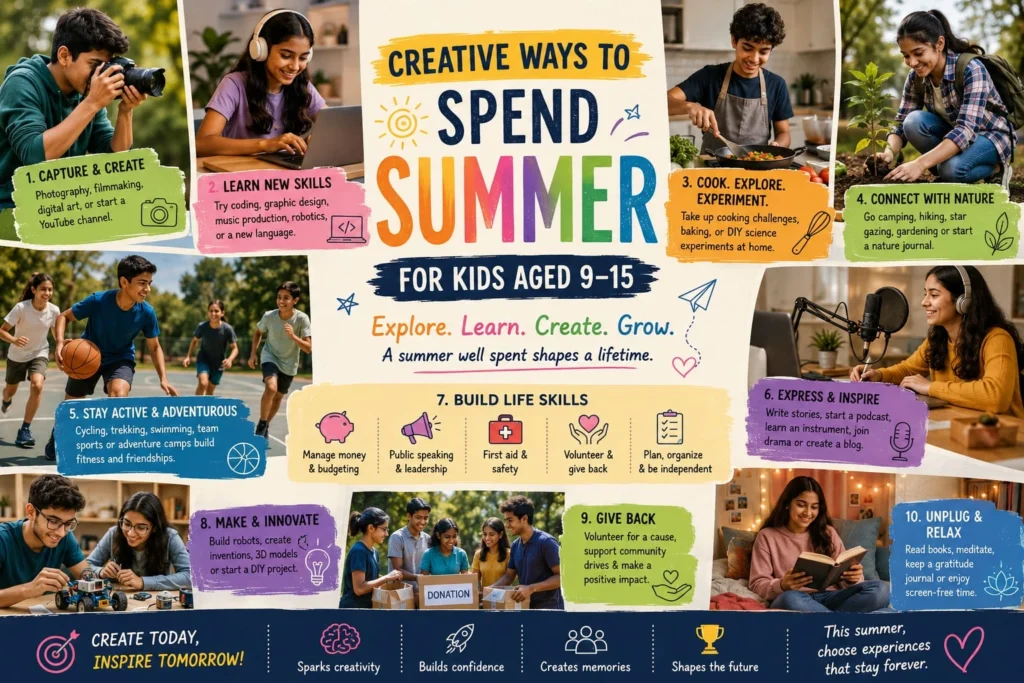
Something shifts around age nine. The playground still calls, but so does a deeper question: Who am I, and what can I do? The best summers for tweens aren't back-to-back activities — they include space to be bored, then creative, then genuinely proud of something they built entirely on their own terms.
Summer Activities for Kids To Build Real Skills- Sunbeam World School
Passion projects — let them build something real
| Activity | Description | Benefits |
| Mini YouTube Channel | Script, shoot, and edit videos to share ideas and stories. | Builds storytelling, communication, tech skills, and persistence. |
| Coding a Simple Game | Use Scratch, Replit, or MIT App Inventor to create beginner-friendly games. | Encourages logical thinking, creativity, and problem-solving. |
| Start a Podcast | Interview family, discuss interests, or review books. Their voice, their show. | Develops confidence, speaking skills, and creativity. |
| Fashion Sketching | Design collections, create lookbooks, and explore personal style. | Enhances artistic expression and design thinking. |
| Mini Online Business | Sell handmade items or digital art for early entrepreneurship experience. | Teaches business basics, responsibility, and money management. |
| Digital Art Portfolio | Use Canva, Procreate, or GIMP to create and curate a personal gallery. | Strengthens digital creativity and portfolio-building skills. |
| Why passion projects work: They give children a sense of agency. When a 12-year-old edits their first short film or makes their first sale, something quietly but fundamentally shifts in how they see themselves. |
Life skills that shape character
Budgeting basics — give them a small weekly summer budget. Let them decide how to spend and sometimes overspend. Lessons stick fast.
Family TED Talk evening — everyone presents for 3 minutes on something they're curious about. Public speaking without pressure.
First aid fundamentals — treating cuts, managing burns, knowing when to call for help. Genuine confidence through real knowledge.
Community volunteering — food banks, neighborhood clean-ups, small fundraisers. Empathy deepens with practice.
Robotics & AI workshops — libraries and online platforms offer summer programs. Earlier exposure, more natural fluency.
| Children this age don't just want to be entertained — they want to be taken seriously. The summers they'll remember are the ones where they were trusted with real tools, real challenges, and real choices. |
Conclusion
The most meaningful summers are rarely the busiest ones. They are the summers filled with muddy hands, unfinished art projects, bedtime storytelling, curious questions, and proud little moments of “I did it myself.”
Children do not always remember every activity, but they remember how summer made them feel free, trusted, curious, and connected.
At Sunbeam World School, we believe learning extends far beyond the classroom walls. Through creativity, exploration, and real-world experiences, children develop the skills, resilience, and imagination they need to thrive in an ever-changing world. Summer is not just a break from school; it is an opportunity for children to discover who they are becoming.
Looking for more meaningful ways to support your child’s growth this summer? Explore the learning philosophy at Sunbeam World School.

Frequently Asked Questions
What are the best activities for children aged 3 to 5?
-For young children, the best activities are simple, sensory, and imaginative — rainbow rice bins, foam painting, homemade playdough, ice treasure rescues, and bubble play. Focus on the process rather than the outcome. A child who spends 40 minutes sorting pebbles by color is engaged in genuine learning.
How do I keep my 10–13-year-old off screens during summer?
+How can summer activities support school readiness?
+Are expensive summer camps necessary?
+How do I balance structure and free play during summer?
+
In this article
Share this post:


Press and Blogs
Stay updated with our press releases, educational blogs, and more.

Quick Summary You can improve your child’s writing skills by making writing a regular part...

Quick Summary The 12 months name in English are January, February, March, April, May, June,...

Quick answer: India has 28 states and 8 union territories in 2026, making 36 capitals...