Admissions Open for Academic Year 2026–27 · Limited Seats Available · Nursery to Grade 12 · IND +91 97112 56925 · UAE +971 58 592 4773 · World's First  AI-Powered  Online School · 100K+ Students across 135+ Countries · Admissions Open for Academic Year 2026–27 · Limited Seats Available · Nursery to Grade 12 · IND +91 97112 56925 · UAE +971 58 592 4773 · World's First  AI-Powered  Online School · 100K+ Students across 135+ Countries ·
Sunbeam World School
SW
Sunbeam World School
International Online School
Uniting Global EducationAsia's Largest Online School
Accredited American Online School

American Online School for Kindergarten to Grade 12

Sunbeam World School is an accredited American online school. Your child learns the US curriculum in live classes with certified teachers, from kindergarten to Grade 12, and graduates with a US high school diploma, with NIOS alongside for Indian entrance exams. All from home, anywhere in the world.

Live Classes, Not Self-Paced K-12 American Curriculum US High School Diploma Three Time-Zone Batches
4.8 Google rating from parents of 100,000+ learners

Reviewed by the Sunbeam World School admissions team · Updated October 2026

KG to 12Thirteen grades, one framework
3 BatchesAsia, the Gulf, Europe and the Americas
135+Countries
Step 1: Check the Credentials

Accredited American Online School, Recognised Worldwide

Sunbeam World School is an accredited American online school, backed by Cognia accreditation for its American curriculum, IAO accreditation for the institution, and classrooms on Discovery Education. Every registration is listed on the affiliations page, so you can verify it with the awarding body before paying a fee.

Step 2: What You Are Choosing

What Is an American Online School and How Does It Work?

Sunbeam World School is an American online school that delivers the US K-12 curriculum, kindergarten through Grade 12, over the internet with certified teachers and a structured academic programme, which sets it apart from parent-led homeschooling. Students are assessed continuously, earn credits and a GPA, and finish with a US high school diploma. The three cards below show how it is built.

1 The curriculum

K-12 American Curriculum, Common Core Aligned

The American curriculum runs from kindergarten through Grade 12 in four stages: kindergarten, elementary (Grades 1 to 5), middle school (6 to 8) and high school (9 to 12). Every stage builds on the last, with core subjects, electives and skills in critical thinking, research and communication throughout.

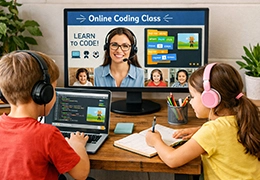
2 The assessment

Credits, GPA and Transcripts, Not One Exam

From Grade 9 a student earns credits for each course passed, with grades recorded each term on an official transcript and averaged into a cumulative GPA. A weak week does not decide a year, and a strong student can add AP courses for a weighted GPA above 4.0.

3 The outcome

US High School Diploma, with NIOS Alongside

Completing the required credits in Grades 9 to 12 earns the US high school diploma, the document universities in the US, UK, Canada, Australia and Europe read alongside the transcript. Students who may sit NEET, JEE or other national entrance exams add NIOS Class 12 alongside, because the AIU does not grant equivalence for online-mode diplomas; the parent questions below explain the rule.

American Curriculum vs CBSE, IGCSE and British

The American curriculum assesses continuously and lets students choose electives and AP courses; CBSE assesses through board exams in Class 10 and 12 on a fixed syllabus; the Cambridge route assesses through IGCSE and A Level papers marked by Cambridge. None is harder or easier in the abstract: the right fit depends on how the child learns and where the family plans to study. With the model clear, the next section gives the six reasons families choose it.

Read CBSE vs IGCSE vs American curriculum, or compare the British online school, Cambridge online school and IGCSE online school pages. The American curriculum page covers the framework subject by subject.

Step 3: Why Families Choose It

Six Advantages of the American Curriculum Online

Families choose the American curriculum online for six reasons: continuous assessment, electives and AP, transferable credits, a transcript universities read directly, skill-based learning, and one framework from kindergarten to Grade 12.

Continuous Assessment, No Single Board Exam

Grades come from classwork, projects, quizzes and term tests across the year, recorded on the transcript each term. A child who learns steadily is rewarded for it, and one bad exam day does not define Class 10 or 12.

Electives and AP That Follow the Child

Alongside English, Mathematics, Science and Social Studies, students choose electives in high school and add AP courses from Grade 11, so a future engineer, designer or economist shapes the timetable around real strengths.

Credits That Transfer Between Schools

Each completed course is a credit on an official transcript. A family that moves to the US, the Gulf or back to India carries the record with them, and accredited US schools accept the credits already earned.

A Transcript Universities Read Directly

US, Canadian, UK, Australian and European admissions offices read a US transcript and GPA without translation or conversion tables, which is why families planning university abroad start the American route early.

Skills, Projects and Presentations

The curriculum assesses research, writing, presentation and collaboration as well as recall. Students present projects, debate and write across subjects, which is the preparation university seminars and interviews expect.

One Framework from KG to Grade 12

A child can start in kindergarten and finish with the diploma in Grade 12 without changing board, school or teaching style, and a child who joins later slots into the matching grade with a placement assessment.

Switching from CBSE or ICSE, or unsure which grade your child should join? The counsellor maps both on the free demo call. Next: the full K-12 pathway.

Step 4: Find Your Child's Stage

K-12 American Online School: Kindergarten to Grade 12

Sunbeam World School teaches all four American stages online, kindergarten to Grade 12, and each stage has its own page. The table maps every US grade to age and to the local class a child would otherwise be in.

American K-12 stages at Sunbeam World School with grades, ages, local equivalents and what students earn
StageUS GradesAgesLocal Equivalent (India)What Students Earn
KindergartenKG5 to 6UKGReadiness in reading, numbers and routines
Elementary SchoolGrades 1 to 56 to 11Class 1 to 5Core subjects, projects, term report cards
Middle SchoolGrades 6 to 811 to 14Class 6 to 8Subject depth, first electives, study skills
High SchoolGrades 9 to 1214 to 18Class 9 to 12Credits, GPA, transcript, AP, US high school diploma

Not sure which grade matches your child's current class? The counsellor places by age, report card and a short assessment on the free demo call. Next: how the classes themselves run.

Step 5: How Classes Run

How Live Online American School Classes Work

Live online American school classes at Sunbeam World School combine real-time video instruction from a certified teacher with a digital learning platform, so students attend school remotely while following the US curriculum. Lessons run on a fixed timetable in three daily batches, and every class is recorded the same day for revision.

  1. 1

    Live Lessons with Certified Teachers

    Each subject is taught live on a weekly timetable with a virtual whiteboard, breakout rooms and the same teacher all year, on classrooms powered by Discovery Education.

  2. 2

    Small Batches, Three Time Zones

    Morning, afternoon and evening batches mean a student in Mumbai, Dubai, London or Toronto attends at a normal school hour. A family that moves switches batch at the next term.

  3. 3

    Recordings, Projects and Offline Work

    Every live class is saved to the learning portal with its worksheet. Reading, practice and projects are set offline, so screen time is tied to teaching rather than the whole day.

  4. 4

    Grades Each Term, Credits Each Year

    Quizzes, assignments and term tests feed a report card every term and, from Grade 9, credits and a cumulative GPA on the official transcript.

Live vs self-paced

Why Live Matters Online

  • A teacher who sees the child's work and questions in real time
  • Attendance and a routine, so a term cannot drift
  • Classmates in the same batch every day, not a forum
  • Recordings as a backup for a missed day, not the main lesson
A school day, in outline

What a Week Looks Like

  • Core subjects daily: English, Mathematics, Science, Social Studies
  • Electives, languages and activities on fixed slots
  • Doubt-clearing hours with each subject teacher
  • Clubs, assemblies and competitions outside lesson time
Step 6: Your Questions, Answered

Everything Parents Ask Before Admission

Parents ask fifteen questions before admission to an American online school, and each is answered below, point by point: accreditation and college acceptance, AP, live versus self-paced, daily hours, the parent's role, friendships, batch size, fees, hardware and mid-year entry.

Accreditation and College Acceptance

Sunbeam World School is an American online school that teaches the K-12 American curriculum live from kindergarten to Grade 12 for students in 135+ countries, with credits, GPA and transcripts from Grade 9 and a US high school diploma at the end of Grade 12.

Key facts at a glance

  • Accredited: Cognia accreditation for the American curriculum, IAO accreditation for the institution, classrooms on Discovery Education, and NIOS and BOSSE pathways for an Indian board certificate alongside.
  • Kindergarten to Grade 12: four stages, each with its own page, on one Common Core aligned framework.
  • Live, not self-paced: timetabled live lessons with certified teachers in small batches across three time zones, recorded the same day.
  • What students earn: term report cards, a cumulative GPA, an official transcript and the US high school diploma, with AP courses from Grade 11.

Who chooses an American online school

  • Students adding a US diploma to a local board such as CBSE, ICSE or a state board, who want continuous assessment and electives alongside.
  • NRI, expat and Gulf families who want one transcript that travels with them.
  • Families planning US, Canadian or European universities who need a GPA, a transcript and AP options.
  • Athletes, performers, homeschooling families and frequent movers who need a real timetable that fits their life.

The American curriculum at Sunbeam World School is accredited by Cognia, a US accreditation body for schools around the world, the institution is accredited by IAO, and every registration is listed on the affiliations page so a parent can verify it with the awarding body before paying a fee.

  • What to check at any school: the accrediting body's own directory, not just a logo on the website; Cognia, WASC, NEASC and Middle States are the names US universities know.
  • Why it matters: accreditation is what makes credits transferable and a diploma readable by a university admissions office.
  • What it does not do: no accreditation changes the rules of a national body such as the Association of Indian Universities, which are explained below.
  • Indian certificate alongside: students who need an Indian board certificate can take NIOS or BOSSE in parallel.

See all affiliations and accreditations.

Universities in the US, UK, Canada, Australia and Europe read a US high school diploma by its transcript, GPA and accreditation rather than by whether the classes were online, so a Sunbeam World School graduate applies with the same documents a US day-school graduate submits.

  • What they read: the official transcript with credits and cumulative GPA, the diploma, AP scores if taken, a counsellor reference and, where required, SAT or ACT scores.
  • What they do not ask: whether the lessons were delivered on a campus or online.
  • Beyond academics: admissions offices also weigh extracurriculars and recommendations, which is why the school runs clubs, competitions and a counsellor programme.
  • Documents from the school: transcript, diploma, predicted grades, counsellor reference and attendance records for every application.

See the online high school page for the Grade 9 to 12 detail.

Indian private universities generally admit on a US high school diploma and transcript, but national entrance examinations such as NEET and JEE require an AIU equivalence certificate, and the Association of Indian Universities does not currently grant equivalence for qualifications completed entirely through online or distance mode, so Sunbeam World School advises students targeting those exams to add NIOS Class 12 alongside.

  • Private universities: many evaluate the transcript and diploma directly; the counsellor checks the target university's current policy before Grade 11 choices are made.
  • NEET, JEE and central universities: the AIU certificate is the gatekeeper, and its current rule excludes online-mode diplomas.
  • The parallel route: NIOS Class 10 and 12 are Indian board certificates recognised by every Indian university and exam body, and can be taken alongside the American programme.
  • Why the school says this upfront: a family planning for NEET or JEE should choose the route at entry, not in Grade 12.

Read the AIU equivalence certificate guide and the NIOS Class 12 page.

The school teaches AP courses live for college-bound students, usually from Grade 11, with Grade 10 used for AP readiness, and AP exam scores of 3 or higher are accepted for credit or placement by universities in the US and many other countries.

  • How AP works: a college-level course in high school, assessed by a College Board exam each May, scored 1 to 5.
  • Why take it: a weighted GPA above 4.0 and possible university credit, which can shorten a degree.
  • Who should take it: students aiming at selective universities, in the subjects they plan to study.
  • NCAA and dual enrolment: these are US-domestic programmes that Sunbeam World School does not claim; ask the counsellor if an athlete's route needs them.

See the AP options on the online high school page.

Daily Schedule and Learning Format

Classes are live and timetabled, with a certified teacher teaching each lesson in real time to a small batch, and every session recorded the same day, which is the opposite of the self-paced model most American online schools sell and the reason a child cannot quietly fall behind for weeks.

  • Live lesson: teacher, whiteboard, questions and breakout work in real time, on a fixed weekly timetable.
  • Recording: saved to the learning portal with its worksheet for revision or a missed day.
  • Three batches: morning, afternoon and evening sessions cover Asia, the Gulf, Europe and the Americas.
  • Self-paced elements: practice, reading and projects are set between lessons, so screen time is tied to teaching.

See school timings and the learning portal.

A student spends the live-class hours of a normal school morning or afternoon on the platform, shorter for kindergarten and elementary and longer for high school, with reading, practice and projects set offline so that total screen time stays below that of a full day of video lessons.

  • Kindergarten and elementary: shorter live sessions with movement breaks and hands-on tasks away from the screen.
  • Middle school: a fuller timetable across core subjects and electives.
  • High school: a school-length timetable with AP and elective periods, plus independent study.
  • Exact schedule: the counsellor shares the timetable for the chosen grade and batch on the demo call.

See the current school timings.

A parent does not need to teach, mark or plan lessons, because timetabling, teaching, grading, report cards and counselling are the school's job; parents provide a quiet desk and a working laptop, check the parent dashboard, and attend a parent-teacher meeting each term.

  • What parents do: set up the workspace, keep the routine, and attend the termly meeting.
  • What parents see: the parent dashboard with attendance, submitted work, grades and teacher remarks.
  • Younger children: a parent nearby helps in kindergarten and early elementary, as it would with homework at any school.
  • When the school calls: if attendance drops, a grade trend appears, or a wellbeing concern is raised.

See the essential requirements for home setup.

The school records attendance in every live class, logs submitted work and quiz scores on the learning portal, and issues report cards each term with a cumulative GPA from Grade 9, so a parent can see progress week by week rather than waiting for a year-end result.

  • Daily: attendance per live class and submission status per task.
  • Weekly: quiz and assignment grades visible on the dashboard.
  • Termly: report card, teacher remarks and a parent-teacher meeting.
  • Yearly: credits recorded on the transcript from Grade 9.

Teacher Support and Social Interaction

Every student can meet the subject teacher outside the main lesson in scheduled doubt-clearing hours, message the teacher through the portal, and book extra time through the form tutor when a topic needs it, so one-on-one help is part of the week rather than an add-on.

  • In the lesson: small batches mean the teacher sees every student's work and questions.
  • After the lesson: scheduled doubt-clearing hours per subject.
  • Through the portal: questions on set work answered before the next class.
  • When more is needed: the form tutor arranges extra sessions and, where relevant, the special education team.

See the learning approach and special education support.

Students meet the same batch every day, work in breakout groups, and join clubs, competitions, assemblies and celebrations that run outside lesson time, so friendships form around shared classes and activities the way they do in a day school.

  • Same batch, same faces: a fixed batch all year, not a rotating pool of strangers.
  • Clubs and activities: coding, public speaking, art, music, sports challenges and more, listed on the school life page.
  • Events: assemblies, competitions, celebrations and student showcases through the year.
  • Safeguarding: moderated sessions and an anti-bullying policy that applies online.

See school life at Sunbeam World School.

The school teaches in small live batches so the teacher can see every student's camera, work and questions during the lesson, and the exact batch size for the chosen grade is confirmed by the counsellor on the demo call.

  • Why it matters online: a teacher can only read faces and check work in a batch small enough to see.
  • Same teacher all year: each subject keeps its teacher, so progress is tracked by someone who knows the child.
  • Form tutor: one adult who follows the whole picture across subjects.
  • Demo class: the free demo shows the real batch size, not a promise.

Tuition, Technology and Enrolment

Tuition covers the live classes, recordings, the learning portal, digital resources, assessments, report cards and the transcript, and the full fee structure is published by stage, so there is no separate software or platform charge; AP exam fees are paid to the College Board separately.

  • Included: every live class, recordings, portal, digital worksheets, assessments, reports, transcript.
  • Paid separately: AP exam fees to the College Board and, where chosen, NIOS or BOSSE examination fees.
  • Learning kit: the learning kit page lists books and materials and whether they are supplied or purchased.
  • Payment plans: the admissions team explains the instalment options on the counselling call.

See the fee structure, learning kit and refund policy.

A student needs a laptop or desktop with a webcam and headset, a stable broadband or 4G connection able to run video calls, and a quiet place to sit, and the essential requirements page lists the exact specifications so families can check their setup before the demo class.

  • Device: a laptop or desktop; a tablet works for younger grades but not for extended writing.
  • Connection: a connection that runs a video call without dropping; the school tests it in the demo.
  • Software: a browser and the learning portal, with no paid software to buy.
  • Backup: a mobile hotspot for outages, since every class is also recorded.

See the essential requirements.

A student can enrol at any point in the year, because the admissions team evaluates the current report card and, from Grade 9, maps completed work to credits on the transcript, then places the child in the right batch with a catch-up plan built from recordings and portal tasks.

  • Mid-year from CBSE or ICSE: a placement assessment and a bridging plan for the first term.
  • Credit transfer in high school: prior coursework evaluated for the transcript, so a semester is not lost.
  • Catch-up plan: recordings, portal tasks and form-tutor check-ins in the first weeks.
  • Mid-year from a US school: the transcript transfers directly between accredited schools.

See mid-year admission and the academic year calendar.

Beyond the Classroom

50+ Co-Curricular Activities for Every Age & Interest

From online yoga to competitive coding - Sunbeam nurtures every child's unique talent, Nursery through Grade 12.

Online yoga class for school students
Wellness
Online Yoga
All grades · Certified instructors
Kids online coding class
STEM
Online Coding & Programming
Grades 3-12 · Python, Scratch & more
Student in an online vocal music class - Sunbeam World School co-curricular activities
Performing Arts
Music & Vocals
All ages · Guitar, keyboard, singing
Student painting and doing art
Arts & Crafts
Painting & Visual Art
Nursery-Grade 12 · Creative expression
Kids dance class online
Performing Arts
Dance & Choreography
All grades · Classical & contemporary
Chess class online for kids
Strategy
Chess
Grades 2-12 · Beginner to advanced
Public speaking and debate
Leadership
Public Speaking & Debate
Grades 5-12 · Builds confidence
Online fitness for kids
Sports & Fitness
Fitness & Sports Training
All grades · Home-friendly workouts
Science experiment for kids
STEM
Science Experiments
Grades 1-12 · DIY lab at home
Creative writing for kids
Language Arts
Creative Writing & Storytelling
Grades 2-12 · Sparks imagination
Online drama and theatre for kids
Performing Arts
Drama & Theatre
Grades 4-12 · Script & performance
Kids robotics and AI class
STEM
Robotics & AI
Grades 5-12 · Future tech skills
Meditation and mindfulness for students
Wellness
Meditation & Mindfulness
All grades · Mental wellbeing
Culinary arts for kids
Life Skills
Culinary Arts
Grades 4-12 · Fun & practical
Foreign language classes online
Language
Foreign Languages
French, Spanish, German & more
Photography and film making class
Creative
Photography & Film Making
Grades 6-12 · Digital storytelling
Karate and martial arts for kids
Sports
Karate & Martial Arts
All grades · Discipline & strength
Environmental science project for kids
Science
Environmental Science
Grades 1-12 · Eco awareness
Poetry and journaling for kids
Language Arts
Poetry & Journaling
All grades · Self-expression
Digital art and design class for students
Creative Tech
Digital Art & Design
Grades 5-12 · Canva, illustration
50+Activities
K-12All Age Groups
100%Online & Live
CertifiedInstructors
Explore All Activities
Step 7: Families Like Yours

Who Joins an American Online School, and Why

Students and families who want international university pathways, global exposure or flexible schooling choose Sunbeam World School, and each tab below shows one of five groups: students adding a US diploma to a local board, expats and globally mobile families, study-abroad applicants, young athletes and artists, and students with special learning needs.

Perfect for

Students Adding a US High School Diploma Alongside a Local Board

Learners enrolled in a CBSE, ICSE, state-board or other national-board school who add the American programme to earn an accredited US high school diploma alongside their local certificate, keeping university doors open in both directions.

How the school supports them

  • Live US curriculum classes timetabled around the local school day, with credits and GPA building on an official transcript from Grade 9
  • NIOS or BOSSE available in parallel for students who need a recognised local board certificate alongside the US diploma
  • A counsellor who maps both routes at entry so entrance-exam eligibility and university applications are planned together
Step 8: Why This School

Best American Online School? Compare the Options

The best American online school for a child is the one that teaches live, is accredited and fits the family's time zone. The seven rows below compare Sunbeam World School with self-paced private online schools and US public virtual schools on exactly those points.

Comparison of Sunbeam World School with self-paced American online schools and US public virtual schools
What to compare RecommendedSunbeam World School Self-Paced Online Schools US Public Virtual Schools
Who can enrolStudents in 135+ countries, KG to Grade 12International students, usually Grade 6 upwardResidents of one US state only
Teaching modelLive timetabled classes, recorded same dayPre-recorded lessons, student sets the paceMixed; built for US time zones
Attendance and routineDaily attendance, form tutor, three batchesSelf-managed; easy to fall behindState attendance rules
Teacher accessIn the lesson plus doubt-clearing hoursEmail or ticket, by appointmentOffice hours in US time
Transcript and diplomaOfficial transcript, GPA, US high school diploma, AP from Grade 11Transcript and diploma if accredited; check the directoryState diploma
Local board alongsideNIOS or BOSSE available in parallelNoNo
Cost structurePublished tuition per stage; AP exam fees separatePer course or per yearFree for residents; closed to others
Step 9: What Parents Say

American Online School Reviews from Parents

Parents rate Sunbeam World School 4.8 on Google, and the six reviews below are their own words on teachers, live classes, fees and flexibility. Read more on the online school reviews page.

My both children are studying online at Sunbeam World School. Teachers focus on every student and solve doubts instantly. The coding classes are very helpful.

This year was his first time interaction through online classes and he is enjoying very much and learning new things.

The classes are fun, and my child loves studying here. The teachers are patient and explain everything well. It's the best online school for us.

This School offers Monthly fee payment plans which has best suited our family conditions.

Sunbeam World School has the best virtual programs. My daughter loves the interactive classes and the flexible schedule fits perfectly with our life in Dubai.

The best thing about Sunbeam World School is that your child receives education at home using world-class materials and resources.

Section: AS SEEN IN

Sunbeam World School in the News - Featured Online School

Real stories, real recognition - from national television to world records.

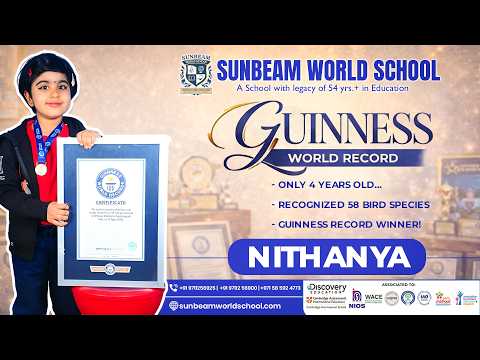
GUINNESS WORLD RECORDS
4-Year-Old Record Holder Nithanya - Our Student - Sunbeam World School video thumbnail
4-Year-Old Record Holder Nithanya - Our Student
Check Nithanya Video →
JIOHOTSTAR - FUTURE SCHOOLS
Sunbeam World School Featured on India's Biggest Streaming Platform - Sunbeam World School video thumbnail
Sunbeam World School Featured on India's Biggest Streaming Platform
Jio Hotstar Streaming Platform Video →
Dr. Alisha Madhok Walia
What Every Parent Must Know! - Sunbeam World School video thumbnail
What Every Parent Must Know!
Parent Must Know - Video From Founder →
CEO, Sunbeam World School
Dr. Alisha Madhok Walia, CEO of Sunbeam World School - Sunbeam World School video thumbnail
Dr. Alisha Madhok Walia, CEO of Sunbeam World School
A Message from our Founder & CEO →
CEO, Sunbeam World School
Building Confident & Curious Children | Sunbeam World School - Sunbeam World School video thumbnail
Building Confident & Curious Children | Sunbeam World School
Building Confident Video from CEO
CEO, Sunbeam World School
Dr. Alisha Madhok Walia, CEO - Sunbeam World School - Sunbeam World School video thumbnail
Dr. Alisha Madhok Walia, CEO - Sunbeam World School
A Message from our Founder & CEO →
CEO, Sunbeam World School
AI-Powered Learning for Global Success - Sunbeam World School video thumbnail
AI-Powered Learning for Global Success
Watch the Story →
Young Achiever
Young Talent from Sunbeam World School - Sunbeam World School video thumbnail
Young Talent from Sunbeam World School
Watch the Story →
Yoga Star!
7 Year Old → Yoga Star!💫 You Won’t Believe Her Story - Sunbeam World School video thumbnail
7 Year Old → Yoga Star!💫 You Won’t Believe Her Story
Watch the Story →
Future-Ready Education
Future-Ready Education Starts Here - Sunbeam World School video thumbnail
Future-Ready Education Starts Here
Watch the Story →
Step 10: Get Started

American Online School Fees and Admission

Admission to the school takes three steps: a counselling call to confirm the grade and batch, a free live demo class, and online enrolment. Fees are published by stage on the fee structure page, tuition is all-inclusive, and AP exam fees are paid separately to the College Board.

Step 1: Confirm the Grade and Batch

Share your child's age, current board and goals. A counsellor confirms the grade, explains the NIOS option for NEET or JEE aspirants, and sets the batch for your time zone.

Step 2: Book a Free Online Demo Class

Sit in on a live class with your child and meet a certified teacher, so you see the teaching style, the batch size and the learning portal before deciding.

Step 3: Enrol Online and Start Learning

Complete enrolment online in minutes. Choose your batch time, pay securely through the published fee structure, and your child begins from the very next session.

FAQ

American Online School FAQs

These answers cover what parents search before choosing an American online school: whether an online school diploma is valid, where a US diploma is accepted, American curriculum vs CBSE, AP, NEET and JEE, fees, mid-year entry and whether online high school is worth it.

An online school diploma is valid for university admission when the school is accredited and the certificate comes from a recognised body, which is why Sunbeam World School pairs its Cognia-accredited American programme with NIOS and BOSSE for students who need a local board certificate.

  • What makes it valid: the accreditation of the school and the recognition of the final certificate, not the delivery mode of the lessons.
  • US diploma: read by universities in the US, UK, Canada, Australia and Europe on its transcript and accreditation.
  • Local board alongside: NIOS and BOSSE are Government of India recognised boards available in parallel for students who need one.
  • Check it yourself: every registration is listed on the affiliations page.

See affiliations and accreditation.

An American online school teaches the K-12 American curriculum over the internet, with live or recorded classes, continuous assessment through classwork and tests, credits recorded on a transcript from Grade 9, and a US high school diploma at the end of Grade 12.

  • Curriculum: kindergarten to Grade 12, aligned with US Common Core standards, with electives and AP in high school.
  • Assessment: term grades, cumulative GPA and credits, not one board exam.
  • Two models: live timetabled classes, as at Sunbeam World School, or self-paced recorded lessons.
  • Outcome: an official transcript and a US high school diploma.

See the American curriculum page for the framework.

A US high school diploma earned online is accepted by many Indian private universities on the transcript and accreditation, but the Association of Indian Universities does not currently grant equivalence for qualifications completed entirely online, so NEET, JEE and central-university entry need NIOS alongside.

  • Private universities: policies vary; the counsellor checks the target university before Grade 11 choices are made.
  • AIU equivalence: required by NEET, JEE and central universities, and not currently issued for online-mode diplomas.
  • Parallel route: NIOS Class 10 and 12 taken alongside the American programme.
  • Decide at entry: the route is chosen with the counsellor when the child joins.

Read the AIU equivalence guide.

A student needs an AIU equivalence certificate to sit NEET or JEE on a foreign diploma, and because the AIU does not currently grant equivalence for online-mode qualifications, Sunbeam World School advises students targeting these exams to take NIOS Class 12 alongside the American programme.

  • NIOS Class 12: a Government of India recognised certificate accepted by NTA for NEET and JEE.
  • Subjects: Physics, Chemistry, Biology or Mathematics must be on the NIOS certificate for eligibility.
  • Coaching: NEET and JEE draw on the NCERT syllabus, so coaching is extra whichever board is chosen.
  • Plan early: the counsellor maps the dual route at entry, not in Grade 12.

See NIOS Class 12.

The American curriculum is better than CBSE for a child who learns through continuous assessment, projects and electives and may study abroad, while CBSE is better for a child set on NEET or JEE, so the choice depends on the child and the destination.

  • Assessment: American grades build through the year; CBSE rests on board exams in Class 10 and 12.
  • Choice: American electives and AP from high school; CBSE follows a fixed syllabus.
  • Destination: American suits US and international applications; CBSE suits Indian entrance exams.
  • Both: the NIOS route lets a Sunbeam World School student keep an Indian certificate alongside.

Read CBSE vs IGCSE vs American curriculum.

K-12 means kindergarten through Grade 12, the thirteen years of the American school system: kindergarten, elementary school for Grades 1 to 5, middle school for Grades 6 to 8 and high school for Grades 9 to 12, all taught online at Sunbeam World School.

  • Kindergarten: age 5 to 6, the equivalent of UKG.
  • Elementary: Grades 1 to 5, ages 6 to 11.
  • Middle school: Grades 6 to 8, ages 11 to 14.
  • High school: Grades 9 to 12, ages 14 to 18, where credits and the diploma begin.

A child can switch from CBSE or ICSE to the American curriculum at any grade, because Sunbeam World School places by age and report card, evaluates prior work for credits from Grade 9, and runs a first-term bridging plan for extended writing, projects and presentations.

  • Best timing: the start of any grade, and by Grade 9 for a full four-year transcript.
  • Mid-year: possible, with a catch-up plan built from recordings and portal tasks.
  • Credits: completed CBSE or ICSE coursework in Grades 9 to 11 is evaluated for the transcript.
  • Keeping options open: NIOS alongside for families who may return to an Indian board.

See mid-year admission.

There is no free American online school open to students outside the United States, because the free options are US public virtual schools restricted to residents of one state; international students enrol in accredited private schools, and Sunbeam World School offers a free demo class.

  • Public virtual schools: free, but only for residents of that US state.
  • Free resources: Khan Academy and similar supplement a course but issue no transcript or diploma.
  • Try first: the free demo class and counselling call cost nothing.
  • Fees: published by stage on the fee structure page.

See the fee structure.

International students can join Sunbeam World School from any country, because the school is a private accredited institution with no residency requirement, and three daily batches place a student in India, the Gulf, Europe or the Americas at a normal school hour.

  • No residency rule: unlike US public virtual schools, enrolment is open worldwide.
  • Time zones: morning, afternoon and evening batches.
  • Documents: previous report cards and a short placement assessment.
  • Country pages: Saudi Arabia, Qatar, Singapore and Malaysia have dedicated pages.

See the eligibility criteria.

Online high school is worth it when the school teaches live, keeps attendance, grades continuously and issues an accredited transcript, because those are the things forum critics say self-paced programmes lack; recorded videos with no teacher contact are where the complaints come from.

  • What to insist on: live teachers, a timetable, small batches, a form tutor and an accredited transcript.
  • What to avoid: self-paced courses with no attendance and support by ticket only.
  • Who it suits: students who need flexibility of place, not absence of structure.
  • See for yourself: the free demo shows the real class, not a brochure.

Read online school reviews from Sunbeam World School families.

Sunbeam World School admits students from kindergarten at age 5 to Grade 12 at age 17 or 18, placing each child by age, previous report card and a short assessment, so a student can start in any grade and continue to the diploma.

  • Kindergarten: age 5 to 6.
  • Elementary: Grades 1 to 5, ages 6 to 11.
  • Middle school: Grades 6 to 8, ages 11 to 14.
  • High school: Grades 9 to 12, ages 14 to 18; older students are admitted case by case.

See the eligibility criteria.

A parent should check an American online school in three places: the accrediting body's own directory, named family reviews on Google and the school's reviews page, and a live demo class, because a logo proves nothing and a recorded sample lesson hides the batch size.

  • Accreditation: search the body's directory, not the school's site.
  • Reviews: read named Google reviews and watch for patterns, not single complaints.
  • Demo: attend a live class with your child and count the students.
  • Documents: ask to see a sample transcript and report card.

See online school reviews and book a free demo.

Admissions Open

Start Your American Curriculum Journey from Anywhere

Book a free demo to see a live class, meet the admissions team and map the right grade, batch and route for your child, including a local board alongside where the family needs one.

  • Live US curriculum classes in your time zone
  • Kindergarten to Grade 12 on one framework
  • Transcript, GPA and a US high school diploma
Trusted Worldwide
100K+Learners
135+Countries
4.8Google rating
54Years of legacy
View Fee Structure
Book A Free Demo
WhatsApp
Admission counselor
Kajal Online