
 Curriculum
What Is Curriculum in Education? A Guide for Parents, Educators, and Schools
| What is meant by Curriculum? Curriculum is the backbone of education, shaping what students learn, how they learn, and how knowledge is applied in real life. A good curriculum includes subjects, skills, activities, and values, helping students think critically, learn creatively, embrace personalized learning, and develop holistically, preparing them for higher education, careers, and responsible global citizenship. |
Curriculum meaning in education is not just about textbooks, exams, or classrooms, it’s about what students learn, how they learn, and why that learning matters, at the center of this process lies the curriculum. In fact, research shows that schools with well‑structured curricula report up to 30% higher student achievement and engagement compared to those without defined frameworks.
Whether you are a parent choosing the right school, an educator designing lessons, or an institution shaping future‑ready learners, understanding curriculum is essential. From traditional subject‑based models to modern, skill‑driven and digital approaches, curriculum determines the quality, relevance, and impact of education.
This guide offers a complete, easy‑to‑understand concept of curriculum in education - equipping you with practical insights and real‑world relevance.
What Is Curriculum in Education?
Curriculum is the structured and purposeful framework that shapes what learners study, how they learn, and how their progress is assessed, guiding education in schools, colleges, and all learning institutions to ensure meaningful, skill-oriented, and future-ready outcomes.
A strong curriculum ensures that learning is intentional, structured, and meaningful, rather than random or purely exam-driven, providing students with a coherent and purposeful educational experience.
Curriculum Definitions by Different Authors
Ralph Tyler
According to Tyler, curriculum is:“All the learning experiences planned and directed by the school to attain its educational goals.”
Tyler emphasized that curriculum should focus on clear educational objectives and organized learning experiences that help achieve those objectives.
Hilda Taba
Hilda Taba defined curriculum as: “A plan for learning.”
Taba believed that curriculum should be systematically designed by considering students’ needs, objectives, content, learning experiences, and evaluation methods.
John Dewey
John Dewey viewed curriculum as: “A continuous reconstruction of experience.”
Dewey focused on experiential learning and believed that curriculum should connect education with real-life experiences and democratic values.
Franklin Bobbitt
Franklin Bobbitt stated: “Curriculum is the entire range of experiences, both directed and undirected, concerned in unfolding the abilities of the individual.”
He emphasized preparing learners for practical life activities and social efficiency.
William Kilpatrick
According to Kilpatrick:“Curriculum consists of all experiences children have under the guidance of teachers.”
This definition highlights the importance of activity-based and child-centered learning.
Importance of Curriculum in Education
Curriculum is far more than a list of topics to be taught, it is the foundational framework that shapes every student's learning journey from the first day of school to graduation. A well-designed curriculum ensures that education is purposeful, structured, and impactful for every learner regardless of their background.
Here are the key reasons why there is need and importance of curriculum in education:
1. Provides a Structured Learning Path
Without a defined curriculum, teaching becomes inconsistent and directionless. Curriculum gives educators a clear roadmap of what to teach, when to teach it, and how to assess it. This structure ensures that no essential concept is skipped and that students progress logically from foundational knowledge to more advanced ideas.
2. Ensures Standardisation Across Schools
A national or board-level curriculum guarantees that every student — whether studying in a rural government school or an urban private institution — receives education based on the same academic standards. This standardisation is the backbone of fair assessments such as board examinations and competitive entrance tests.
3. Promotes Holistic Development
A good curriculum goes beyond academics. It encompasses co-curricular activities, value education, physical education, and life skills training. This 360-degree approach ensures that students develop intellectually, socially, emotionally, and physically, preparing them to be well-rounded human beings.
4. Aligns Education with Societal and National Goals
Curriculum is not created in isolation — it reflects the values, priorities, and aspirations of a society. In India, curriculum frameworks like the National Curriculum Framework (NCF) 2023 are designed to nurture critical thinking, cultural awareness, and citizenship, aligning individual learning with broader national development goals.
5. Guides Teachers in Effective Instruction
Curriculum acts as a professional guide for teachers. It outlines learning objectives, suggested methodologies, and assessment strategies, allowing educators to plan lessons with precision, maintain consistency in instruction, and measure whether students are achieving expected outcomes.
6. Prepares Students for Future Challenges
A forward-looking curriculum equips students with skills that go beyond textbooks — including digital literacy, problem-solving, communication, collaboration, and critical thinking. These are the very competencies that employers and higher education institutions seek in students today.
7. Bridges Theory and Practice
Curriculum design that includes practical components such as laboratory work, project-based learning, field visits, and internships helps students connect theoretical knowledge to real-world application, making learning more meaningful and memorable.
8. Supports Inclusive Education
A thoughtfully designed curriculum accommodates diverse learning needs, including students with disabilities, different learning styles, and varying socio-economic backgrounds. It promotes equity by ensuring that every child has access to quality learning experiences.
Types of Curriculum in Education
There are 15 major types of curriculum recognised in educational research, each serving a distinct purpose.
1. Formal Curriculum
The formal curriculum is like the school curriculum, it is official, written, and structured plan of study prescribed by an educational board or institution. It includes all subjects, lesson plans, learning objectives, and assessment methods that students are required to follow.
In India, the formal curriculum for most schools is designed by bodies like CBSE, ICSE, or State Boards. It covers academic subjects such as Mathematics, Science, Social Studies, and Languages, and is documented in the form of syllabi and prescribed textbooks.
Key features:
- Officially approved and documented
- Mandatory for all enrolled students
- Includes defined assessment and examination schedules
- Standardised across schools within the same board
2. Informal Curriculum
The informal curriculum refers to learning that happens outside the structured classroom environment but is still facilitated by the school. This includes co-curricular activities, cultural programmes, sports, community service, and peer interactions.
Although not listed in the official syllabus, the informal curriculum plays a significant role in developing soft skills, sportsmanship, teamwork, and civic responsibility in students.
3. Hidden Curriculum
The hidden curriculum consists of the unwritten, implicit values, norms, and behaviours that students absorb through their school environment. These are lessons that are never explicitly taught but are deeply embedded in the culture of the institution.
Examples of the hidden curriculum include:
- Learning to be punctual and disciplined
- Understanding social hierarchies and classroom dynamics
- Developing attitudes about authority, gender roles, or cultural norms
The hidden curriculum can have both positive and negative influences on students, which is why educators must be mindful of the messages their school culture sends.
4. Null Curriculum
The null curriculum refers to what is deliberately left out of the formal curriculum — subjects, topics, or perspectives that are not taught. Elliot Eisner, who coined this term, argued that what is absent from a curriculum is just as significant as what is present.
For example, if a curriculum does not include financial literacy, emotional intelligence, or media literacy, students leave school without those vital skills. Schools and policymakers must regularly evaluate the null curriculum to ensure critical topics are not being overlooked.
5. Spiral Curriculum
Developed by cognitive psychologist Jerome Bruner, the spiral curriculum is built on the principle that students can learn complex concepts at any age, as long as the instruction is adapted to their developmental level. Topics are revisited multiple times across grade levels, each time with greater depth and complexity.
Example: The concept of fractions is introduced in Grade 3 with basic halves and quarters, revisited in Grade 5 with mixed numbers, and deepened in Grade 7 with operations on fractions.
This approach strengthens long-term retention and deep conceptual understanding.
6. Integrated Curriculum
An integrated curriculum breaks down the barriers between subjects, combining two or more disciplines into a unified learning experience. Instead of treating Mathematics, Science, and Art as separate silos, integrated curricula help students see the connections between different fields of knowledge.
Example: A project on environmental conservation could incorporate Science (ecosystems), Mathematics (data analysis), English (report writing), and Art (poster design) — all within a single learning unit.
7. Core Curriculum
The core curriculum is the mandatory set of subjects that all students must study, regardless of their chosen stream or electives. It ensures that every student, upon completing their schooling, possesses a common foundation of knowledge and skills.
In Indian schools, core subjects typically include English, Mathematics, Science, and Social Studies up to Grade 10, ensuring a baseline of academic competency for all learners.
8. Subject-Centred Curriculum
The subject-centred curriculum is one of the oldest and most widely used curriculum models, particularly in traditional educational systems. It organises learning around specific academic disciplines — Mathematics, Physics, History, Literature — each taught as a separate, independent subject.
While effective for transmitting established bodies of knowledge, critics argue that this model can limit interdisciplinary thinking and may not address the real-world interests of students.
9. Learner-Centred Curriculum
A learner-centred curriculum prioritises the needs, interests, learning styles, and prior knowledge of individual students. Rather than delivering a one-size-fits-all programme, this approach allows students to take ownership of their learning journey.
It is most commonly associated with progressive educational philosophies and is increasingly being adopted in modern schools that value personalisation, student agency, and intrinsic motivation.
10. Teacher-Centred Curriculum
In a teacher-centred curriculum, the teacher is the primary source of knowledge and authority. They decide what is taught, how it is taught, and how students are assessed. Students typically assume a passive role, receiving information through lectures and direct instruction.
While this approach ensures coverage of content and is efficient in large classrooms, it is often criticised for limiting student participation and critical thinking.
11. Activity-Based Curriculum
An activity-based curriculum (ABC) replaces passive learning with hands-on, experiential activities that engage students actively in the learning process. Students learn by doing — through experiments, role-plays, group projects, field trips, and creative tasks.
This type of curriculum is particularly effective for young learners and students with kinaesthetic learning preferences, and is a cornerstone of early childhood education programmes.
12. Competency-Based Curriculum
A competency-based curriculum focuses on ensuring that students master specific skills and competencies rather than simply covering a prescribed amount of content. Students progress based on demonstrated mastery, not time spent in class.
This model is increasingly relevant in a skills-first economy, where employers value what candidates can do over the mere possession of certificates. It is widely used in vocational and technical education programmes.
13. Montessori Curriculum
Developed by Italian educator Dr. Maria Montessori, the Montessori curriculum is built on the belief that children are naturally curious and capable of directing their own learning when given a prepared, nurturing environment.
Key features include mixed-age classrooms, child-led exploration, hands-on learning materials, and a non-competitive assessment system. The Montessori approach is widely used in early childhood and primary education across the world, including in several Indian schools.
14. National Curriculum
Curriculum in India is an example of a national curriculum, it is a standardised framework mandated by a country's government to ensure uniformity and quality in education across all schools within a particular educational system.
In India, the National Curriculum Framework (NCF) — developed by NCERT — provides the guiding principles for curriculum design across CBSE and many State Board schools. The most recent NCF 2023 emphasises competency-based education, mother tongue instruction, and experiential learning in line with the National Education Policy (NEP) 2020.
15. Vocational Curriculum
A vocational curriculum equips students with practical skills and knowledge specific to a trade, profession, or industry. Unlike academic curricula, which focus on theoretical knowledge, vocational programmes prepare students directly for employment.
Common vocational areas include Information Technology, Healthcare, Retail Management, Hospitality, and Automotive Technology. In India, the Skill India Mission has significantly expanded the scope and recognition of vocational education in school and post-school programmes.
| Curriculum Type | Definition | Key Features | Best Suited For |
| Formal Curriculum | The officially approved and documented learning plan that schools are required to follow as part of an education system. | Structured syllabus, prescribed subjects, standardized assessments, fixed timetable | Accredited schools, exam-oriented education systems |
| Informal Curriculum | Learning that occurs naturally outside formal classroom instruction through daily interactions and experiences. | Unstructured learning, social interaction, value-based skill development | Social, emotional, and life-skill development |
| Hidden Curriculum | The unwritten lessons, values, and behavioral expectations students learn through school culture and routines. | Implicit rules, discipline norms, behavioral modeling | Character building and attitude formation |
| Subject-Centered Curriculum | A curriculum organized around individual academic subjects taught separately. | Content-heavy approach, subject mastery focus, teacher-led instruction | Traditional academic education and competitive exams |
| Learner-Centered Curriculum | A curriculum designed around students’ needs, interests, abilities, and learning pace. | Personalized learning, active participation, flexible pacing | Inclusive classrooms and diverse learners |
| Teacher-Centered Curriculum | A curriculum where teachers control instruction, content delivery, and assessments. | Lecture-based teaching, structured lessons, limited student autonomy | Early education and large classroom settings |
| Integrated Curriculum | A curriculum that connects multiple subjects through common themes or real-world problems. | Interdisciplinary learning, application-based teaching | Holistic and project-based learning environments |
| Spiral Curriculum | A curriculum where key concepts are revisited multiple times with increasing depth and complexity. | Progressive learning, concept reinforcement, long-term retention | Subjects requiring deep conceptual understanding |
| Competency-Based Curriculum | A curriculum where students progress based on skill mastery rather than time spent in class. | Outcome-focused learning, flexible timelines, mastery-based assessment | Skill-based, vocational, and self-paced education |
| Activity-Based Curriculum | A curriculum that emphasizes learning through active engagement and practical activities rather than passive listening. | Hands-on tasks, experiments, role-play, simulations, interactive and experiential learning | Early childhood, primary education, skill-oriented subjects, learners who thrive with experiential methods |
| Montessori Curriculum | A child-centered educational approach that promotes independence, self-directed learning, and holistic development in a prepared environment. | Self-paced learning, mixed-age classrooms, hands-on materials, focus on independence and practical life skills | Early childhood and elementary education, learners who thrive in autonomous and exploratory environments |
Characteristics of a Good Curriculum
Not all curricula are equal. A well-designed curriculum that truly serves the needs of students, educators, and society shares a distinct set of characteristics. Understanding characteristics of good curriculum will helps schools evaluate whether their existing curriculum is effective — and what improvements may be needed.
1. Clearly Defined Learning Objectives
A good curriculum begins with precise, measurable, and achievable learning goals. Every subject, unit, and lesson should answer the question: What exactly will students know and be able to do by the end of this? Clear objectives guide both teaching and assessment.
2. Age-Appropriate and Developmentally Aligned
Content must match the cognitive, emotional, and social developmental stages of learners. What is appropriate for a Grade 3 student differs significantly from what suits a Grade 10 student. A curriculum that misjudges this alignment either overwhelms learners or fails to challenge them.
3. Comprehensive and Balanced
A good curriculum does not focus exclusively on academic achievement. It balances intellectual, physical, aesthetic, emotional, and social development, ensuring that students emerge from school as capable and well-rounded individuals.
4. Flexible and Adaptable
Rigidity is the enemy of effective education. A quality curriculum includes built-in flexibility that allows teachers to adapt content to the needs of diverse classrooms, incorporate emerging topics, and respond to changes in technology, society, or policy.
5. Sequentially Organised
Knowledge builds on itself. A good curriculum is logically sequenced, so that foundational concepts are taught before more complex ideas, and learning from earlier grades is reinforced and extended in later years.
6. Inclusive and Equitable
A strong curriculum is designed to be accessible to all learners, regardless of ability, language, background, or learning style. It incorporates differentiated instruction strategies and avoids cultural biases that may disadvantage certain groups of students.
7. Relevant and Connected to Real Life
Students learn better when they can see the relevance of what they are studying to their own lives. A quality curriculum connects academic content to real-world problems, current events, and practical applications, making learning more engaging and purposeful.
8. Assessment-Integrated
A good school curriculum incorporates continuous, varied, and meaningful assessment — not just end-of-year examinations. Formative assessments (quizzes, discussions, projects) and summative assessments (exams, portfolios) together give a complete picture of student learning.
9. Informed by Research and Best Practices
Curriculum design should be grounded in the latest educational research, learning science, and pedagogical innovations. This ensures that teaching methods and content remain effective and evidence-based.
10. Regularly Reviewed and Updated
A curriculum that was designed a decade ago may no longer reflect the skills and knowledge students need today. Good curricula are periodically evaluated and revised to stay aligned with societal changes, technological advancements, and updated academic research.
How the Meaning of Curriculum Has Evolved
Historically, curriculum was viewed narrowly. It was mostly about:
-Prescribed subjects
-Fixed textbooks
-Rigid schedules
-Standardized exams
This model worked for industrial‑age education, where uniformity was valued over individuality. However, modern education demands something different. Today, curriculum is understood as a dynamic learning ecosystem that includes:
-Academic knowledge
-Life skills and soft skills
-Digital literacy
-Emotional and social development
-Ethical and global awareness
This shift reflects the reality that education is not just about passing exams, but about preparing learners for a complex, interconnected world. Let’s understand the difference between the traditional curriculum and modern curriculum.
| Aspect | Traditional Curriculum | Modern Curriculum |
| Focus | Emphasizes memorization, rote learning, and subject mastery. | Emphasizes skills, critical thinking, creativity, and real-world application. |
| Teaching Approach | Teacher-centered, lecture-based, and structured. | Learner-centered, interactive, and flexible. |
| Assessment | Primarily exams and tests measuring factual knowledge. | Continuous, formative, performance-based, and competency-focused assessments. |
| Content | Fixed textbooks and prescribed subjects. | Adaptive, interdisciplinary, and incorporates life skills and digital literacy. |
| Learning Pace | Uniform pacing for all students. | Personalized learning pathways based on individual pace and interests. |
| Skills Development | Focuses on academic knowledge only. | Focuses on holistic development including social, emotional, and practical skills. |
| Technology Integration | Minimal or traditional use of resources. | Digital tools, blended learning, and technology-driven methods are integral. |
| Global Perspective | Often local or national context. | Includes global awareness, cultural relevance, and citizenship education. |
| Flexibility | Rigid structure, difficult to adapt. | Flexible and adaptable to learner needs and societal changes. |
Importance Of Curriculum For Students, Teachers, Parents & Society
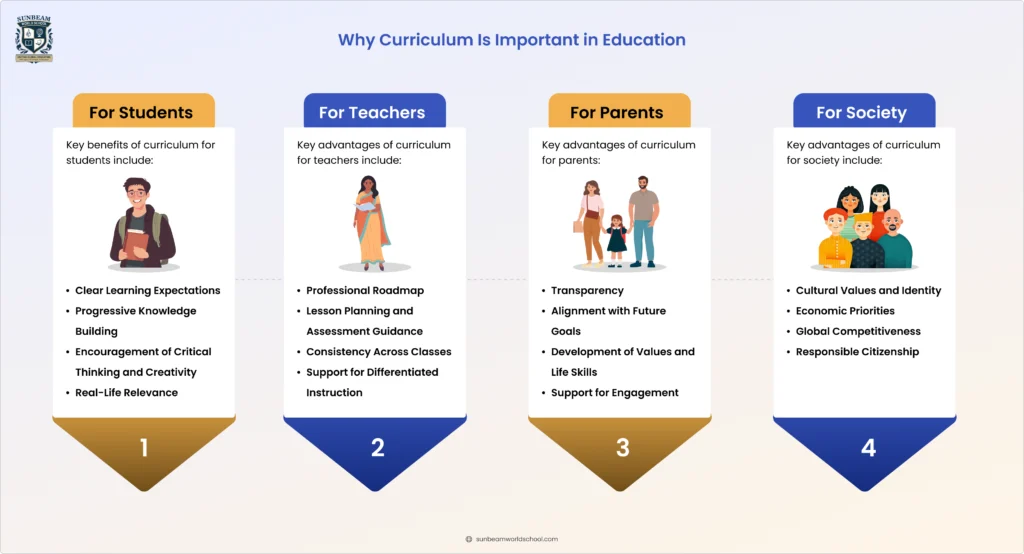
A well-designed curriculum benefits students, guides teachers, informs parents, and strengthens society.
Curriculum is the backbone of any education system. It does more than just outline subjects or chapters—it shapes learning experiences, develops skills, and prepares students for life. A thoughtfully designed curriculum impacts students, teachers, parents, and society in profound ways.
1. For Students
A well-designed school curriculum provides students with clarity, structure, and meaningful learning opportunities. It ensures they progress in a logical, skill-oriented way, building knowledge step by step rather than in isolation.
Key benefits of curriculum for students include:
-Clear Learning Expectations: Students understand what they are expected to learn and achieve, reducing confusion and anxiety.
-Progressive Knowledge Building: Concepts are introduced in a sequence that reinforces prior learning, ensuring mastery before moving to advanced topics.
-Encouragement of Critical Thinking and Creativity: Beyond rote learning, students are guided to analyze, evaluate, and create solutions, fostering independent thought.
-Real-Life Relevance: Curriculum connects classroom lessons to practical applications, helping students see how learning matters in everyday life and future careers.
-Holistic Skill Development: A strong curriculum includes life skills, digital literacy, social-emotional learning, and values, not just academic knowledge.
2. For Teachers
For educators, the curriculum serves as a roadmap and framework that guides teaching while allowing creativity in delivery.
Key advantages of curriculum for teachers include:
-Professional Roadmap: Curriculum provides a clear framework of learning goals and outcomes, helping teachers plan and organize instruction effectively.
-Lesson Planning and Assessment Guidance: It informs the selection of teaching methods, resources, and assessment tools, making lessons purposeful.
-Consistency Across Classes: Ensures all students receive a uniform standard of education, while still leaving room for teacher innovation.
-Support for Differentiated Instruction: Teachers can adapt lessons to meet the needs of diverse learners, ensuring inclusivity and engagement.
-Enhanced Student Outcomes: A structured curriculum helps teachers identify gaps, track progress, and improve overall student achievement.
3. For Parents
Parents rely on curriculum to understand what their child is learning and how education supports future success.
Key advantages of curriculum for parents:
-Transparency: Provides insight into subjects, skills, and knowledge being taught.
-Alignment with Future Goals: Helps parents see whether learning prepares students for higher education, careers, or real-world problem solving.
-Development of Values and Life Skills: Parents can assess how the curriculum nurtures ethics, empathy, leadership, and social skills.
-Support for Engagement: Knowing the curriculum enables parents to reinforce learning at home and support their child’s interests and strengths.
4. For Society
Curriculum shapes not only individual learners but also the future citizens of a nation, reflecting cultural, economic, and social priorities.
Key advantages of curriculum for society include:
-Cultural Values and Identity: Curriculum transmits the heritage, traditions, and ethical values of a community or nation.
-Economic Priorities: Prepares students with skills needed for the workforce, entrepreneurship, and innovation.
-Global Competitiveness: Incorporates international standards, digital literacy, and global perspectives to prepare students for a connected world.
-Responsible Citizenship: Education fosters civic awareness, social responsibility, and empathy, contributing to a healthy, just, and inclusive society.
-Shaping Future Generations: A well-rounded curriculum ensures students grow into capable, informed, and ethical adults, driving societal progress.
Components of a Curriculum
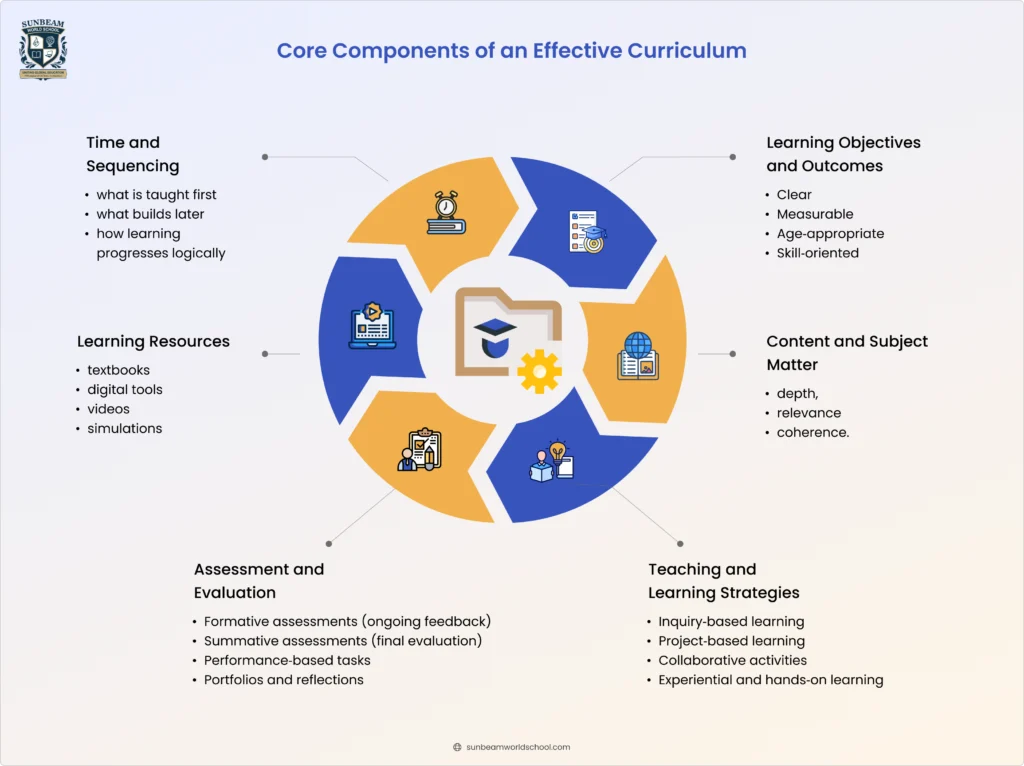
A curriculum is not a single document — it is a multi-layered framework made up of several interconnected components. Understanding these components helps educators design and implement a curriculum that is coherent, purposeful, and effective.
1. Aims, Goals, and Learning Objectives
The starting point of any curriculum is a clear articulation of what it intends to achieve.
- Aims are broad, long-term purposes (e.g., "To develop lifelong learners who contribute positively to society")
- Goals are medium-term targets for specific subjects or programmes (e.g., "Students will develop mathematical reasoning skills")
- Learning Objectives are specific, measurable outcomes for individual lessons or units (e.g., "Students will be able to solve two-step word problems involving multiplication")
These three levels of intent work together to keep curriculum planning focused and purposeful.
2. Content (Subject Matter)
Content refers to the specific knowledge, concepts, facts, principles, and skills that students are expected to learn. It is typically organised by subject area (Mathematics, Science, English, etc.) and sequenced by grade level.
Content selection is guided by criteria such as:
- Validity — Is the content accurate and current?
- Significance — Is it worth knowing?
- Interest — Does it engage learners?
- Learnability — Is it appropriate for the age and ability of students?
- Social usefulness — Does it prepare students for life?
3. Teaching and Learning Experiences
This component describes how the content will be delivered — the strategies, activities, and methods used to help students achieve the learning objectives. It includes:
- Direct instruction and lectures
- Collaborative group work and discussions
- Project-based and inquiry-based learning
- Experiential learning (field trips, labs, simulations)
- Technology-integrated learning (digital tools, AI-assisted platforms)
The choice of teaching methods should be guided by the nature of the content, the age of learners, and the learning objectives.
4. Assessment and Evaluation
Assessment is the mechanism by which student learning is measured and curriculum effectiveness is evaluated. A well-designed curriculum includes:
- Formative assessment — ongoing checks for understanding (quizzes, class discussions, exit tickets)
- Summative assessment — end-of-unit or end-of-year evaluations (exams, projects, portfolios)
- Diagnostic assessment — pre-learning assessments that identify existing knowledge and gaps
- Authentic assessment — real-world tasks that demonstrate applied understanding
Assessment data should not only grade students but also inform teachers about where to adjust instruction.
5. Instructional Materials and Resources
Curriculum implementation requires the right tools and materials, including:
- Textbooks and reference books
- Digital learning platforms and educational apps
- Laboratory equipment and science kits
- Audio-visual resources (videos, documentaries, interactive simulations)
- Library resources and reading materials
The quality, relevance, and accessibility of these resources significantly impact how effectively the curriculum is delivered.
6. Time Allocation and Scheduling
A practical curriculum includes a realistic timetable that allocates sufficient time to each subject and activity. Time allocation decisions must balance:
- Depth vs. breadth of content coverage
- Academic learning time vs. co-curricular activities
- Individual study time vs. collaborative learning
- Examination preparation periods
Poor time management in curriculum planning often leads to rushed teaching and superficial learning.
7. Teacher Preparation and Professional Development
No curriculum succeeds without well-prepared, continuously learning educators. This component encompasses:
- Pre-service teacher training aligned with the curriculum
- Ongoing professional development workshops
- Curriculum orientation and training for new staff
- Collaborative lesson planning and peer review processes
8. Evaluation and Review Mechanism
Finally, a curriculum must include a structured process for reviewing its effectiveness over time. This involves collecting feedback from teachers, students, and parents; analysing student performance data; and making evidence-based revisions to ensure the curriculum remains relevant and effective.
Difference Between Curriculum And Syllabus
While often used interchangeably, curriculum and syllabus serve different purposes in education. Understanding curriculum vs syllabus difference will help parents, teachers, and students know what to expect from learning programs and how education is structured from the big picture down to each subject.
| Aspect | Curriculum | Syllabus |
| Definition | The complete educational plan outlining what, how, and why students learn, including teaching methods, learning objectives, content, and assessments. | A detailed outline of topics, chapters, and content to be covered in a particular subject or course. |
| Scope | Broad and holistic; covers philosophy, objectives, teaching methods, assessments, and learning experiences. | Narrow and specific; limited to content/topics of a single subject. |
| Purpose | To guide overall learning, skill development, and holistic growth. | To guide subject-specific content delivery and exam preparation. |
| Flexibility | Can adapt to different teaching styles, learner needs, and educational goals. | More rigid; usually fixed for a subject or course. |
| Focus | Emphasizes learning outcomes, skills, and values in addition to knowledge. | Emphasizes coverage of topics for exams or assessments. |
| Timeframe | Long-term; spans an academic year or entire program. | Short-term; specific to a course, semester, or unit. |
| Example | CBSE Curriculum for Class 10, IB Diploma Program, Montessori Program | Chapter-wise syllabus for Mathematics Class 10, English Literature Course Syllabus |
| Who Prepares It | Education boards, school authorities, curriculum specialists | Subject teachers, examination boards |
| Evaluation | Includes multiple forms of assessment: formative, summative, performance-based | Mostly exam-oriented, topic-specific assessment |
Why This Distinction Matters
Understanding the difference between curriculum and syllabus is important for several reasons:
- For teachers: Curriculum guides lesson planning philosophy; the syllabus tells you exactly what to teach this term.
- For students: The syllabus tells you what to study for exams; the curriculum determines the kind of learner you are becoming.
- For parents: Asking "what curriculum does the school follow?" gives you the big picture of educational philosophy; asking "what is the syllabus?" tells you what your child is studying this term.
Curriculum Development Process
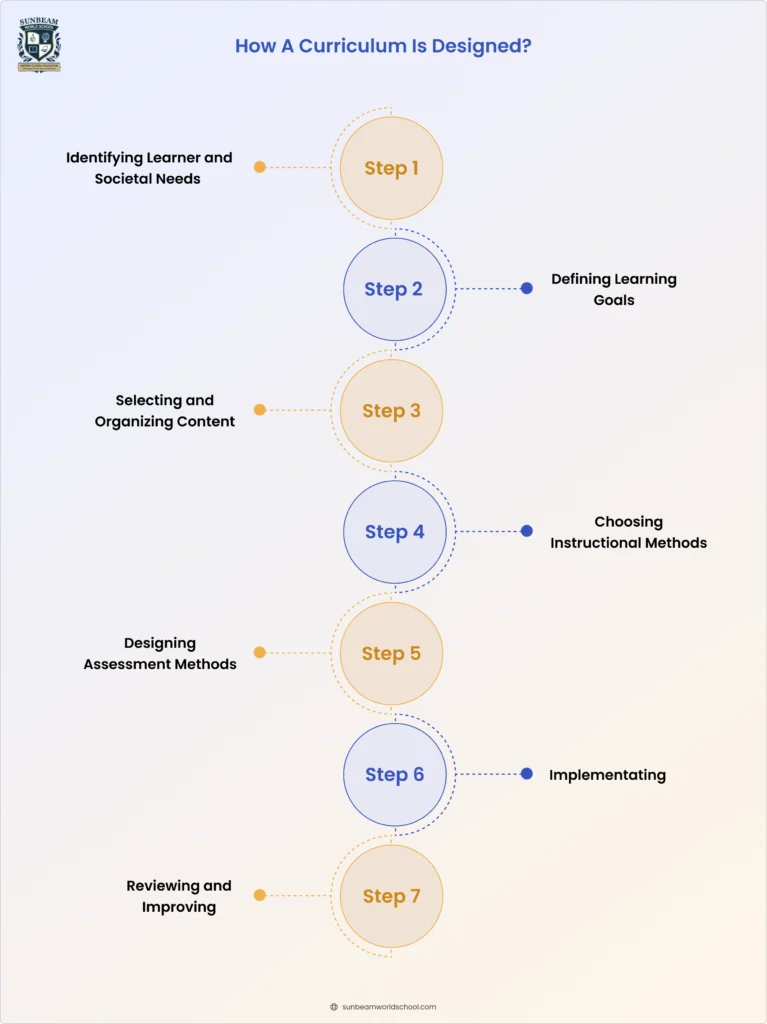
Steps showing how a curriculum is designed in education
Curriculum development is the systematic, collaborative process of designing, implementing, evaluating, and refining the curriculum to ensure it meets the educational needs of students and the goals of society. It is not a one-time event but an ongoing cycle of improvement.
What is Curriculum Development?
Curriculum development involves input from multiple stakeholders — educators, subject matter experts, psychologists, policymakers, parents, and even students — to create learning programmes that are academically rigorous, developmentally appropriate, culturally relevant, and practically useful.
The goal is to bridge the gap between what students currently know and what they need to know and be able to do as responsible, capable citizens.
The 7-Step Curriculum Development Process
Step 1: Needs Assessment
The process begins with a thorough understanding of who the learners are and what they need. This involves:
- Analysing current student performance data
- Identifying gaps in knowledge and skills
- Consulting with teachers, parents, and community stakeholders
- Reviewing national education policies and international benchmarks
A strong needs assessment ensures that the curriculum is relevant and addresses real educational challenges.
Step 2: Defining Learning Objectives
Based on the needs assessment, curriculum designers establish clear, specific, and measurable learning outcomes. These are guided by frameworks such as Bloom's Taxonomy, which organises objectives across six cognitive levels: Remember, Understand, Apply, Analyse, Evaluate, and Create.
Well-defined objectives give the entire curriculum development process a clear direction and make it possible to assess whether the curriculum is achieving its intended purpose.
Step 3: Content Selection and Organisation
This step involves deciding what knowledge, skills, and values will be included in the curriculum and how they will be organised. Content must be:
- Accurate and up-to-date with current knowledge in the field
- Sequentially arranged from simple to complex
- Relevant to students' lives and future needs
- Balanced across different domains of learning
Content is usually organised by subject area, grade level, and term to ensure logical progression.
Step 4: Designing Instructional Strategies
With content decided, curriculum developers then specify how that content will be taught. This includes:
- Recommending specific pedagogical approaches (e.g., inquiry-based learning, collaborative learning, direct instruction)
- Suggesting classroom activities and learning tasks
- Identifying the role of technology in instruction
- Planning for differentiation to meet diverse learner needs
Step 5: Selecting Assessment Methods
Assessment design is an integral part of curriculum development — not an afterthought. This step involves planning:
- Formative assessments that occur throughout the learning process
- Summative assessments that evaluate cumulative learning
- Performance tasks and projects that assess applied understanding
- Rubrics and evaluation criteria that ensure fair and consistent assessment
Assessment methods should align directly with the stated learning objectives — this is known as constructive alignment.
Step 6: Implementation
The curriculum is now ready to be put into practice. Successful implementation requires:
- Teacher orientation and training — ensuring educators understand the curriculum's goals and methods
- Resource provisioning — making textbooks, materials, and digital tools available
- Administrative support — timetabling, scheduling, and resource management
- Monitoring systems — tracking how effectively the curriculum is being delivered
The implementation phase often reveals practical challenges that need to be addressed.
Step 7: Evaluation and Revision
The final — and perhaps most critical — step is evaluating whether the curriculum is achieving its intended outcomes, and making necessary revisions. Evaluation involves:
- Analysing student performance data
- Collecting feedback from teachers and learners
- Reviewing relevance in light of social and technological changes
- Comparing outcomes with stated learning objectives
Curriculum development is a cyclical process — the insights from evaluation feed back into the next round of needs assessment, and the cycle begins again.
Factors That Influence Curriculum Development
Several internal and external factors shape how curricula are designed and revised:
Social and Cultural Factors: The values, traditions, and social norms of a community influence what is considered important to teach. In India, curricula must reflect the country's rich cultural diversity while also preparing students for a globalised world.
Political and Policy Factors: Government priorities and education policies significantly direct curriculum development. The National Education Policy (NEP) 2020 in India, for instance, has catalysed major curriculum reforms, including the shift to a 5+3+3+4 school structure and emphasis on mother tongue instruction.
Economic Factors: The needs of the labour market influence what skills and subjects are prioritised in the curriculum. The growing demand for STEM skills, financial literacy, and digital competencies has reshaped curricula in recent years.
Technological Advancements: Rapid changes in technology require curricula to evolve continuously. The integration of AI, coding, data literacy, and digital citizenship into school curricula is a direct response to the digital transformation of the global economy.
Research and Educational Theory: Advances in learning science — including our understanding of cognitive development, memory, and motivation — continuously inform best practices in curriculum design.
Modern Trends in Curriculum Designing
Education is evolving rapidly, and modern curriculum design reflects changes in skills, technology, and global perspectives.
-Skill-Based Learning: Focuses on developing communication, collaboration, creativity, and critical thinking, preparing students for real-world challenges and careers.
-Digital and Blended Curriculum: Combines online tools with traditional teaching methods, offering flexibility, accessibility, and interactive learning experiences.
-Personalized Learning Pathways: Adapts curriculum to individual learner pace, interests, and abilities, ensuring higher engagement and mastery of concepts.
-Global and Cultural Relevance: Integrates diverse perspectives, cultural awareness, and global citizenship education to create informed and empathetic learners.
-Social and Emotional Learning (SEL): Helps students build empathy, resilience, self-awareness, and emotional regulation for personal and social growth.
Challenges in Curriculum Implementation
Implementing a curriculum is often more complex than designing it, as schools face practical, resource-based, and instructional challenges that affect learning outcomes.
1. Diverse Learner Needs
Meeting the varying abilities, learning styles, and backgrounds of students can be difficult, making it challenging to ensure all learners achieve the intended outcomes without gaps or frustration. Schools need adaptive strategies to address differences effectively.
2. Teacher Training Gaps
Teachers may lack adequate professional development or guidance to effectively deliver new curricula, limiting teaching quality and reducing alignment with learning goals. Continuous training and support are crucial for successful curriculum implementation.
3. Resource Limitations
Insufficient textbooks, digital tools, lab equipment, or classroom materials can hinder practical implementation and prevent students from engaging fully with curriculum activities. Adequate funding and resource planning are essential for a smooth rollout.
4. Overemphasis on Exams
Focusing primarily on test scores may restrict creative, skill-based, or experiential learning, reducing the curriculum’s effectiveness in developing holistic knowledge and competencies. Balanced evaluation methods help foster critical thinking and real-world skills.
5. Resistance to Change
Educators, administrators, or parents may resist curriculum updates due to comfort with traditional methods, slowing adoption of modern, innovative approaches. Effective communication and showcasing benefits can reduce resistance and encourage acceptance.
6. Inadequate Assessment Alignment
Assessments that don’t match learning objectives can misrepresent student progress and fail to reinforce critical skills and understanding. Aligning evaluation with goals ensures meaningful feedback and supports continuous improvement.
Curriculum Examples Models in Practice
Curriculum theories come alive in real classrooms. Schools adopt models that best fit their teaching philosophy, student needs, and educational goals. Here’s how different curriculum models work in practice:
1. Traditional Schools – Subject-Centered Curriculum
Focuses on teaching each subject separately, emphasizing exams and academic mastery.
Examples: CBSE, ICSE, Common Core schools.
Key Features:
-Teacher-led instruction
-Content-heavy syllabus
-Structured learning progression
Outcomes:
-Strong subject knowledge
-Clear academic structure
-Limited interdisciplinary connections
2. Alternative Schools – Learner-Centered & Activity-Based Curriculum
Prioritizes student interests, choice, and hands-on learning through projects and activities.
Examples: Montessori schools, Reggio Emilia-inspired programs, project-based learning schools.
Key Features:
-Self-directed and inquiry-based learning
-Active, experiential activities
-Flexible pacing based on learner needs
Outcomes:
-Develops independence, critical thinking, and problem-solving skills
-Higher student engagement and motivation
3. International Schools – Integrated & Competency-Based Curriculum
Combines interdisciplinary learning with skill mastery, aligning with global standards.
Examples: IB (International Baccalaureate), Cambridge IGCSE programs.
Key Features:
-Holistic and interdisciplinary approach
-Emphasis on real-world competencies
-Global perspectives incorporated in learning
Outcomes:
-Internationally recognized qualifications
-Strong critical thinking and adaptability
-Preparation for higher education and global opportunities
4. Online Schools – Personalized & Digital Curriculum
Uses technology to offer self-paced, flexible learning pathways with interactive content.
Examples: Sunbeam World School demonstrates how an online curriculum can combine global standards with individualized learning experiences.
Key Features:
-Digital tools and platforms for learning
-Personalized instruction and adaptive learning paths
-Blend of live and asynchronous teaching
Outcomes:
-Self-paced learning
-Access to global resources
-Interactive and engaging experiences
5. Vocational & Skill-Oriented Schools – Competency-Based Curriculum
Focuses on skill mastery and practical outcomes rather than time spent in class.
Examples: Technical institutes, coding bootcamps, culinary schools.
Key Features:
-Hands-on, performance-based assessments
-Outcome-focused learning paths
-Flexible timelines for mastery
Outcomes:
-Proficiency in specific skills
-Career-ready graduates
-Strong alignment with industry needs
How Parents Can Evaluate a School’s Curriculum
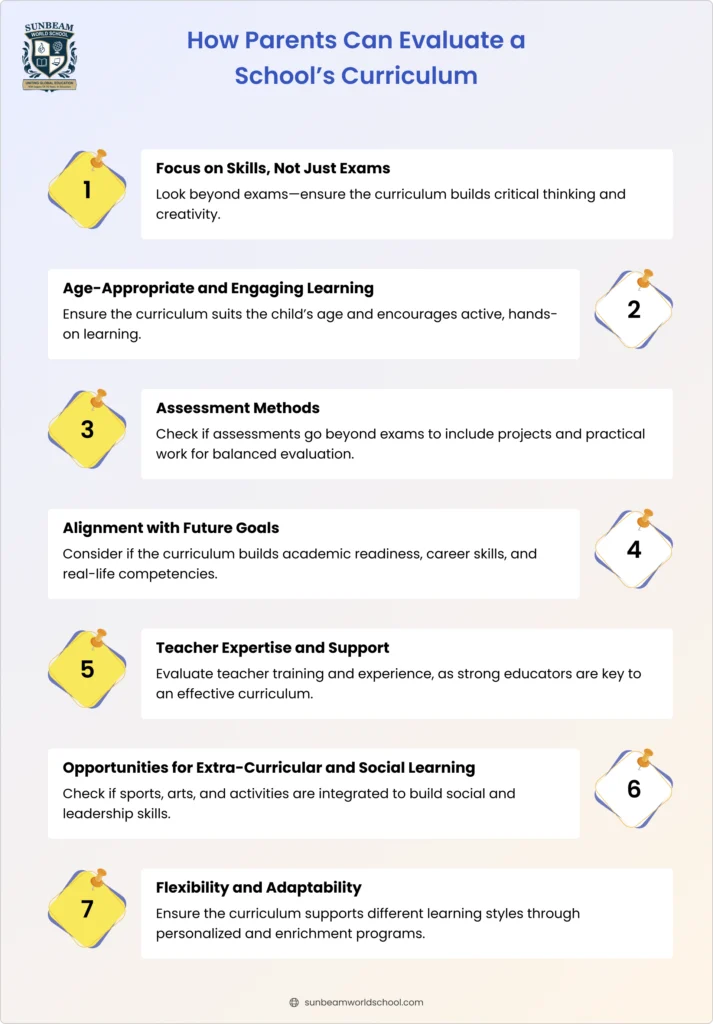
A practical checklist to help parents choose a school with a strong, future-ready curriculum.
Choosing the right school is not just about facilities or reputation—it’s about the quality and relevance of the curriculum. Parents play a key role in understanding how a school prepares students for the future. Here’s a practical guide to evaluating a school’s curriculum:
1. Focus on Skills, Not Just Exams
-Check whether the curriculum emphasizes critical thinking, creativity, and problem-solving alongside academic grades.
-Schools that focus solely on exams may neglect holistic skill development.
2. Age-Appropriate and Engaging Learning
-Evaluate whether the curriculum is designed for the child’s age and developmental stage.
-Look for interactive, hands-on activities that make learning engaging rather than passive.
3. Assessment Methods
-Ask about how students are evaluated: Are there only written exams, or are projects, portfolios, and practical assessments included?
-Balanced assessment methods give a better picture of learning and skills.
4. Alignment with Future Goals
-Consider whether the curriculum prepares students for higher education, career readiness, and life skills.
-International or competency-based programs may offer broader opportunities and flexibility.
5. Teacher Expertise and Support
-A curriculum is only as effective as the teachers delivering it.
-Ask about teacher training, professional development, and their experience in implementing the curriculum.
6. Opportunities for Extra-Curricular and Social Learning
-Check if the school integrates sports, arts, clubs, and social projects as part of the informal or integrated curriculum.
-These experiences enhance social, emotional, and leadership skills.
7. Flexibility and Adaptability
-The best curricula adapt to different learning styles and student needs.
-Ask how the school supports personalized learning, remediation, or enrichment programs.
Common Curriculum Mistakes Schools Should Avoid
Designing and implementing a curriculum is challenging. Avoiding these common mistakes can ensure learning is effective, engaging, and future-ready.
Mistake 1: Overloading Content
Including too many topics or excessive information can overwhelm students, reduce the depth of learning, and hinder long-term retention. Focus on quality over quantity.
Mistake 2: Ignoring Learner Diversity
A one-size-fits-all approach fails to address different learning styles, abilities, and interests, leaving some students behind. Personalized or differentiated learning is essential.
Mistake 3: Lack of Clear Learning Objectives
Without well-defined goals, teaching can become random or inconsistent, making it difficult to measure progress and ensure meaningful outcomes.
Mistake 4: Overemphasis on Exams
Focusing solely on grades can limit creativity, critical thinking, and practical skill development, turning learning into rote memorization rather than understanding.
Mistake 5: Poor Teacher Training
Even a well-designed curriculum fails without adequately trained teachers. Regular professional development is critical for effective delivery.
Mistake 6: Neglecting Life Skills and Values
Academic knowledge alone is not enough. Schools often overlook emotional, social, and ethical development, which are vital for holistic growth.
Mistake 7: Lack of Regular Review and Updates
Curricula that remain static become outdated. Failing to review and revise content, methods, and assessments can make learning irrelevant for today’s world.
Mistake 8: Insufficient Integration of Technology
Modern education requires digital literacy and tech-enabled learning. Ignoring technology limits student engagement and preparedness for the digital world.
Mistake 9: Weak Assessment Alignment
Assessments not aligned with learning objectives can misrepresent student understanding and fail to reinforce the intended skills or knowledge.
Mistake 10: Ignoring Parental Involvement
Parents play a critical role in reinforcing learning. Lack of communication about curriculum goals and progress can hinder student support at home.
Curriculum Available at Sunbeam World School
Sunbeam World School offers a range of internationally recognised curriculum tracks to meet diverse learning goals and global education standards:
1. American Curriculum
This curriculum is based on U.S. educational frameworks, like the Common Core State Standards and Next Generation Science Standards, emphasising creativity, problem-solving, and real-world readiness. It prepares students for admission to universities in the U.S., Canada, the UK, and other systems.
2. British (Cambridge) Curriculum
The British curriculum provides a globally structured academic pathway, focused on analytical thinking, conceptual clarity, and international standards, commonly structured around IGCSE and A-Level frameworks.
3. Indian Curriculum (CBSE-Aligned & NIOS)
Sunbeam World School offers programs aligned with the Central Board of Secondary Education (CBSE) plus options like the National Institute of Open Schooling (NIOS), including its Open Basic Education (OBE) programme, which supports flexible, inclusive learning paths.
4. WACE Curriculum
The Western Australian Certificate of Education (WACE) curriculum is based on the educational framework developed by the School Curriculum and Standards Authority in Western Australia. It emphasises academic excellence, critical thinking, practical learning, and university readiness through a flexible course structure. The curriculum prepares students for higher education and career pathways in Australia and is widely recognised by universities in countries such as the UK, Canada, the U.S., and New Zealand.
5. Multi-Board Homeschooling Programs
For homeschooling families and international learners, Sunbeam World School supports multiple board pathways such as CBSE, NIOS, and Cambridge, enabling students to choose curricula that match their academic goals and geographic mobility.
6. Skill-Enhanced Learning Integration
Across all curriculum tracks, Sunbeam World School incorporates co-curricular and skill development elements—such as coding, robotics, foreign languages, creativity workshops, and life skills—to ensure a holistic education that goes beyond academics.
How Sunbeam World School’s Curriculum Shapes Real Classroom Learning
At Sunbeam World School, the curriculum goes beyond textbooks to shape how students engage, apply knowledge, and grow academically and personally. With American, British (Cambridge), and Indian (CBSE/NIOS) pathways, lessons are flexible yet aligned with clear learning outcomes.
Classrooms—live online or blended—feature interactive lessons, discussions, projects, and real-world problem-solving, moving students beyond rote learning. Continuous assessment through assignments, presentations, quizzes, and skill-based activities ensures progress tracking and personalized feedback.
By fostering a learner-centered culture, the curriculum develops critical thinking, collaboration, communication, and digital skills, making learning meaningful and future-ready.
BONUS BOX:Major Curriculum Theories and PhilosophiesUnderstanding the philosophies behind a curriculum helps parents and educators see why it’s designed a certain way, not just what it includes. 1. Behaviorist Curriculum TheoryFocuses on observable outcomes. Learning is broken into small steps, reinforced through repetition and testing. -Best for: Foundational skills, early literacy/numeracy, exam preparation. -Limitations: Can overlook creativity, critical thinking, and deeper understanding of concepts. 2. Constructivist Curriculum TheoryLearners actively construct knowledge through experiences and reflection. -Best for: Project-based, inquiry-driven, and experiential learning classrooms. -Limitations: Can be time-consuming, harder to standardize, and may challenge teachers used to traditional methods. 3. Humanistic Curriculum TheoryCenters on the whole learner — emotional, social, and intellectual growth. -Best for: Learner-centered schools, personalized learning, alternative education models. -Limitations: May lack focus on standardized outcomes and measurable academic achievement. 4. Social Reconstructionist CurriculumUses education as a tool for social change, addressing real-world issues. -Best for: Global curricula, citizenship education, interdisciplinary programs. -Limitations: Can be politically or socially sensitive; may challenge traditional content coverage and assessment structures. These theories show that curriculum is not just about content—it’s shaped by a vision of learning and the kind of students schools aim to develop, helping parents and educators evaluate schools more insightfully. |
Conclusion
Curriculum is the backbone of an effective education; it shapes what students learn, how they learn, and how well they are prepared for the future. A well-designed curriculum goes beyond textbooks, integrating skills, values, real-world application, and continuous assessment to create meaningful learning experiences.
Sunbeam World School demonstrates how a thoughtfully structured curriculum can translate into impactful classroom learning. We at Sunbeam World School, ensure learners receive education that is relevant, engaging, and future-ready. Through interactive teaching methods, continuous evaluation, and a learner-centered approach, the curriculum at Sunbeam World School supports both academic success and holistic student development.
Give your child the advantage of a future-focused education. Enroll at Sunbeam World School and begin a journey of confident, joyful learning.
Happy Schooling!

Frequently Asked Questions
What is Curriculum?
-Curriculum is the structured framework that defines what students learn, how learning is delivered, and how progress is assessed, including subjects, skills, values, teaching methods, and learning experiences across an educational program.
What is the curriculum in schools?
+What is the purpose of the curriculum?
+How often should a curriculum be updated?
+How does Curriculum differ in online schools?
+Is Curriculum the same as a syllabus?
+Why is curriculum important in education?
+What is a learning experience in the curriculum?
+What is the National Curriculum Framework?
+
In this article
Share this post:


Press and Blogs
Stay updated with our press releases, educational blogs, and more.
For NRI families moving to Australia, choosing between WACE and IGCSE depends on long-term plans...
The CBSE new curriculum 2026-27 introduces significant reforms aligned with NEP 2020, moving away from...
What after IGCSE? After completing IGCSE, students usually move to A Levels (2 years) to...