
 Kids Learning
100+ Fruits Name in English for Kids – Complete Guide for Easy learning
| This comprehensive 100 fruits name A-Z guide helps kids learn fruit names, their color, and how they taste, along with fruit name pictures and fun quizzes to make learning interactive and memorable. Here are some of the common Fruits name in English which your kids should learn – Apple, Banana, Mango, Orange, Grapes, Strawberry, Watermelon, Pineapple, Papaya, Pear, Kiwi, Cherry, Blueberry, and Pomegranate, along with tropical, exotic. Also teach them names of rare fruits varieties such as Dragon Fruit, Star Fruit, Lychee, Passion Fruit, Avocado, Coconut, Guava, Lemon, Lime, Peach, Plum, Fig, and Grapefruit. Enjoy this detailed 100+ fruit name arranged alphabetically from A – Z with pictures. |
Are you a parent or caregiver looking to make learning fruit names fun and easy for your kids? Teaching children fruit names goes beyond words—it helps your kids recognize how these fruits look, what is their name, color, texture, and taste. From everyday favorites like apples, bananas, and oranges to exotic fruits like dragon fruit, star fruit, and passion fruit, this comprehensive fruit name with picture guide makes it simple for kids to learn, identify, and enjoy fruits.
Let’s learn 100 nombres de frutas in a simple and engaging way.
| Quick Definition – What is a Fruit? Fruits are the edible, seed-bearing parts of flowering plants that develop from the ovary after fertilization. They are usually sweet or tangy in taste and are rich in essential nutrients like vitamins, minerals, fiber, and antioxidants, making them important for a healthy diet. When To Start Teaching Kids Names of Different Fruits? You can start teaching fruits names as early as when your babies are 6-12 months old, and introduce more varieties of fruits when they are around 12- 18 months old. If your kid is into vocabulary expansion age (18-23 months old), you can teach them around 10-20 fruit names. At the age of 4 years you can start introducing exotic fruits names to them along with explaining their texture, taste, and colors. |
Watch this fun and engaging A-Z fruits name video to help kids learn fruit names easily with colorful visuals and pronunciation.
100+ Fruits Name in English – Easy List for Parents To Teach Kids
Now, let’s explore a visual fruit chart that makes learning even more fun and easy.
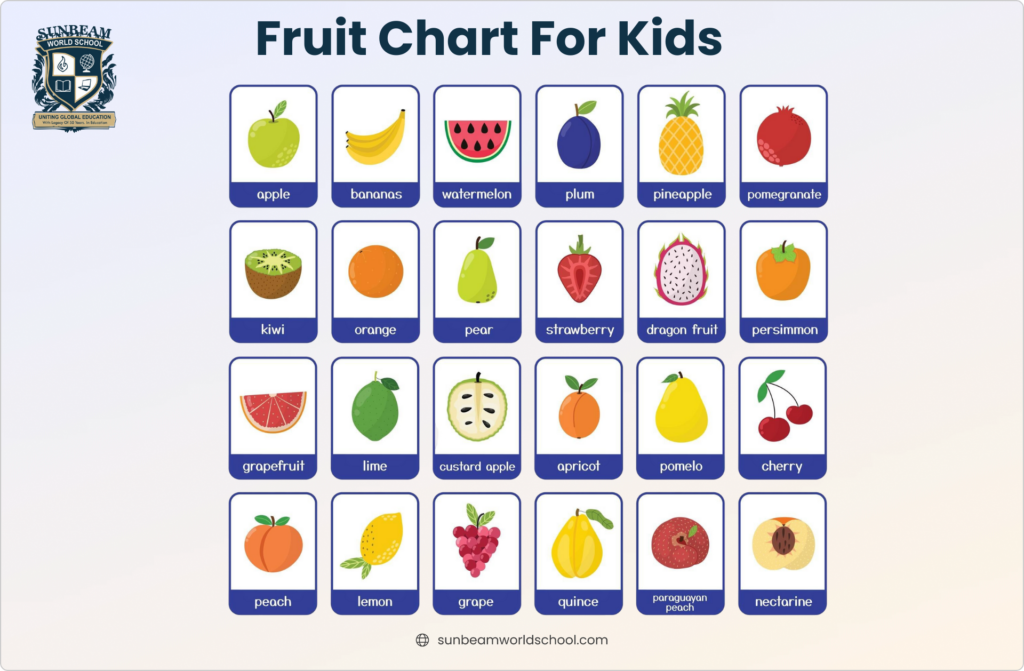
A simple and colorful fruit chart to help kids learn fruit names in English.
You can use this chart to practice fruit names daily and improve memory through repetition.
Also, check out the table below for all Fruits Name in English for Kids
| Apple | Banana | Mango | Orange |
| Grapes | Pineapple | Papaya | Watermelon |
| Cherry | Strawberry | Blueberry | Raspberry |
| Kiwi | Guava | Pomegranate | Pear |
| Peach | Plum | Apricot | Lychee |
| Coconut | Fig | Date | Mulberry |
| Avocado | Blackberry | Cranberry | Dragonfruit |
| Passion Fruit | Starfruit | Custard Apple | Jackfruit |
| Sapota (Chikoo) | Tamarind | Amla (Indian Gooseberry) | Wood Apple |
| Lemon | Lime | Tangerine | Sweet Lime (Mosambi) |
| Nectarine | Quince | Persimmon | Mangosteen |
| Rambutan | Longan | Durian | Breadfruit |
| Gooseberry | Elderberry | Huckleberry | Jabuticaba |
| Kiwano | Feijoa | Nance | Miracle Fruit |
| Olive | Noni | Bael | Rose Apple |
| Sugar Apple | Red Banana | Ice Apple | Velvet Apple |
| Ugli Fruit | Xigua | Yuzu | Ziziphus (Jujube) |
Fruits Names Starting with A
1. Apple
Apples are crisp, juicy fruits enjoyed worldwide in many varieties and flavors. They are rich in dietary fiber, vitamin C, and antioxidants, supporting digestion, heart health, and immunity while making a filling, low-calorie everyday snack.
2. Apricot
Apricots are small, golden-orange fruits with a soft texture and mildly sweet taste. They contain vitamin A, vitamin C, and potassium, helping improve eye health, skin quality, and digestion when eaten fresh or dried.
3. Avocado
Avocado is a creamy fruit known for its healthy monounsaturated fats. It provides fiber, potassium, vitamin E, and folate, supporting heart health, brain function, and skin nourishment while keeping you full for longer periods.
4. Amla (Indian Gooseberry)
Amla is a sour green fruit widely used in Ayurvedic medicine. Extremely rich in vitamin C and antioxidants, it boosts immunity, improves digestion, supports hair growth, and helps regulate blood sugar naturally.
5. Ackee
Ackee is a tropical fruit native to West Africa and commonly eaten in Jamaica. When properly ripe and cooked, it provides healthy fats, protein, and minerals, but unripe ackee can be toxic and unsafe.
Fruits Names Starting with B
1. Banana
Bananas are soft, naturally sweet fruits packed with potassium, vitamin B6, and fiber. They provide instant energy, support muscle function, improve digestion, and are easy to eat, making them ideal for all age groups.
2. Blueberry
Blueberries are small, deep-blue berries loaded with antioxidants. They support brain health, improve memory, reduce inflammation, and strengthen immunity while being low in calories and high in fiber and vitamin C.
3. Blackberry
Blackberries are juicy berries with a slightly tart flavor. Rich in fiber, vitamin K, and antioxidants, they support digestion, bone health, and heart function while promoting healthy skin and reducing oxidative stress.
4. Boysenberry
Boysenberries are a hybrid berry combining raspberry, blackberry, and loganberry. They are rich in vitamin C, fiber, and antioxidants, supporting immune health, digestion, and overall wellness with a sweet-tart flavor.
5. Breadfruit
Breadfruit is a starchy tropical fruit commonly cooked before eating. It provides complex carbohydrates, fiber, and potassium, making it a filling energy source that supports digestion and is often used as a vegetable substitute.
Fruits Names Starting with C
1. Cherry
Cherries are small, round fruits with a sweet or tart taste. They are rich in antioxidants and melatonin, helping reduce inflammation, improve sleep quality, support heart health, and aid muscle recovery after physical activity.
2. Coconut
Coconut is a versatile tropical fruit providing coconut water, flesh, and oil. It contains healthy fats, electrolytes, and fiber, supporting hydration, digestion, and sustained energy while being widely used in cooking.
3. Cranberry
Cranberries are tart red berries known for urinary tract health benefits. They contain antioxidants and vitamin C, helping prevent infections, support immune function, and reduce inflammation when consumed fresh or unsweetened.
4. Custard Apple
Custard apples have a creamy texture and sweet flavor. It is rich in vitamin B6, vitamin C, and magnesium, supporting brain function, digestion, energy production, and healthy skin when eaten ripe.
5. Cantaloupe
Cantaloupe is a refreshing melon with orange flesh and mild sweetness. High in water content, vitamin A, and vitamin C, it supports hydration, eye health, and immunity while being low in calories.
Fruits Names Starting with D
1. Date
Dates are naturally sweet fruits often eaten dried. They are rich in fiber, iron, potassium, and antioxidants, supporting digestion, energy levels, and heart health while serving as a natural alternative to refined sugar.
2. Dragon Fruit
Dragon fruit has a vibrant appearance with mildly sweet flesh. It contains fiber, vitamin C, and antioxidants, supporting digestion, gut health, and immunity while being low in calories and visually appealing.
3. Durian
Durian is a strong-smelling tropical fruit with creamy flesh. It provides healthy fats, fiber, and vitamins like B6, supporting energy production and digestion, though its taste and aroma are often an acquired preference.
4. Damson Plum
Damson plums are small, dark-purple fruits with a tart flavor. They are rich in antioxidants, vitamin C, and fiber, supporting digestion, immune health, and skin protection when eaten fresh or cooked.
5. Desert Lime
Desert lime is a native Australian citrus fruit with a sharp, tangy taste. It contains vitamin C and antioxidants, supporting immunity and digestion while being commonly used in sauces and gourmet cooking.
Fruits Names Starting with E
1. Elderberry
Elderberries are small dark berries traditionally used in syrups and teas. They are rich in antioxidants and vitamin C, helping boost immunity, reduce cold symptoms, and support overall respiratory health.
2. Eggfruit (Canistel)
Eggfruit has a custard-like texture and sweet flavor resembling pumpkin pie. It provides fiber, vitamin A, and carbohydrates, supporting digestion and energy while being commonly eaten fresh or in desserts.
3. Entawak
Entawak is a tropical fruit related to jackfruit with soft, sweet pulp. It contains carbohydrates and vitamins, offering quick energy and is commonly consumed fresh in Southeast Asian regions.
4. Emu Apple
Emu apple is an Australian native fruit rich in antioxidants. Traditionally used by Indigenous communities, it supports skin health, digestion, and immunity while gaining attention for its nutritional and cosmetic benefits.
5. Evergreen Huckleberry
Evergreen huckleberries are dark berries with a slightly tart taste. They contain antioxidants and fiber, supporting digestion, heart health, and cellular protection while being traditionally harvested in forest regions.
Fruits Names Starting with F
1. Fig
Figs are soft, sweet fruits with edible seeds. They are rich in fiber, calcium, and antioxidants, supporting digestion, bone health, and heart function while being enjoyed fresh or dried.
2. Feijoa
Feijoa is a fragrant fruit with a sweet-tangy flavor. It provides vitamin C, fiber, and antioxidants, supporting immune health and digestion while being commonly eaten raw or added to desserts.
3. Finger Lime
Finger lime is a citrus fruit with caviar-like pulp. Rich in vitamin C and antioxidants, it enhances digestion, immunity, and culinary appeal, often used in gourmet dishes and seafood recipes.
4. Fox Grape
Fox grapes are native American grapes with a strong aroma. They contain antioxidants and vitamins that support heart health and immunity, commonly used in juices, jams, and traditional grape products.
5. Flat Peach
Flat peaches, also called donut peaches, are sweet and aromatic fruits. They provide vitamin C, fiber, and antioxidants, supporting digestion, hydration, and skin health while being easy to eat.
Fruits Names Starting with G
1. Grapes
Grapes are small, juicy fruits available in green, red, and black varieties. They are rich in antioxidants, vitamin K, and natural sugars, supporting heart health, hydration, digestion, and providing quick energy when eaten fresh.
2. Guava
Guava is a tropical fruit with a sweet and slightly tangy flavor. It is extremely high in vitamin C, fiber, and antioxidants, helping boost immunity, improve digestion, regulate blood sugar, and support healthy skin.
3. Grapefruit
Grapefruit is a citrus fruit known for its bitter-sour taste. It contains vitamin C, fiber, and antioxidants that support weight management, improve digestion, strengthen immunity, and promote heart health when eaten fresh.
4. Gooseberry
Gooseberries are small, round fruits with a tart flavor. They provide vitamin C, fiber, and antioxidants, supporting digestion, immunity, skin health, and overall wellness when consumed fresh, cooked, or preserved.
5. Golden Kiwi
Golden kiwi has smooth skin and sweet yellow flesh. It is rich in vitamin C, fiber, and antioxidants, helping improve digestion, boost immunity, and support eye and skin health naturally.
Fruits Name With H
1. Honeydew Melon
Honeydew melon is a sweet, pale-green fruit with high water content. It provides hydration, vitamin C, potassium, and fiber, supporting digestion, skin health, and temperature regulation during hot weather.
2. Huckleberry
Huckleberries are small dark berries similar to blueberries. They are rich in antioxidants, vitamin C, and fiber, helping improve immunity, digestion, heart health, and reducing oxidative stress in the body.
3. Hackberry
Hackberries are small fruits with a thin sweet flesh surrounding a large seed. They provide carbohydrates, antioxidants, and minerals, offering quick energy and were traditionally consumed by Indigenous communities.
4. Horned Melon
Horned melon, also known as kiwano, has spiky skin and jelly-like flesh. It contains vitamin C, magnesium, and antioxidants, supporting hydration, digestion, and immune health with a mildly refreshing taste.
5. Hawthorn Berry
Hawthorn berries are small red fruits traditionally used for heart health. They contain antioxidants and flavonoids that support blood circulation, cardiovascular function, and digestion when consumed in controlled amounts.
Fruits Names Starting With I
1. Indian Fig (Prickly Pear)
Indian fig is a cactus fruit with sweet, juicy pulp. It is rich in fiber, vitamin C, and antioxidants, helping support digestion, regulate blood sugar, and improve hydration in warm climates.
2. Indian Jujube
Indian jujube is a small fruit with a crisp texture and sweet taste. It provides vitamin C, fiber, and minerals, supporting immunity, digestion, and energy levels when eaten fresh or dried.
3. Illawarra Plum
Illawarra plum is an Australian native fruit with dark purple skin. It is rich in antioxidants and anthocyanins, supporting skin health, cellular protection, and overall wellness when consumed fresh or processed.
4. Ice Apple
Ice apple is a translucent fruit from palm trees, commonly eaten in summer. It provides hydration, electrolytes, and cooling properties, helping prevent heat-related fatigue and supporting digestion naturally.
5. Imbe Fruit
Imbe is a tropical African fruit with a sweet-tangy flavor. It contains vitamin C and antioxidants, supporting immune health, digestion, and refreshing energy when eaten ripe.
Fruits Name Starting With J
1. Jackfruit
Jackfruit is the largest tree-grown fruit with sweet yellow bulbs. It provides fiber, vitamin C, and carbohydrates, supporting digestion, immunity, and energy, and is widely used in both sweet and savory dishes.
2. Jujube
Jujube is a small, apple-like fruit with a sweet flavor when ripe. It contains antioxidants, vitamin C, and fiber, supporting immunity, digestion, sleep quality, and overall vitality.
3. Java Plum
Java plum, also called jamun, has a deep purple color and tangy taste. It supports blood sugar regulation, digestion, and immunity due to its antioxidants, fiber, and bioactive compounds.
4. Japanese Persimmon
Japanese persimmon is a bright orange fruit with a honey-like sweetness. It contains vitamin A, vitamin C, and antioxidants, supporting eye health, immunity, and digestion when fully ripe.
5. Jabuticaba
Jabuticaba is a Brazilian fruit that grows directly on tree trunks. It is rich in antioxidants, vitamin C, and fiber, supporting digestion, heart health, and immune function.
Fruits Names Starting With K
1. Kiwi
Kiwi is a small fruit with green flesh and tiny seeds. It is rich in vitamin C, fiber, and antioxidants, supporting digestion, immunity, heart health, and improved nutrient absorption.
2. Kumquat
Kumquat is a small citrus fruit eaten whole, including the peel. It provides vitamin C, fiber, and antioxidants, supporting digestion, immunity, and gut health with a unique sweet-sour flavor.
3. Kaffir Lime
Kaffir lime is a citrus fruit mainly used for its aromatic peel and leaves. It contains vitamin C and antioxidants, supporting digestion, immunity, and flavor enhancement in culinary applications.
4. Kiwano
Kiwano, or horned melon, has a mildly sweet and refreshing taste. It provides hydration, vitamin C, and antioxidants, supporting digestion, skin health, and electrolyte balance in hot climates.
5. Kerson Fruit
Kerson fruit, also called Jamaican cherry, is a small red berry. It contains vitamin C and antioxidants, supporting immunity, digestion, and providing a naturally sweet snack.
Fruits Names Starting With L
1. Lemon
Lemon is a citrus fruit known for its sour taste. It is rich in vitamin C and antioxidants, supporting immunity, digestion, skin health, and detoxification when consumed as juice or whole.
2. Lychee
Lychee is a tropical fruit with juicy, sweet flesh. It provides vitamin C, antioxidants, and hydration, supporting immune health, digestion, and skin vitality when eaten fresh.
3. Longan
Longan is similar to lychee but milder in flavor. It contains vitamin C, iron, and antioxidants, supporting blood health, immunity, and energy levels when consumed fresh or dried.
4. Loquat
Loquat is a small fruit with a sweet-tart taste and soft flesh. It provides vitamin A, vitamin C, and fiber, supporting eye health, digestion, and immune function.
5. Lucuma
Lucuma is a South American fruit with a naturally sweet flavor. It contains fiber, beta-carotene, and minerals, supporting digestion, skin health, and energy while often used as a natural sweetener.
Fruits Name Starting With M
1. Mango
Mango is a popular tropical fruit known for its juicy texture and sweet flavor. It is rich in vitamin A, vitamin C, and antioxidants, supporting eye health, immunity, digestion, and natural energy levels.
2. Melon
Melon is a refreshing fruit with high water content and mild sweetness. It provides hydration, vitamin C, potassium, and fiber, helping regulate body temperature, support digestion, and keep the body cool.
3. Mulberry
Mulberries are small berries with a sweet-tart taste. They are rich in iron, vitamin C, and antioxidants, supporting blood health, immunity, digestion, and reducing oxidative stress in the body.
4. Mandarin
Mandarin is a small citrus fruit with easy-to-peel skin and sweet flavor. It contains vitamin C, fiber, and antioxidants, supporting immunity, digestion, skin health, and hydration when eaten fresh.
5. Muskmelon
Muskmelon has soft orange flesh and a pleasant aroma. Rich in vitamin A, vitamin C, and water content, it supports hydration, skin health, digestion, and provides cooling relief in summer.
Fruits Name Starting With N
1. Nectarine
Nectarine is a smooth-skinned stone fruit similar to peaches. It provides vitamin C, fiber, and antioxidants, supporting digestion, skin health, immunity, and hydration with a naturally sweet taste.
2. Nance
Nance is a small yellow tropical fruit with a sweet-tart flavor. It contains vitamin C, fiber, and antioxidants, helping support digestion, immunity, and overall metabolic health.
3. Noni
Noni is a tropical fruit with a strong aroma and bitter taste. Traditionally used in herbal remedies, it contains antioxidants and compounds that support immunity, digestion, and general wellness.
4. Nutmeg Fruit
Nutmeg fruit surrounds the nutmeg seed and has mild sweetness. It contains antioxidants and fiber, supporting digestion and traditional medicinal uses, especially in tropical regions.
5. Natal Plum
Natal plum is a small red fruit with a sweet-tart flavor. It is rich in vitamin C and antioxidants, supporting immune health, digestion, and natural energy when eaten fresh.
Fruits Name Starting With O
1. Orange
Orange is a citrus fruit famous for its refreshing taste and vitamin C content. It supports immunity, skin health, hydration, digestion, and provides antioxidants that help protect the body from illness.
2. Olive
Olive is a small fruit commonly used for oil production. It contains healthy fats, antioxidants, and vitamin E, supporting heart health, brain function, and reducing inflammation naturally.
3. Orangelo
Orangelo is a hybrid citrus fruit combining orange and grapefruit. It offers vitamin C, fiber, and antioxidants, supporting immunity, digestion, and heart health with a balanced sweet-sour taste.
4. Osage Orange
Osage orange is a large, rough-textured fruit not commonly eaten raw. Traditionally used for medicinal purposes, it contains antioxidants and bioactive compounds.
5. Otaheite Apple
Otaheite apple is a tropical fruit with a crisp texture and mild sweetness. It contains vitamin C and fiber, supporting digestion, immunity, and hydration in warm climates.
Fruits Name Starting With P
1. Papaya
Papaya is a soft tropical fruit rich in digestive enzymes. It contains vitamin C, vitamin A, and fiber, helping improve digestion, boost immunity, support skin health, and reduce bloating.
2. Pineapple
Pineapple is a juicy tropical fruit with a sweet-tangy flavor. It contains bromelain enzymes, vitamin C, and antioxidants, supporting digestion, immunity, and reducing inflammation naturally.
3. Pear
Pear is a sweet and juicy fruit with soft flesh. It provides dietary fiber, vitamin C, and antioxidants, supporting digestion, blood sugar balance, and heart health when eaten regularly.
4. Peach
Peach is a stone fruit with fuzzy skin and sweet flesh. It contains vitamins A and C, fiber, and antioxidants, supporting skin health, digestion, hydration, and immunity.
5. Plum
Plum is a small stone fruit with a sweet-tart taste. It is rich in fiber, vitamin C, and antioxidants, helping improve digestion, prevent constipation, and support overall cellular health.
Fruits Name Starting With Q
1. Quince
Quince is a yellow fruit with a firm texture and aromatic flavor. Rich in fiber and antioxidants, it supports digestion, gut health, and is commonly cooked into jams and desserts.
2. Queen Apple
Queen apple is a sweet apple variety known for its crisp texture. It provides fiber, vitamin C, and antioxidants, supporting digestion, immunity, and heart health when eaten fresh.
3. Quandong
Quandong is an Australian native fruit with a tart flavor. It contains vitamin C and antioxidants, supporting immune health, digestion, and traditional medicinal uses.
4. Quararibea Fruit
Quararibea fruit, also called South American sapote, has creamy flesh. It provides fiber and minerals, supporting digestion and sustained energy levels.
5. Quenepa
Quenepa, also known as Spanish lime, has juicy pulp and tangy sweetness. It contains vitamin C and fiber, supporting digestion, hydration, and immune function.
Fruits Name Starting With R
1. Raspberry
Raspberries are soft berries with a tangy-sweet taste. They are high in fiber, vitamin C, and antioxidants, supporting digestion, heart health, blood sugar balance, and immunity.
2. Red Currant
Red currants are small, tart berries rich in vitamin C and antioxidants. They support immune function, digestion, skin health, and help reduce inflammation naturally.
3. Rambutan
Rambutan is a tropical fruit with hairy red skin and juicy flesh. It provides vitamin C, iron, and antioxidants, supporting immunity, digestion, and healthy blood circulation.
4. Rose Apple
Rose apples have a crisp texture and mild sweetness. High in water content and vitamin C, it supports hydration, digestion, and refreshing snacking during warm weather.
5. Rowan Berry
Rowan berries are small red fruits traditionally used for cooking. They contain antioxidants and vitamin C, supporting immune health, digestion, and natural detoxification.
Fruits Name Starting With S
1. Strawberry
Strawberries are bright red berries with a sweet and slightly tangy flavor. They are rich in vitamin C, antioxidants, and fiber, supporting heart health, skin glow, immunity, and blood sugar balance.
2. Sapodilla (Chikoo)
Sapodilla is a tropical fruit with brown skin and soft, sweet flesh. Rich in fiber, iron, and vitamins A and C, it supports digestion, boosts energy, and improves gut health.
3. Star Fruit (Carambola)
Star fruit has a unique star-shaped appearance and mildly sweet-sour taste. It contains vitamin C, antioxidants, and fiber, supporting immunity, digestion, and hydration when consumed fresh.
4. Sugar Apple
Sugar apple has creamy white flesh with intense sweetness. It provides magnesium, fiber, and vitamin B-complex, supporting nervous system health, digestion, and natural energy production.
5. Salak (Snake Fruit)
Salak has scaly brown skin and crisp, sweet flesh. It contains fiber, potassium, and antioxidants, helping support digestion, eye health, and steady energy levels.
Fruits Name Starting With T
1. Tangerine
Tangerine is a small citrus fruit with easy-to-peel skin and sweet flavor. It is rich in vitamin C, fiber, and antioxidants, supporting immunity, digestion, hydration, and skin health.
2. Tomato
Tomato is botanically a fruit and widely used in cooking. Rich in lycopene, vitamin C, and antioxidants, it supports heart health, skin protection, and overall cellular health.
3. Tamarind
Tamarind has tangy-sweet pulp commonly used in foods and drinks. It contains antioxidants, fiber, and minerals that support digestion, heart health, and metabolism.
4. Tree Tomato (Tamarillo)
Tamarillo has bright skin and tangy-sweet flesh. Rich in vitamin C, potassium, and antioxidants, it supports immunity, heart health, and overall cellular protection.
5. Thai Guava
Thai guava is crunchy and mildly sweet. It is high in vitamin C and fiber, supporting digestion, immunity, and sustained energy while being low in calories.
Fruits Name Starting With U
1. Ugli Fruit
Ugli fruit is a citrus hybrid with rough skin and sweet-tangy flesh. It contains vitamin C, fiber, and antioxidants, supporting immunity, digestion, and heart health.
2. Umbu
Umbu is a Brazilian fruit with a refreshing sour-sweet taste. Rich in vitamin C and antioxidants, it supports hydration, digestion, and immune system function.
3. Uva Ursi Berry
Uva ursi berries are small fruits used traditionally for medicinal purposes. They contain antioxidants and compounds that support urinary tract health and digestion.
4. Ugni Berry
Ugni berry is a small red fruit with aromatic sweetness. It contains antioxidants and vitamin C, supporting immunity, digestion, and skin health.
5. Usuma Fruit
Usuma is a tart African fruit rich in vitamin C. It supports immune health, digestion, and is commonly used in traditional remedies.
Fruits Name Starting With V
1. Vanilla Fruit
Vanilla fruit comes from vanilla orchids and contains aromatic pods. While mainly used as flavoring, it contains antioxidants and compounds supporting mood and digestion.
2. Velvet Apple
Velvet apple has reddish-brown skin and soft sweet pulp. Rich in vitamin A, iron, and antioxidants, it supports vision, skin health, and blood circulation.
3. Voavanga
Voavanga is a tropical fruit with a mildly sour taste. It contains vitamin C and antioxidants, supporting immunity, digestion, and traditional medicinal uses.
4. Vaccinium Berries
Vaccinium includes blueberries and cranberries. These berries are rich in antioxidants, vitamin C, and fiber, supporting brain health, heart function, and immunity.
5. Valencia Orange
Valencia orange is a juicy citrus fruit widely used for juice. High in vitamin C and antioxidants, it supports hydration, immunity, and skin health.
Fruits Name Starting With W
1. Watermelon
Watermelon is a hydrating fruit with mild sweetness and high water content. It provides vitamin C, vitamin A, and lycopene, supporting hydration, heart health, and cooling the body.
2. White Sapote
White sapote has creamy, custard-like flesh with mild sweetness. It contains vitamin C, potassium, and fiber, supporting digestion, heart health, and relaxation.
3. Wolfberry (Goji Berry)
Goji berries are small red fruits rich in antioxidants and vitamin A. They support vision, immunity, skin health, and overall vitality.
4. Wax Apple
Wax apple has a crisp texture and mild sweetness. High in water content, it supports hydration, digestion, and refreshing snacking.
5. Wild Berry
Wild berries include various nutrient-dense fruits. They are rich in antioxidants and fiber, supporting immune health, digestion, and reducing oxidative stress.
Fruits Name Starting With X
1. Xigua
Xigua is another name for watermelon in some regions. It provides hydration, vitamin C, antioxidants, and supports cooling the body during hot weather.
2. Ximenia
Ximenia is a sour tropical fruit used traditionally. It contains antioxidants and vitamin C, supporting digestion, immunity, and skin health.
3. Xango Fruit
Xango fruit is associated with mangosteen extracts. It contains antioxidants that support immune health and cellular protection.
4. Xarello Grape
Xarello grapes are used in winemaking and fresh consumption. They contain antioxidants and natural sugars, supporting energy and heart health.
5. Xylocarp Fruit
Xylocarp fruits grow in mangrove regions. Traditionally used, they contain bioactive compounds with antioxidant properties.
Fruits Name Starting With Y
1. Yellow Passion Fruit
Yellow passion fruit has tangy pulp rich in vitamin C and fiber. It supports digestion, immunity, heart health, and stress reduction.
2. Yuzu
Yuzu is a Japanese citrus fruit with a strong aroma. Rich in vitamin C and antioxidants, it supports immunity, digestion, and skin health.
3. Yangmei (Chinese Bayberry)
Yangmei is a sweet-tart fruit rich in antioxidants and vitamin C. It supports digestion, blood health, and immunity.
4. Yumberry
Yumberry is a superfruit with high antioxidant content. It supports immunity, skin health, and protection against oxidative stress.
5. Yellow Sapote
Yellow sapote has creamy flesh and mild sweetness. It contains vitamin A, fiber, and antioxidants, supporting digestion and skin health.
Fruits Name Starting With Z
1. Zucchini
Zucchini is botanically a fruit and commonly used as a vegetable. It is rich in water, fiber, and vitamin C, supporting digestion, hydration, and weight-friendly diets.
2. Ziziphus (Jujube)
Jujube is a small fruit with an apple-like taste. Rich in vitamin C and antioxidants, it supports immunity, digestion, and stress relief.
3. Zhe Fruit
Zhe fruit is native to East Asia and has medicinal value. It contains antioxidants that support digestion and immune health.
4. Zabergau Grape
Zabergau grapes are aromatic and nutrient-rich. They provide antioxidants and natural sugars, supporting energy and heart health.
5. Zinfandel Grape
Zinfandel grapes are used fresh and in winemaking. Rich in antioxidants, they support heart health and cellular protection.
List of Seasonal Fruits Names and Its Benefits
Want to teach your kids about seasonal fruits? This list helps you to introduce seasonal fruit names and their benefits in a way kids can quickly grasp.
| Season | Fruits |
| Summer Fruits | Mango, Watermelon, Muskmelon, Lychee, Papaya, Pineapple, Peach, Plum, Apricot, Jackfruit, Cherry, Fig |
| Monsoon/Rainy Fruits | Jamun, Custard Apple, Pear, Pomegranate, Fig, Plum, Peach, Indian Gooseberry (Amla), Banana |
| Winter Fruits | Apple, Orange, Strawberry, Kiwi, Grapes, Guava, Pomegranate, Pear, Blueberry, Raspberry |
| All-Season Fruits | Banana, Apple, Papaya, Coconut, Lemon, Avocado, Tomato, Date, Guava |
1. Summer Fruits
Summer fruits are rich in water, natural sugars, and electrolytes that help prevent dehydration and heat exhaustion. Fruits like watermelon, mango, and papaya support digestion, provide instant energy, and keep the body cool during extreme heat.
Key nutrients of Summer Fruits:
- Water
- Vitamin C
- Vitamin A
- Natural sugars
List of Summer Fruits Name
- Mango
- Watermelon
- Muskmelon
- Papaya
- Pineapple
- Lychee
- Jamun
- Peach
- Plum
- Cantaloupe
2. Winter Fruits
Winter fruits are packed with vitamin C, antioxidants, and fiber that strengthen immunity and protect against seasonal infections. Fruits such as oranges, guava, and strawberries help improve skin health and boost energy during colder months.
Key nutrients of Winter Fruits:
- Vitamin C
- Antioxidants
- Dietary fiber
- Potassium
List of Winter Fruits Name
- Apple
- Orange
- Guava
- Kiwi
- Strawberry
- Pomegranate
- Pear
- Grapes
- Mandarin
3. Monsoon Fruits
Monsoon fruits help maintain gut health and reduce infection risks caused by humidity. Fruits like jamun and custard apple support digestion, regulate blood sugar levels, and provide antioxidants that protect against microbial issues.
Key nutrients of Monsoon Fruits:
- Fiber
- Antioxidants
- Iron
- Natural enzymes
List of Rainy Season Fruits Name
- Jamun
- Custard Apple
- Peach
- Pear
- Plum
- Litchi
- Fig
4. All-Season Fruits
All-season fruits provide consistent nutrition throughout the year. Bananas, apples, and papayas supply energy, aid digestion, and support heart health, making them ideal for daily consumption across all age groups.
Key nutrients:
- Carbohydrates
- Potassium
- Fiber
- Essential vitamins
List of All-Season Fruits
- Banana
- Apple
- Papaya
- Coconut
- Lemon
- Dates
Fruits Name in Different Languages
Along with teaching/telling fruits names in English you should also help your child learn fruits in multiple languages! This list shows common and exotic fruits in English, Hindi, Marathi, and Tamil, making it fun and easy for kids to expand their vocabulary while recognizing fruits from around the world.
| English Fruit Name | Hindi | Marathi | Tamil |
| Apple | सेब (Seb) | सफरचंद (Safarchand) | ஆப்பிள் (Apple) |
| Banana | केला (Kela) | केळी (Keli) | வாழைப்பழம் (Vazhaipazham) |
| Mango | आम (Aam) | आंबा (Amba) | மாம்பழம் (Maampazham) |
| Orange | संतरा (Santra) | संत्रे (Santra) | ஆரஞ்சு (Orange) |
| Grapes | अंगूर (Angoor) | द्राक्षे (Drakshe) | திராட்சை (Thiratchai) |
| Papaya | पपीता (Papita) | पपई (Papayi) | பப்பாளி (Pappali) |
| Pineapple | अनानास (Ananas) | अननस (Ananas) | அன்னாசி (Annasi) |
| Watermelon | तरबूज (Tarbooj) | कलिंगड (Kalingad) | தர்பூசணி (Tharpoosani) |
| Guava | अमरूद (Amrood) | पेरू (Peru) | கொய்யாப்பழம் (Koyyapazham) |
| Pomegranate | अनार (Anaar) | डाळिंब (Dalimb) | மாதுளை (Mathulai) |
| Coconut | नारियल (Nariyal) | नारळ (Naral) | தேங்காய் (Thengai) |
| Lemon | नींबू (Nimbu) | लिंबू (Limbu) | எலுமிச்சை (Elumichai) |
| Strawberry | स्ट्रॉबेरी | स्ट्रॉबेरी | ஸ்ட்ராபெரி |
| Pear | नाशपाती (Nashpati) | नाशपाती | பேரிக்காய் (Perikkai) |
| Chikoo (Sapota) | चीकू (Chikoo) | चिकू | சப்போட்டா (Sapota) |
| Lychee | लीची (Lichi) | लीची | லிசி (Lichi) |
| Jackfruit | कटहल (Kathal) | फणस (Phanas) | பலாப்பழம் (Palaapazham) |
| Dragon Fruit | ड्रैगन फ्रूट | ड्रॅगन फ्रूट | டிராகன் பழம் (Dragon Pazham) |
| Muskmelon | खरबूजा (Kharbuja) | खरबूज | முஸ்க்மெலன் (Muskmelon) |
| Honeydew | मधुमालती (Madhumalti) | हनीड्यू | ஹனிட்யூ (Honeydew) |
| Fig | अंजीर (Anjir) | अंजीर | அத்திப்பழம் (Aththipazham) |
| Date | खजूर (Khajoor) | खजूर | வெல்லி (Velli) |
| Blueberry | ब्लूबेरी | ब्लूबेरी | ப்ளூபெரி (Blueberry) |
| Blackberry | ब्लैकबेरी | ब्लॅकबेरी | பிளாக்பெரி (Blackberry) |
| Raspberry | रास्पबेरी | रास्पबेरी | ராஸ்பெரி (Raspberry) |
Different Types of Fruits Based on Taste Profile
If your child is around 4-6 years old, you can also tell them that fruits have many different flavors, from sweet and juicy to tangy, sour, or slightly bitter. When you tell the name of different fruits along with its taste, it makes learning even more fun and pattern-driven. They start to recognize fruits’ names, while helping parents choose the right fruits for snacks, meals, and healthy eating habits.
Here are some of the different fruits name based on their taste
1. Sweet Fruits
Sweet fruits are naturally high in natural sugars like fructose and glucose, giving them a pleasant taste that appeals to all age groups. They provide quick energy, support brain function, and are commonly eaten raw, in desserts, smoothies, and snacks.
- Banana
- Mango
- Apple
- Grapes
- Cherries
- Dates
- Fig
- Custard Apple
- Sapodilla (Chikoo)
- Jackfruit
2. Sour Fruits
Sour fruits have a sharp, tangy flavor due to their high acid content, especially vitamin C and citric acid. They help improve digestion, boost immunity, and stimulate appetite. Sour fruits are often used in juices, chutneys, pickles, and refreshing summer drinks.
- Lemon
- Lime
- Cranberry
- Gooseberry (Amla)
- Tamarind
- Grapefruit
- Raw Mango
- Green Apple
3. Sweet & Sour (Mixed Taste) Fruits
Sweet–sour fruits offer a balanced flavor, combining natural sugars with mild acidity. They are refreshing, versatile, and widely used in cooking, salads, sauces, and beverages. These fruits provide both energy and digestive support.
- Orange
- Strawberry
- Pineapple
- Kiwi
- Pomegranate
- Passion Fruit
- Plum
- Raspberry
4. Bitter Fruits
Bitter fruits have a strong, sharp taste and are often avoided, but they offer powerful health benefits. They support liver function, aid digestion, and help regulate blood sugar. Bitter fruits are commonly used in traditional medicine rather than daily meals.
- Bitter Orange
- Bael (Wood Apple)
- Unripe Papaya
- Wild Gourd
- Neem Fruit
5. Citrus Fruits
Citrus fruits are known for their refreshing tangy flavor, bright colors, and high vitamin C content. They strengthen immunity, improve skin health, support digestion, and help the body absorb iron. Citrus fruits are widely consumed as fresh fruit, juices, and flavor enhancers.
- Orange
- Lemon
- Lime
- Grapefruit
- Pomelo
- Tangerine
- Clementine
Fruits Names by Color – A Fun Way for Kids to Learn Fruits Easily
Teaching fruit names becomes much easier when you group them by color. Kids naturally remember colors, so learning fruits this way feels like a fun game rather than a lesson. And the best part, they learn fruit names and also recognize the colors which often enhance their Multisensory Association (Cognitive “Anchoring)
People Also Ask – Quick Doubts Answered By Sunbeam World School Teachers1. Why is it effective to teach fruit names and colors at the same time? 2. How does teaching fruit names with colors/taste help a child’s brain develop? When you mix two activities – teaching color with the help of fruits name it builds categorization and sorting skills, which are foundations for early math and logic. When a child sorts a green apple and a green grape together, they are learning to group items based on shared attributes, a key milestone in cognitive development. 3. What is the “Logic Breakthrough” for kids in the process of teaching fruit names along with colors? Around age 3, kids realize that while an apple can be red or green, it is still an apple. This helps them understand that objects have permanent names but temporary or varying properties, a major leap in logical reasoning. |
This simple color-based guide will help you to introduce fruit names step by step, improve word recognition, and make everyday learning more enjoyable.
| Fruit Color | Fruits Names |
| Red Fruits | Apple, Strawberry, Cherry, Pomegranate, Raspberry, Watermelon |
| Yellow Fruits | Banana, Mango, Pineapple, Papaya, Lemon, Yellow Pear |
| Green Fruits | Green Apple, Grapes, Kiwi, Guava, Avocado, Lime |
| Orange Fruits | Orange, Tangerine, Mandarin, Peach, Apricot, Persimmon |
| Blue Fruits | Blueberry, Blue Grapes, Bilberry, Damson Plum |
| Purple Fruits | Black Grapes, Plum, Blackcurrant, Fig, Jamun |
| Brown Fruits | Coconut, Dates, Sapodilla (Chikoo), Tamarind, Jackfruit |
| White / Light Fruits | Banana, Pear, Longan, Rambutan, White Peach |
1. Red Fruits – Heart & Immunity Support
Red fruits are rich in antioxidants like lycopene and anthocyanins. They help improve heart health, boost immunity, and protect cells from damage caused by free radicals.
Names of Red Color Fruits
- Apple (Red varieties)
- Strawberry
- Cherry
- Raspberry
- Pomegranate
- Red Grapes
- Watermelon
- Cranberry
- Red Currant
- Blood Orange
2. Orange Fruits – Eye & Skin Health
Orange fruits contain beta-carotene, which converts into vitamin A. They support eye health, improve skin glow, and strengthen the immune system.
Names of Orange Color Fruits
- Orange
- Papaya
- Mango
- Peach
- Apricot
- Cantaloupe
- Persimmon
- Nectarine
- Loquat
3. Yellow Color Fruits – Energy & Digestion
Yellow fruits provide natural sugars, vitamin C, and fiber. They help boost energy levels, improve digestion, and support gut health.
Names of Yellow Fruits
- Banana
- Pineapple
- Lemon
- Yellow Apple
- Yellow Watermelon
- Star Fruit (Carambola)
- Yellow Passion Fruit
- Jackfruit
4. Green Fruits – Detox & Heart Health
Green fruits are rich in fiber, chlorophyll, and minerals. They support detoxification, improve digestion, and help maintain healthy cholesterol levels.
Name of Green Color Fruits
- Green Apple
- Kiwi
- Pear
- Gooseberry (Amla)
- Avocado
- Green Grapes
- Guava
- Feijoa
- Honeydew Melon
5. Blue Fruits – Brain & Memory Health
Blue fruits are high in anthocyanins, which support brain function and memory. They also help reduce inflammation and oxidative stress.
Names of Blue Color Fruits
- Blueberry
- Blue Grape
- Damson Plum
- Blue Java Banana
- Elderberry
6. Purple Fruits – Anti-Aging & Cell Protection
Purple fruits contain powerful antioxidants that help slow aging, protect cells, and improve overall immunity.
Names of Purple Color Fruits
- Plum
- Blackberry
- Jamun
- Black Grape
- Acai Berry
- Mulberry
- Purple Fig
7. Brown Fruits – Bone & Digestive Health
Brown fruits are rich in minerals, natural sugars, and fiber. They support bone strength, digestion, and long-lasting energy.
List of Brown Fruits
- Dates
- Sapodilla (Chikoo)
- Tamarind
- Longan
- Bael
8. White Fruits – Hydration & Immunity
White fruits are high in water content and vitamins. They help hydrate the body, support digestion, and strengthen immunity.
Names of White / Pale Color Fruits
- Coconut
- Lychee
- Dragon Fruit (White flesh)
- Rambutan
- Asian Pear
Fruit Names Which Kids Learn at Different Ages
Children discover fruits step by step as they grow. This guide helps parents introduce fruit names in an age-appropriate way, making everyday eating moments a fun learning experience.
1. Teach Below Fruits Name To Toddlers (1–5 years)
- Banana – Soft, easy to digest, rich in potassium and energy.
- Apple (softened or grated) – Provides fiber and vitamin C, supports digestion.
- Papaya – Gentle on the stomach and loaded with vitamin A for growth.
- Mango (ripe, soft) – Sweet, rich in vitamins and antioxidants for immunity.
- Pear (ripe) – Low-allergy fruit, helps digestion and provides natural sweetness.
2. Teach Below Fruits Name To Children Who Are 6–12 years Old
- Orange – Vitamin C boosts immunity and supports growth.
- Strawberries – Rich in antioxidants and fiber for overall health.
- Grapes – Natural energy, high in vitamins and easy to snack.
- Watermelon – Hydrating fruit with vitamins A, C, and magnesium.
- Blueberries – Supports brain development and memory with antioxidants.
3. Fruits for Teenagers To Learn When They are 13–19 years Old
- Mango – Supports growth with vitamin A and fiber.
- Banana – Boosts energy for school, sports, and activities.
- Pomegranate – Improves circulation and provides iron for healthy blood.
- Papaya – Digestive aid and rich in nutrients for teen metabolism.
- Berries – Helps brain function, skin health, and immunity.
Fruits Name Which Are Recently Getting Popular for Adults
- Avocado – Healthy fats support heart, skin, and brain.
- Blueberries – Antioxidants fight aging and improve cognitive function.
- Yuzu – A floral, tart citrus fruit that is becoming mainstream in everything from cocktails to salad dressings
- Blood Orange – Getting Popular for its vibrant color and higher antioxidant
- Fricy” (Fruit + Spicy) – Not a single fruit, but a pair of fruits like mango and guava with chili, lime, and salt
Rare, Exotic & Forgotten Fruits You Should Know About
Time to enhance the fruit vocabulary of your kids!… Discover a world beyond apples and bananas! Rare and exotic fruit names which introduce kids to exciting flavors, vibrant colors, and amazing nutrients, making learning fun while encouraging healthy eating habits from an early age.
1. Tropical & Exotic Fruits
These fruits thrive in warm climates and are known for bold flavors and nutrient density.
- Rambutan
A tropical fruit with a hairy red shell and juicy white flesh. Rambutan is rich in vitamin C and iron, supporting immunity and healthy blood circulation while offering a sweet, grape-like taste. - Mangosteen
Often called the “queen of fruits,” mangosteen has soft white segments with a sweet-tangy flavor. It contains xanthones, powerful antioxidants known for anti-inflammatory and immune-supporting benefits. - Durian
Famous for its strong aroma, durian has a creamy texture and high energy content. It’s rich in healthy fats, potassium, and B vitamins, making it highly nourishing despite its polarizing smell. - Dragon Fruit (Pitaya)
This vibrant pink fruit is low in calories but high in fiber and antioxidants. Dragon fruit supports digestion, hydration, and gut health while offering a mildly sweet, refreshing flavor. - Jackfruit
The largest tree-grown fruit in the world, jackfruit is sweet when ripe and savory when unripe. It’s high in fiber, vitamin B6, and is often used as a plant-based meat alternative.
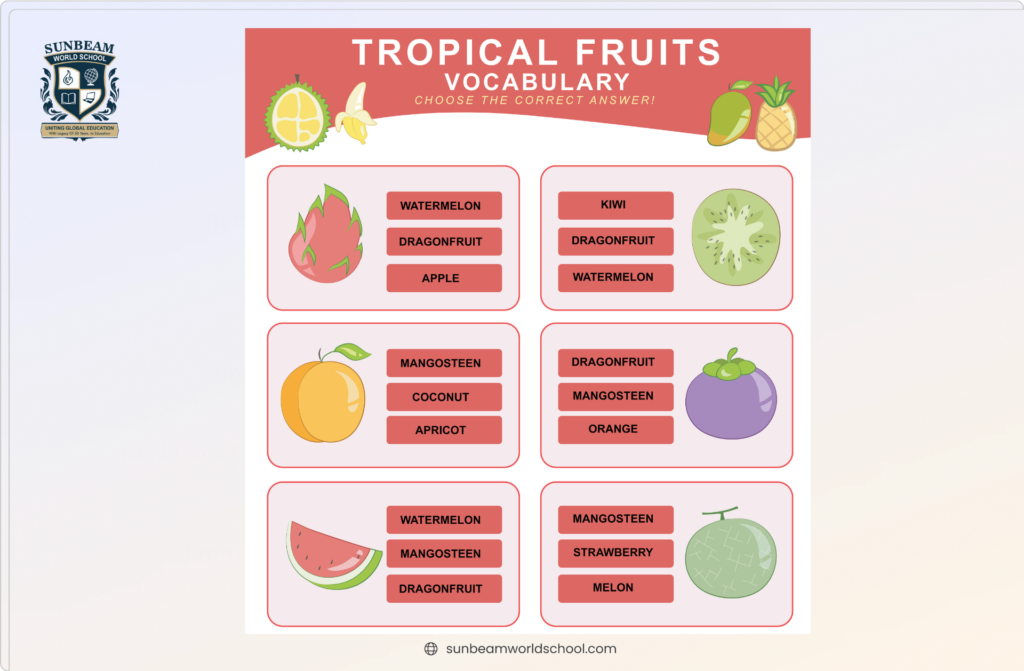
Tropical fruits vocabulary activity to help kids identify and learn fruit names with pictures.
2. Forgotten & Indigenous Fruits
These fruits were once common in local diets but are now rarely consumed.
- Bael (Wood Apple)
A traditional fruit in Indian households, bael supports digestion and gut health. It’s often used in drinks and Ayurvedic remedies due to its cooling and detoxifying properties. - Jamun (Java Plum)
Deep purple in color, jamun helps regulate blood sugar and improve digestion. It’s especially beneficial for people with diabetes due to its low glycemic index. - Karonda
A tart, berry-like fruit used in pickles and preserves. Karonda is rich in iron and vitamin C, supporting blood health and immunity. - Phalsa
A small purple fruit with a tangy taste, phalsa is known for its cooling properties. It’s commonly used in summer drinks to prevent heat exhaustion. - Mahua
An ancient tribal fruit used in traditional medicine. Mahua flowers and fruits are energy-rich and known for supporting digestion and vitality.
3. Rare Fruits with High Nutritional Value
These fruits may not be common, but they offer exceptional health benefits.
- Açaí Berry
Native to the Amazon, açaí is packed with antioxidants, healthy fats, and fiber. It supports heart health, energy levels, and skin health. - Lucuma
A naturally sweet fruit from Peru, lucuma is rich in beta-carotene and antioxidants. It’s often used as a healthy sugar substitute. - Salak (Snake Fruit)
Named for its scaly skin, salak has a sweet and tangy crunch. It’s high in potassium and fiber, supporting digestion and heart health. - Longan
Similar to lychee, longan supports immune function and iron levels. It’s commonly used in traditional Asian medicine to reduce fatigue. - Feijoa (Pineapple Guava)
A fragrant fruit with a tropical flavor, feijoa is high in vitamin C and dietary fiber.
Fruit Quiz Time– Easy Exercises For Kids
You Can Play This fruit name quiz with kids after you teach them a few common and most-widely fruit names. So, Guess the Fruit (answers given after all the questions related to fruits name)
- I am yellow and bendy. Monkeys love me. What am I?
- I am red, juicy, and crunchy.
- I have a spiky skin and sweet, tangy yellow flesh.
- I am small, red, and full of tiny seeds.
- I am green outside, red inside, and very juicy in summer.
- I am small, purple or green, and grow in bunches. Sweet or tart, I’m fun to eat.
- I am round, orange, and full of juicy segments. People often drink my juice.
- I am tropical, have rough brown skin, and soft white flesh inside.
- I am small, red, and tart, often used in juices and sauces.
- I have a spiky green skin and white flesh with black seeds.
- I am yellow outside and have sweet orange flesh inside. Popular desserts.
- I am a fuzzy-skinned fruit with juicy yellow-orange flesh inside.
- I am bright pink outside, with white flesh and tiny black seeds inside.
- I am green outside, red inside, and my seeds are black dots. Very refreshing.
- I am tropical, green outside, and creamy inside. People call me a “superfruit.
Ask Your Kids To Tell “True or False” Related To Fruits Name Questions:
- Oranges are blue.
- Mangoes are tropical fruits.
- Grapes grow in clusters.
- Lemon is sweet.
- Kiwi is green inside.
| Quick Note For correct answers, read the blog till END |
Activity Time– Easy Fruit Names Learning Activities:
Activity 1: Turning Fruit Names into Sentences
Learning fruit names is fun, but kids can remember them better when they use the names in simple sentences. Turning fruit names into sentences improves vocabulary, reading skills, and understanding of how fruits are used in daily life.
Examples for Kids:
- I like to eat a banana every morning.
- Apples are crunchy and sweet.
- My favorite fruit juice is made from mangoes.
- We picked strawberries from the garden today.
- Watermelon keeps me cool during summer.
How to Do the Activity:
- Pick a fruit name you know.
- Think of a sentence using that fruit.
- Say it out loud or write it down.
Encourage your child to make their own sentences using fruit names. This makes learning interactive, strengthens memory, and builds language skills—all while having fun!
Activity 2: Fruit Sorting and Categorizing
Learning names of fruits is even more fun when kids sort and categorize them. This activity helps with observation, critical thinking, and vocabulary.
How to Do the below Fruit Name Activity:1. Collect pictures or real fruits (apple, banana, mango, strawberry, watermelon, grapes, orange, etc.). 2. Sort by color: Put all red fruits together, yellow fruits together, green fruits together, etc. 3. Sort by size: Arrange small, medium, and large fruits. 4. Sort by type: Fruits with seeds vs. fruits without seeds, or tropical vs. local fruits. Fun Twist:Ask kids to make a sentence about each fruit after sorting. |
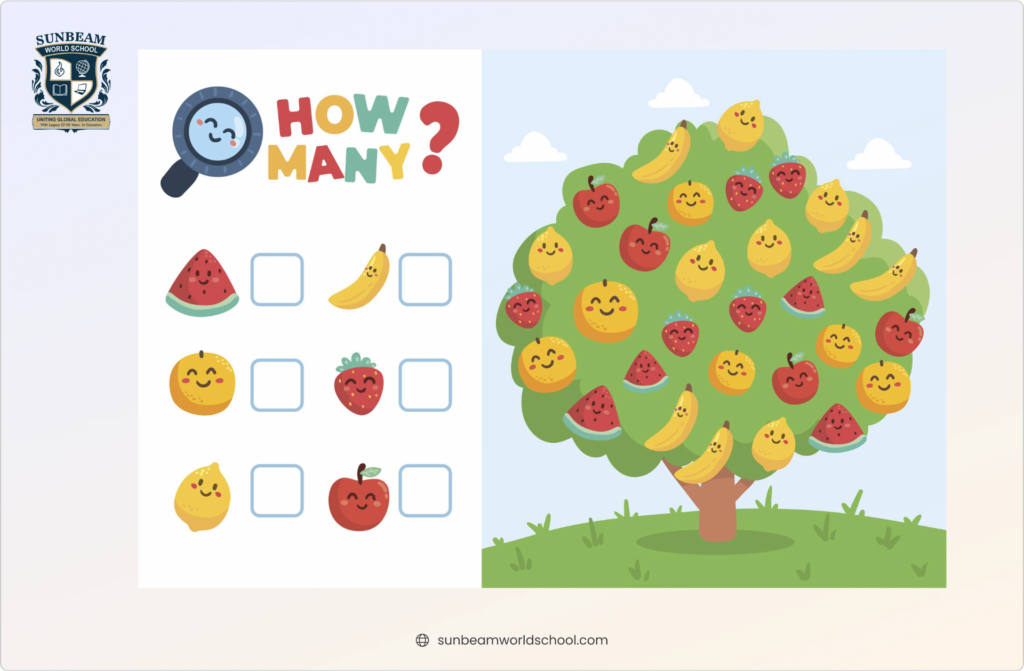
Fun “How Many?” fruit counting activity to help kids practice numbers and observation skills.
How Naming Fruits Helps Kids Speak English with Confidence
Learning fruit names is a simple and fun way for kids to improve their English vocabulary. When children practice naming fruits and using them in sentences, they develop speaking confidence, sentence formation skills, and pronunciation.
Activities like identifying, sorting, and describing fruits make learning interactive and engaging. Regular practice helps kids speak English fluently while connecting words to real-life objects, making language learning natural and enjoyable.
Learning Fruit Names At Home vs. In the Classroom Quicks Tips
How To Teach Fruits Name to Kids At Home?
- Fruit Basket Game: Keep a basket of fruits. Ask your child to name each fruit aloud.
- Sentence Practice: Encourage kids to make simple sentences using fruit names.
Example: “I like to eat an apple every morning.” - Drawing & Coloring: Let kids draw fruits and label them with names to reinforce learning.
- Snack Time Learning: Talk about fruits while eating them – color, taste, texture.
How We Teach Fruits’ Names in Our Online Classroom?
- Flashcard Fun: Show fruit flashcards and have kids call out names.
- Group Sorting Activity: Children sort fruits by color, size, or type and name them.
- Story Time: Read short stories or rhymes about fruits and have kids repeat fruit names.
- Fruit Quiz: Play interactive quizzes where kids guess the fruit from descriptions or images.
Why Parents Trust Sunbeam World School for Online Pre-Primary School Classes?
Parents trust Sunbeam World School for providing a high-quality, engaging, and safe online learning experience for their children. With experienced and KG1 and KG2 dedicated teachers, our online school focuses on holistic development, balancing academics with creative activities like storytelling, fruit games, arts, and interactive exercises.
Sunbeam World school’s child-friendly digital platform makes learning fun, boosts confidence, and encourages curiosity. With personalized attention, structured lesson plans, and innovative teaching methods, children not only learn effectively from home but also develop strong English communication, problem-solving, and life skills.
Answers To Fruit Name Quiz:How many answers did you get right? Check below:
True or False
|
Conclusion
Learning fruit names can be a fun and educational journey for children, helping them explore colors, tastes, and healthy habits. From everyday favorites like Apple and Banana to exotic fruits like Dragon Fruit and Lychee, knowing a wide variety builds curiosity, vocabulary, and nutritional awareness. Parents can make this experience interactive through games, quizzes, and hands-on tasting activities.
At Sunbeam World School, holistic learning emphasizes healthy habits, including understanding and enjoying fruits. By making fruit exploration fun and interactive, children develop a love for nutritious foods, setting the stage for lifelong healthy eating habits.
Fruits Name Related FAQs:
1. What are the 20 names of fruits in English?
Here are 20 common fruit names in English that are easy for kids and students to learn: apple, banana, mango, orange, grapes, pineapple, papaya, watermelon, guava, pomegranate, strawberry, kiwi, pear, peach, plum, cherry, coconut, lemon, lychee, and apricot. These fruits are widely available and are often used in daily life, making them perfect for building basic English vocabulary.
2. Which fruit names start with A to Z?
Fruit names from A to Z include a wide variety of common and unique fruits. For example:
A – Apple, Apricot, Avocado
B – Banana, Blueberry, Blackberry
C – Cherry, Coconut, Cranberry
D – Date, Dragonfruit, Durian
E – Elderberry
F – Fig
G – Grapes, Guava
H – Honeydew
I – Indian Fig
J – Jackfruit
K – Kiwi
L – Lemon, Lychee
M – Mango, Mulberry
N – Nectarine
O – Orange
P – Papaya, Pineapple
Q – Quince
R – Raspberry
S – Strawberry, Sapota
T – Tangerine, Tomato
U – Ugli Fruit
V – Voavanga
W – Watermelon
X – Xigua
Y – Yuzu
Z – Ziziphus
This A to Z fruits list helps kids understand and remember fruit names in alphabetical order.
3. What are the 100 names of fruits?
There are more than 100 fruit names in English, including both common and exotic varieties. Some examples include apple, banana, mango, orange, pineapple, papaya, guava, pomegranate, kiwi, lychee, peach, plum, apricot, dragonfruit, rambutan, passion fruit, starfruit, custard apple, sapota, mulberry, fig, date, coconut, and many more. Learning a complete A–Z fruits list is helpful for improving vocabulary, general knowledge, and exam preparation.
4. How do you remember fruit names for exams?
To remember fruit names easily for exams, students should learn them in a structured and fun way. Start by memorizing fruits in alphabetical order (A to Z), as this improves recall. Use visual aids like charts, flashcards, or pictures to connect names with images. Practice regularly by writing or speaking the names aloud. Grouping fruits into categories like seasonal fruits, tropical fruits, or dry fruits also makes learning easier and more effective.
5. What are some common yellow fruits?
Common yellow fruits include bananas, pineapples, mangoes, lemons, yellow watermelon, and papayas. These vibrant fruits are often rich in vitamins, antioxidants, and natural sugars that help boost immunity and energy throughout the day.
6. What are the easiest fruit name for kids to learn first?
Start with common, colorful, and easily recognizable fruits like Apple, Banana, Orange, Mango, and Grapes. Using visual aids and everyday examples helps children remember names quickly while connecting them with taste, color, and texture.
7. How can I make learning fruit names fun for my child?
Use games, quizzes, flashcards, and “Guess the Fruit” activities. Encourage tasting sessions, matching fruits by color, or grouping seasonal fruits. Hands-on and interactive learning helps kids retain names and associate them with healthy eating habits.
8. Why should children learn about exotic and seasonal fruits?
Exotic and seasonal fruits expand a child’s vocabulary and awareness of global produce. Learning these fruits helps kids appreciate variety, encourages adventurous eating, and teaches them about nutrition, taste differences, and seasonal availability.
9. Can learning fruit names improve a child’s nutrition?
Yes! When children know and recognize a variety of fruits, they are more likely to eat them. Familiarity encourages trying new fruits, ensures intake of vitamins and antioxidants, and promotes healthy eating habits from an early age.
10. How can parents help kids remember fruit names easily?
Parents can use repetition, colorful charts, storytelling, and daily practice during meals or shopping. Associating fruits with colors, shapes, or fun facts creates memory anchors, making it easier for children to recall and enjoy healthy choices.
In this article
Share this post:


Press and Blogs
Stay updated with our press releases, educational blogs, and more.