
 Online Learning
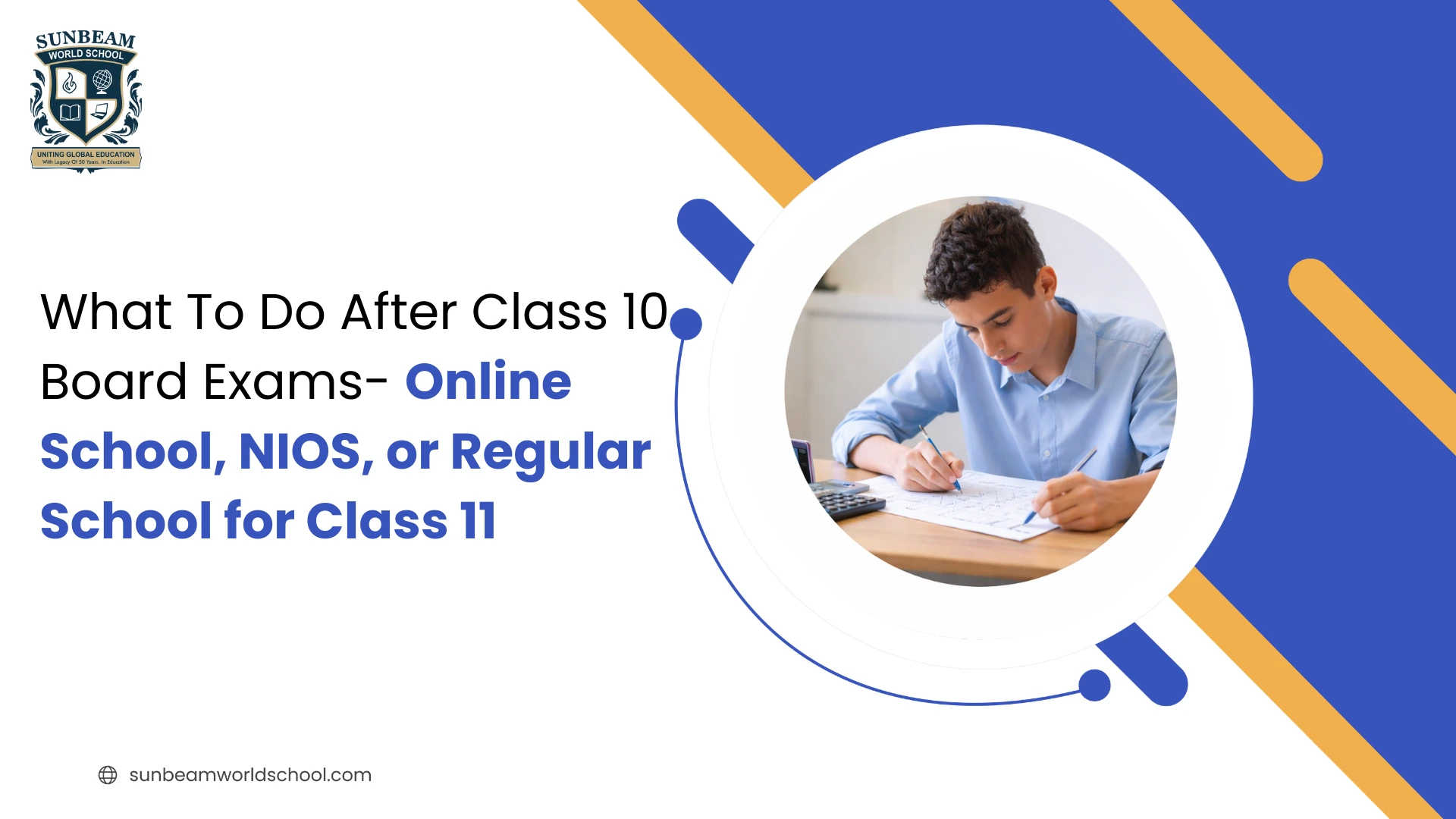
What To Do After Class 10 Board Exams- Online School, NIOS, or Regular School for Class 11
| What to do after Class 10 is what many students and parents wonder about. The options include continuing in a regular school, enrolling in an online school after Class 10, or choosing flexible learning through NIOS. Comparing NIOS vs CBSE for Class 11 highlights differences in curriculum, exam flexibility, and learning pace, helping families make informed decisions. Some students may even consider a switch to online school after boards for greater flexibility, self-paced learning, or to balance competitive exam preparation. Understanding these pathways ensures the right fit for academic growth and long-term success. |
Finishing Class 10 board exams is a proud milestone, but for many parents, it also brings an important question:
What comes next for my child?
We understand this moment can feel overwhelming. For years, the usual path was simple: choose a stream and continue in a regular school for Classes 11 and 12.
But today, education offers far more choices. Parents and students can now consider online schooling, flexible boards like NIOS, or continue traditional schooling.
Each option works differently for different students. That’s why deciding what to do after Class 10 is no longer just about choosing Science, Commerce, or Humanities; it’s about choosing the learning environment where your child can truly succeed.
To make it easy for you and your child, we’ll walk you through the main options after Class 10, regular school for Class 11, online schooling, and NIOS, and explain how switching schools after board exams works, so you can confidently choose the path that best supports your child’s goals.
Let’s get started!
Why the Decision After Class 10 Matters More Than Ever
For decades, students followed a linear path from Class 10 to 12, often attending traditional schools affiliated with boards such as CBSE, ICSE, or state boards. However, rising competition, the advent of online education, and the increasing need for flexibility have introduced new options. Many students now weigh the benefits of online schools, open schooling through NIOS, or continuing in a traditional classroom environment. Each choice affects not only academic performance but also time management, personal development, and preparation for higher education.
Making an informed decision at this stage is crucial because it can determine the pace of learning, the level of academic pressure students experience, and the range of opportunities available in the future. Students continuing into online secondary education for Grades 11 and 12 today have far more structured, credible options than ever before. Choosing the wrong path can lead to stress, disengagement, or a mismatch between learning style and school structure.
What Students Usually Do After Class 10
Traditionally, after Class 10, students enroll in schools that offer Classes 11 and 12, selecting a specific stream: Science, Commerce, or Humanities. The main focus during these years is to build a strong foundation for higher education while also preparing for competitive exams if required.
Choosing a Stream for Class 11
The stream a student selects typically depends on their interests, academic strengths, and career aspirations. Science is ideal for students aiming for engineering, medical, or research fields. Commerce suits students interested in business, finance, or economics, while Humanities caters to learners who excel in social sciences, arts, or creative domains. The right stream helps students focus their efforts and prepares them for relevant entrance exams or university courses.
Continuing in a Regular School
In a conventional classroom setup, students attend daily lectures, complete assignments under teacher supervision, and participate in scheduled examinations. This structure offers discipline, consistent feedback, and access to extracurricular activities, which contribute to personality development. Many students choose this path because it offers a predictable routine and a strong support system for both academics and co-curricular growth.
Preparing for Competitive Exams
Students aiming for highly competitive examinations such as JEE, NEET, or national-level aptitude tests often balance school education with coaching programs. Traditional schools often provide the necessary academic foundation but may struggle to accommodate additional preparation for competitive exams. This situation is one reason many students are exploring alternative education models after Class 10.
Why Many Students Are Rethinking Traditional School After Class 10
Several factors contribute to this shift, making alternative education options like online schooling or NIOS increasingly appealing.
1. Academic Pressure in Classes 11 and 12
In traditional schools, Classes 11 and 12 come with a significant increase in academic workload. Students face multiple subjects with higher complexity, frequent internal assessments, and preparations for board examinations, all of which can become overwhelming. Many students find it challenging to maintain consistent performance while managing stress, which can affect both mental health and overall learning outcomes.
2. Rigid Schedules and Lack of Flexibility
Conventional schools follow strict timetables with fixed class hours, homework deadlines, and mandatory attendance. While this structure benefits disciplined learners, it limits the ability of students to explore other interests or manage personal commitments. For example, students pursuing sports, arts, or entrepreneurial projects may struggle to balance school hours with their professional or personal pursuits.
3. Conflicts Between School and Competitive Exam Preparation
For students aspiring to take competitive exams like JEE, NEET, or national-level aptitude tests, balancing schoolwork with coaching can be challenging. Traditional schools often provide limited flexibility for additional preparation, forcing students to compromise either their school performance or competitive exam readiness.
4. Limited Personalization in Learning
Traditional classrooms move at a fixed pace, which may not match every student’s learning speed. Students who grasp concepts quickly may feel under-challenged, while those needing extra attention may feel left behind. This uniform approach can sometimes demotivate students or lead to gaps in understanding critical concepts.
5. Stress of Peer Pressure and Social Environment
In many schools, the competitive environment among peers, coupled with high parental expectations, can add emotional and psychological pressure. Students who feel anxious or overwhelmed may consider alternative education paths that offer a self-paced and less stressful learning environment.
6. Emerging Opportunities in Flexible Learning Models
With the rise of online schools and open schooling systems like NIOS, students now have options that allow them to continue their education while managing schedules, exploring hobbies, or even preparing for international studies. Online senior secondary programs provide freedom, personalized learning, and a better balance between academics and personal growth, making them increasingly attractive to students reconsidering traditional schooling.
Comparing CBSE, NIOS, and Online School
Before diving into each option in detail, it helps to understand how online and offline learning differ at their core. If you want a deeper breakdown, our guide on online learning vs offline learning covers the key differences in teaching style, flexibility, and outcomes to help you decide what suits your child best.
| Feature | CBSE | NIOS | Online Schools |
| Learning Structure | Fixed classroom schedule, daily lectures, uniform pace | Self-paced, independent learning, flexible schedules | Flexible online classes, live or recorded, self-paced or guided |
| Exams & Assessment | Annual board exams, periodic internal assessments | Multiple sessions per year, subject-wise exams, flexible | Online assessments, quizzes, periodic evaluations, some boards recognized |
| Curriculum Flexibility | Predefined subjects; limited electives | Wide subject choice including electives & vocational subjects | Customizable subjects based on board affiliation and student goals |
| Schedule Flexibility | Rigid timetable, mandatory attendance | Optional attendance, learn anytime | Highly flexible; access classes anytime, balance extracurriculars & prep |
| Teacher Interaction | Direct, in-person guidance, immediate doubt resolution | Online or counselor support; proactive engagement needed | Online teacher support, mentorship, interactive sessions, feedback dashboards |
| Peer Interaction | High – classroom, group activities, clubs | Limited; forums or virtual collaboration | Limited but enhanced with discussion boards, group projects, and live sessions |
| Best For | Students who thrive in structured, disciplined environments | Self-motivated learners needing flexibility | Students seeking balance with sports, arts, entrepreneurship, competitive exams |
Choice 1: Regular School for Class 11
How the Regular School System Works
Regular schools follow a structured academic calendar with daily classroom instruction, homework, periodic assessments, and board examinations at the end of Class 12. Students interact directly with teachers, participate in group activities, and benefit from a disciplined learning environment designed to gradually increase academic complexity.
Advantages of Continuing in a Regular School
- Structured Learning: Daily schedules provide consistent study routines and minimize the risk of procrastination.
- Teacher Support: Direct access to instructors helps clarify doubts immediately, enhancing conceptual understanding.
- Extracurricular Opportunities: Clubs, sports, cultural programs, and competitions support holistic development.
- Preparation for Competitive Exams: Schools may integrate exam coaching, guidance, and resources for entrance tests.
Limitations Students Experience in Classes 11–12
- Lack of Flexibility: Students must adhere to strict schedules, limiting time for personal pursuits.
- Uniform Learning Pace: Classes progress at a fixed pace, which may not align with individual learning speeds.
- Commute and Time Constraints: Traveling to school daily consumes significant time, reducing hours for self-study or extracurricular activities.
Choice 2: Online School After Class 10
As the education landscape evolves, online schools have emerged as a flexible, modern alternative to traditional schooling, offering students the ability to continue their education without being bound to physical classrooms. Unlike conventional schools, online schools leverage technology to deliver a comprehensive academic experience that combines structured lessons, interactive learning, and personalized support.
What Is an Online School?
An online school is a fully digital educational institution that provides instruction, coursework, assessments, and student support through online platforms. Students attend live or recorded virtual classes, interact with teachers via video conferencing, and complete assignments using learning management systems (LMS).
Many online schools also incorporate interactive tools, such as quizzes, collaborative projects, and discussion forums, which foster engagement and simulate classroom interaction. The core advantage of online schools lies in their flexibility -and platforms like our AI-powered learning management system make this experience seamless, giving students everything they need in one place.
Students can learn from anywhere, at any time, while following a curriculum equivalent to CBSE, ICSE, state boards, or even international programs such as IGCSE or Advanced Placement (AP). This approach allows students to customize their learning experience according to their pace, strengths, and personal goals.
How Online Classes Work for Class 11 and 12
Online classes for senior secondary students are designed to replicate and often enhance the classroom experience. Typically, students log into a secure LMS to attend lessons, access study materials, submit assignments, and track their progress. Many platforms provide personalized dashboards that allow students to monitor academic performance, identify areas of improvement, and receive instant feedback from teachers.
Interactive features such as live polls, breakout discussion rooms, and collaborative group projects create opportunities for peer interaction and engagement, despite the digital format. Additionally, recorded lessons allow students to revisit complex topics, ensuring that no concept is left unclear. Online assessments, quizzes, and periodic evaluations help maintain accountability and prepare students effectively for board examinations.
Benefits of Online School After Class 10
The appeal of online schooling extends beyond convenience; it addresses many limitations of traditional schooling while adding unique advantages for modern learners. Some key benefits include:
- Flexible Schedules
Students can design their study routines around personal commitments, such as sports, arts, internships, or family responsibilities. This flexibility reduces stress and allows for a more balanced lifestyle, making it easier to pursue multiple goals simultaneously. - Self-Paced Learning
Online schools allow students to progress at their own speed. Difficult subjects can be revisited multiple times, while advanced learners can accelerate through topics they grasp quickly. This personalized pace ensures deeper understanding and stronger retention of concepts. - Global Curriculum Exposure
Many online schools offer curricula aligned with international education standards. Students gain exposure to diverse teaching methodologies, access global learning resources, and build competencies that prepare them for higher education abroad or international careers. - Reduced Commute
By eliminating daily travel, students save hours previously spent commuting to school. This extra time can be devoted to focused study, personal development, hobbies, or professional training, making the learning experience more efficient and less tiring. - Customized Support and Mentorship
Online schools often provide dedicated academic mentors, counselors, and teachers who monitor student progress closely. Personalized guidance helps students set realistic goals, manage workloads, and make informed career or stream choices. - Integration with Competitive Exam Preparation
For students preparing for exams like JEE, NEET, or CA Foundation, online schools offer integrated modules aligned with exam coaching. Our personalized learning approach ensures students do not compromise either school performance or competitive exam readiness. - Digital Literacy and Technological Skills
Learning entirely online equips students with essential digital skills. From navigating LMS platforms to participating in virtual collaborations, students develop technological proficiency that is increasingly critical in higher education and modern workplaces. - Accessibility for Non-Traditional Students
Students who are unable to attend regular schools due to geographical, medical, or professional reasons—such as athletes, artists, or young entrepreneurs can continue their education without interruption. Online schooling ensures academic continuity without sacrificing personal ambitions.
Who Should Consider Online School After Class 10
Online schooling is not a one-size-fits-all solution. It is most suitable for students who:
- Require flexibility due to sports, arts, or entrepreneurial pursuits.
- Prefer self-directed, self-paced learning over conventional classroom instruction.
- Are balancing competitive exam preparation alongside school education.
- Thrive in a technology-driven learning environment and are comfortable using digital tools.
- Seek global curriculum exposure to prepare for international universities or global careers.
Choice 3: NIOS After Class 10
For students seeking flexibility, independence, and a personalized learning pace, the National Institute of Open Schooling (NIOS) provides an excellent alternative to traditional schooling.
Unlike conventional schools that follow rigid timetables and daily classroom schedules, NIOS allows students to study independently, choose subjects according to interest, and appear for exams at their convenience. This makes it particularly suitable for learners who have unique career goals, personal commitments, or challenges with conventional schooling.
What Is the NIOS Board?
The National Institute of Open Schooling (NIOS) is an autonomous educational board under the Government of India that provides education at the secondary and senior secondary level. Students completing their senior secondary through NIOS Class 12 for open schooling receive certificates recognized by all universities and institutions across India. Students can choose a combination of core and elective subjects, allowing them to tailor their learning experience based on future career goals or personal interests.
By offering self-paced learning, NIOS ensures that students are not forced to progress at the same speed as peers, which helps reduce academic stress while promoting deeper understanding of concepts. This flexibility is one of the key reasons NIOS has become a popular choice among students who require alternatives to the traditional classroom system.
How NIOS Learning Works
NIOS provides a comprehensive learning ecosystem that includes printed study materials, digital resources, online learning platforms, and regular interaction with academic counselors. Students enrolled in NIOS follow these steps:
- Subject Selection: Students can choose a combination of subjects according to their career interests or personal strengths. For example, a student interested in science can pick Physics, Chemistry, and Mathematics, while also opting for optional subjects such as Computer Applications or Psychology.
- Self-Paced Study: NIOS allows students to progress at their own pace. They can spend additional time on difficult subjects or accelerate through topics they grasp quickly, which is particularly beneficial for students with varying academic abilities.
- Study Materials and Resources: NIOS provides printed textbooks, online modules, recorded lectures, and interactive resources to ensure students have access to comprehensive learning tools. These resources are designed to facilitate independent study without requiring daily classroom attendance.
- Exam Flexibility: One of the most attractive features of NIOS is its flexible examination system. Students can appear for board exams twice a year, and in some cases, even choose to take exams only for the subjects they are prepared for. This reduces pressure and allows learners to master subjects before assessment.
- Assessment and Certification: NIOS conducts standardized board examinations, and students who successfully complete the course receive certificates recognized by colleges, universities, and employers across India. This ensures that students can pursue higher education or career opportunities without limitations.
Key Advantages of NIOS
NIOS offers several unique benefits that make it a preferred choice for students with non-traditional learning needs or special circumstances.
- Flexible Exam Schedule
NIOS allows students to take exams twice a year, with additional options for subject-wise attempts. This flexibility reduces the stress associated with annual board exams and gives students the opportunity to focus on mastering individual subjects at their own pace.
- Subject Choice Flexibility
Students are not restricted to a fixed curriculum. NIOS permits the selection of subjects that align with career aspirations or personal interests. For instance, a student aspiring to enter a creative field can choose arts-related subjects while still completing core subjects like English and Mathematics.
- Ideal for Non-Traditional Students
NIOS is particularly beneficial for:
- Athletes who spend significant time in training or competitions
- Artists and performers pursuing professional practice
- Working students or young entrepreneurs balancing academics with business or projects
- Students with health constraints who cannot attend regular schools
- Self-Paced Learning
Unlike traditional schools, NIOS allows students to learn at a comfortable pace, revisit complex topics, and focus on areas where they need improvement. This fosters a deeper understanding of subjects and encourages independent learning skills, which are critical for higher education and professional success.
- Recognition and Acceptance
NIOS certificates are widely recognized for college admissions, competitive exams, and job applications. Many students use NIOS as a pathway to pursue higher education in India or abroad, ensuring that flexibility does not compromise academic credibility.
- Cost-Effective and Accessible
Since NIOS does not require daily school attendance, students save on commuting, uniforms, and other traditional school-related expenses. Its study materials and online resources are designed to be affordable and accessible, making quality education available to a wider audience.
Who Typically Chooses NIOS
NIOS is designed for students who require an alternative to traditional schooling due to various personal, professional, or academic reasons. Typical candidates include:
- Students who need flexible schedules due to extracurricular or professional commitments
- Students who have struggled in conventional schools and need a less stressful, self-paced environment
- Young learners balancing academic study with sports, arts, or business ventures
- Students aiming to pursue international education or alternative career paths
- Individuals living in remote areas without access to quality regular schools
By offering a combination of flexibility, independence, and recognition, NIOS empowers students to take charge of their learning journey while ensuring that they remain academically competitive.
NIOS vs CBSE for Class 11
Choosing the right board after Class 10 can have a significant impact on a student’s learning experience, academic performance, and future opportunities.
While CBSE represents the traditional classroom model with structured schedules and fixed curricula, NIOS offers flexibility, self-paced learning, and a student-centered approach. Below is a comprehensive comparison to help students make an informed decision.
| Feature | CBSE | NIOS |
| Learning Structure | Follows a fixed classroom schedule with daily attendance, regular lectures, and structured lessons. Students progress along with the class, ensuring uniform exposure to all subjects. | Offers self-paced, independent study where students can plan their own learning schedules. They can spend more time on difficult subjects and move faster through topics they grasp quickly. |
| Exam System | Conducts annual board exams at the end of Class 12. Assessments are scheduled and uniform across all affiliated schools. | Provides multiple exam sessions annually, with on-demand options for certain subjects. Students can attempt exams only when ready, reducing stress and allowing mastery of concepts. |
| Subject Flexibility | Limited to a predefined curriculum, often requiring students to study all core subjects offered by the school. | Allows wide subject selection including electives, vocational courses, and optional subjects that can align with career interests or personal goals. |
| Academic Pressure | High, due to structured evaluation, strict deadlines, and continuous internal assessments. Students are expected to keep pace with the class. | Moderate, since students manage their own learning pace, schedule, and exam readiness. Academic pressure is largely self-managed. |
| Attendance Rules | Mandatory, with strict enforcement. Absences can affect final evaluation. | Optional, allowing students to learn remotely without daily attendance constraints. |
| Teacher Interaction | Regular in-person interaction provides direct guidance, mentorship, and immediate doubt resolution. | Interaction occurs online or through counseling sessions. Mentorship is available but requires proactive engagement from the student. |
| Learning Resources | Mostly traditional textbooks, supplemented by school-provided study materials, labs, and library access. | Comprehensive digital and printed materials, online modules, recorded lectures, virtual labs, and discussion forums for self-study. |
| Peer Interaction | High, with regular classroom participation, group activities, and collaborative projects. | Limited, but supplemented with online forums, group projects, and discussion boards. Peer interaction depends on student initiative. |
| Extracurricular Opportunities | Wide range, including sports, cultural programs, clubs, and competitions organized by schools. | Limited physical extracurriculars, but flexibility allows students to pursue external activities such as sports, arts, or internships independently. |
| College Recognition | Widely recognized by Indian and international universities, making it easier for admissions in traditional and professional courses. | Recognized by most universities and competitive exams in India; accepted for higher education and professional courses, though some institutions may require additional verification. |
| Cost & Accessibility | School fees, uniforms, and commuting costs are involved; access depends on location. | Generally more cost-effective, with no commuting, minimal uniform requirements, and accessible even in remote areas. |
| Suitability for Students | Best for students who thrive in structured environments, benefit from peer interaction, and want direct teacher guidance. | Ideal for students who need flexibility, are self-motivated, or balancing academics with sports, arts, entrepreneurship, or other commitments. |
Can Your Child Switch to Online School After Board Exams?
The transition from traditional schools to online schooling after Class 10 board exams is increasingly common as students seek flexibility, personalized learning, and a better balance between academics and other pursuits. While many students start their senior secondary education in regular schools, some realize that the rigid schedules, commuting requirements, and standardized pace of classroom learning do not align with their personal or professional goals.
When Students Decide to Switch
Several scenarios prompt students to consider switching to online school after boards:
1. Schedule Conflicts with Competitive Exam Preparation
Students preparing for highly competitive exams like JEE, NEET, or foundation-level tests often find traditional schools’ rigid schedules insufficient. Online schooling provides the flexibility to integrate board curriculum with exam coaching, allowing students to manage both efficiently.
2. Pursuit of Extracurricular or Professional Goals
Students who are actively involved in professional sports, performing arts, or entrepreneurial projects often face a dilemma: attending regular school limits their time for training, performances, or business management. Online schools enable these students to balance academics with their personal ambitions without compromising educational continuity.
3. Dissatisfaction with Traditional Schooling
Some students struggle with the pace of conventional classrooms, face peer pressure, or feel constrained by the standardized curriculum. For such learners, online schooling offers a more individualized, self-paced approach that reduces stress and enhances conceptual understanding.
How Mid-Year Transfers Work
Contrary to popular belief, switching to online school mid-year is entirely feasible. Many reputable online schools accept mid-year admissions, ensuring students do not lose an academic year. The process typically involves:
1. Submitting Academic Records
Students provide previous school transcripts, Class 10 board results, and subject choices. You can start the mid-year admission process directly through our admissions portal.
2. Subject Selection and Academic Guidance
Students are guided to select subjects that meet both board requirements and personal interests. Academic counselors help plan a customized study schedule that balances pace and coverage, ensuring students are prepared for upcoming assessments.
3. Integration with School Systems
The online school enrolls students in its learning management system (LMS), providing access to study materials, recorded lessons, interactive modules, and virtual labs. Students also receive guidance on assessment schedules, assignment submissions, and progress tracking.
4. Seamless Transition
Well-structured online schools ensure students are not disadvantaged academically. They may offer bridge courses or introductory modules to help students adjust to the new learning style, technologies, and assessment methods.
What to Check Before Switching
Before making the move, students and parents must carefully evaluate potential online schools to ensure the transition is smooth and academically valid:
Accreditation and Recognition
Ensure the online school holds internationally recognized accreditations from official boards like CBSE, ICSE, or international equivalents, guaranteeing that Class 11 and 12 certificates will be accepted by colleges and universities.
Curriculum Compatibility with Higher Education Goals
Verify that the subjects offered align with intended streams or competitive exams. For example, students aiming for medical or engineering fields must ensure core subjects like Physics, Chemistry, Biology, and Mathematics are available and taught rigorously.
College Eligibility After Class 12
Check whether the online school’s certification meets eligibility requirements for desired colleges or competitive examinations, both in India and abroad. Some institutions may require official documentation or board recognition verification.
Support Systems
Evaluate the availability of teachers, counselors, and mentors. Effective online schools provide regular interaction, feedback, doubt resolution, and academic guidance, which are essential for maintaining consistency and performance.
Learning Platform and Resources
Ensure the online school provides a robust LMS with recorded lectures, study modules, virtual labs, and assessments. The platform should be user-friendly and accessible to students from various locations.
How to Choose the Right Option After Class 10
Choosing the right pathway after Class 10 is a decision that goes beyond board affiliation. It requires a holistic evaluation of the student’s learning style, career goals, personal commitments, and ability to self-manage academics.
Consider Your Learning Style
Every student has a unique way of learning. Some thrive in structured environments with daily supervision, peer interaction, and fixed schedules, which makes traditional schools or CBSE-affiliated institutions ideal.
Others excel in self-directed, self-paced environments, where they can revisit complex topics, experiment with learning methods, and manage their own schedules, making online schools or NIOS more suitable.
Evaluate Career Goals
Academic and career aspirations play a crucial role in decision-making. Students aiming for engineering, medicine, or national-level competitive exams may benefit from structured environments like CBSE, which provide a clear framework and standardized syllabus.
In contrast, students pursuing sports, performing arts, entrepreneurship, or international education may require the flexibility offered by online schools or NIOS to balance academics with their specialized training or projects.
Think About Schedule Flexibility
Practical considerations such as commuting time, coaching sessions, training schedules, and personal commitments must be factored in.
Students with tight schedules may struggle to manage daily school attendance alongside external activities, making online or open schooling a better alternative. Our flexible class schedules are designed to accommodate students across different time zones and personal routines.
Assess Academic Discipline
Independent learning requires high levels of self-discipline, time management, and motivation. Students considering NIOS or online schools must be prepared to take ownership of their learning, consistently complete assignments, and manage revision schedules.
Conversely, structured schools provide regular supervision, peer motivation, and guided assessment, which are ideal for students who require external accountability.
Actionable Tips for Parents: Helping Your Child Choose After Class 10● Understand Your Child’s Learning Style: Observe if they thrive in structured classrooms (CBSE) or self-paced environments (NIOS/online). ● Evaluate Career & Stream Goals: Align their choice with Science, Commerce, Humanities, or specialized career prep. ● Check Schedule & Flexibility Needs: For students involved in sports, arts, or competitive exams, online school or NIOS may fit better. ● Review Accreditation & Recognition: Ensure the board or online school is recognized for higher education and competitive exams. Also check the eligibility criteria for online school enrolment to confirm your child qualifies before applying. ● Plan a Transition Early: If considering a switch to online school after boards, start preparations to avoid lost academic time. ● Support Independent Learning: For self-paced options, help them create a study routine and monitor progress without micromanaging. |
The Future of Education After Class 10
As students and parents plan their next steps, understanding the future trends in education becomes essential for making informed choices. There is a growing body of evidence on why online school is the future of education – from AI-driven personalization to globally connected classrooms -making it an option worth seriously considering at this stage.
1. Personalized and Self-Paced Learning
One of the most significant trends shaping the future of education is the shift from uniform learning to personalized pathways. Students today can choose learning models that align with their aptitudes, interests, and career ambitions. Whether it is through NIOS, online schools, or hybrid models, self-paced learning allows students to focus on subjects they excel in, spend more time on challenging topics, and progress according to their individual pace.
This flexibility also enables skill-based learning, where students can integrate coding, entrepreneurship, sports, arts, or research projects alongside their core academic subjects. As a result, education becomes not just about completing a syllabus but about developing holistic capabilities that prepare students for real-world challenges.
2. Integration of Technology in Learning
Technology is at the forefront of the educational revolution. After Class 10, students now have access to digital classrooms, interactive modules, virtual labs, and AI-driven assessments. These tools enhance engagement, facilitate self-directed learning, and provide instant feedback, helping students identify strengths and weaknesses in real time.
Artificial Intelligence (AI) and adaptive learning platforms are becoming increasingly popular, offering customized lesson plans, practice exercises, and predictive performance analysis. For example, a student struggling in Mathematics can receive targeted exercises and tutorials, while another excelling in Physics can be offered advanced problem-solving modules to deepen understanding.
3. Blended and Hybrid Learning Models
The future of education is unlikely to be fully traditional or fully online; rather, it will adopt blended or hybrid models. Students may combine:
- In-person classes for hands-on labs, workshops, and social learning.
- Online modules for theory, interactive exercises, and global curriculum exposure.
This approach ensures students benefit from peer interaction and mentorship while also enjoying the flexibility and accessibility of digital learning. For instance, a student preparing for competitive exams can attend online coaching while participating in school sports or arts activities offline, achieving a balanced and productive learning experience.
4. Global Exposure and International Curricula
The future of education increasingly emphasizes global perspectives. Online schools offering IGCSE, Advanced Placement (AP), and other international curricula are empowering students to prepare for higher education abroad. Exposure to international standards, collaborative projects with students worldwide, and diverse teaching methodologies equips learners with critical thinking, cross-cultural understanding, and global competencies.
Even students in India can now benefit from these opportunities without relocating, as virtual classrooms break geographical barriers. This trend is particularly valuable for students aiming for international universities, global careers, or multidisciplinary professional paths.
5. Skill-Based and Career-Oriented Learning
Modern education is moving beyond rote memorization to focus on practical skills, critical thinking, and employability. After Class 10, students can choose pathways that integrate vocational subjects, coding, entrepreneurship, digital media, and research projects alongside traditional academics.
For example, online schools and NIOS allow students to select optional subjects or certificate programs aligned with their future careers. This approach not only prepares students for board exams but also gives them a competitive edge in higher education and early career opportunities.
6. Flexibility and Life-Long Learning
The future of education emphasizes flexibility in how, when, and what students learn. Online schools and open boards like NIOS allow students to adjust study schedules, attempt exams at their convenience, and explore subjects outside the standard curriculum.
This flexibility encourages self-directed learning, which is crucial in a rapidly changing world. Students learn to manage time, set priorities, and take ownership of their education, preparing them not just for exams but for life-long learning in higher education and careers.
7. Preparing for Uncertain Futures
Post-Class 10 education is no longer solely about board exams or college admissions. The future demands adaptability, digital literacy, and interdisciplinary skills. Flexible learning pathways, global curricula, and technology integration enable students to navigate uncertainties in higher education and professional landscapes.
For instance, a student choosing an online school can simultaneously pursue coding certifications, sports training, or creative arts programs, ensuring that their education remains relevant, diverse, and aligned with personal aspirations.
8. Mental Health and Well-Being Considerations
The future of education also recognizes the importance of student well-being. Traditional schools can sometimes impose stress due to rigid schedules and high academic pressure. Flexible options like NIOS and online schools reduce stress by allowing self-paced learning, choice of subjects, and manageable assessment schedules.
Students who manage their learning independently often develop resilience, self-confidence, and better emotional intelligence, which are essential for success in higher education and professional life.
How Students Can Leverage These TrendsIdentify Personal Strengths: Students should understand their learning style, structured or self-directed, and select a board or school that aligns with it. |
Conclusion
What to do after Class 10 is a major decision, and we understand how important it is for parents to guide their child wisely. Traditional schools offer structure and peer interaction, while flexible options like online schooling or NIOS allow students to learn at their own pace, balance extracurriculars, or prepare for competitive exams.
Sunbeam World School, a leading online school, combines a global curriculum with personalized support, interactive lessons, and flexible schedules, helping students stay motivated and excel academically. Read what parents say about online learning at Sunbeam to see how students have thrived after making the switch.
Ultimately, the best choice is the one that fits your child’s learning style, keeps them engaged, and builds a strong foundation for higher education and future goals.
FAQs
1. What are the best options after Class 10?
After Class 10, students typically choose between regular schools, online schools, or open boards like NIOS. The right option depends on learning style, career goals, schedule flexibility, and whether the student prefers structured classroom learning or self-paced education.
2. Can I switch to online school after Class 10 boards?
Yes, many online schools accept students after Class 10 board exams. Students usually submit academic records, choose subjects, and begin online classes through digital platforms that provide lectures, study materials, and assessments.
3. Is NIOS better than CBSE for Class 11?
NIOS is better for students needing flexible schedules and self-paced learning, while CBSE suits students who prefer structured classrooms and regular teacher interaction. Both boards are recognized for higher education, but the best choice depends on personal learning preferences.
4. Do colleges accept NIOS students?
Yes, NIOS is a recognized board under the Government of India. Students who complete Class 12 from NIOS are eligible for admission to most universities, colleges, and competitive exams in India, provided they meet the required subject criteria.
5. Is online school valid for Class 11 and 12?
Yes, accredited online schools offering recognized curricula are valid for Classes 11 and 12. Students can complete their education online while accessing digital classes, assignments, and exams, and still qualify for college admissions.
6. How do I choose the right stream after Class 10?
Students should choose a stream based on their interests, strengths, and career goals. Science suits engineering and medical fields, Commerce supports business careers, and Humanities is ideal for social sciences, arts, and creative professions.
In this article
- How to Study Effectively – Proven Study Tips and Smart Techniques for Students
- STEM vs STEAM Education – Differences, Benefits, and Which Is Better for Students
- Online School in Georgia – Why Parents Are Choosing Virtual Learning
- Short-Term Goals for Students to Master Time Management
- Good Touch Bad Touch – How To Teach Body Safety To Kids Correctly?
- What are the Passing Marks out of 80 in CBSE?

Share this post:


Press and Blogs
Stay updated with our press releases, educational blogs, and more.

One can study effectively using research-backed study tips and smart techniques rather than long, passive...
In today’s rapidly evolving, technology-driven world, STEM and STEAM education must go beyond textbooks to...
Online schooling in Georgia is an increasingly popular alternative to traditional education, offering flexible schedules,...