
 Online Learning
Good Touch Bad Touch – How To Teach Body Safety To Kids Correctly?
| Good Touch and Bad Touch for Kids Good touch and bad touch help children understand body safety and personal boundaries. Good touch feels safe and caring, while bad touch causes discomfort, fear, or confusion. Teaching kids to recognize unsafe touch, say no, and tell a trusted adult empowers them to stay safe both offline and online. |
Good touch and bad touch are key concepts every child must learn to stay safe and confident. From hugs and high-fives to holding hands, touch plays an important role in emotional bonding and healthy development. However, not every touch is safe. Teaching children to recognize safe and unsafe touch and understand their boundaries will help protect them at home, school, and online.
This guide goes beyond the basics. It combines child psychology, essential kids safety rules, real-life examples, and practical teaching strategies so parents and teachers can empower children with confidence-without creating fear.
What is Bad Touch and Good Touch?
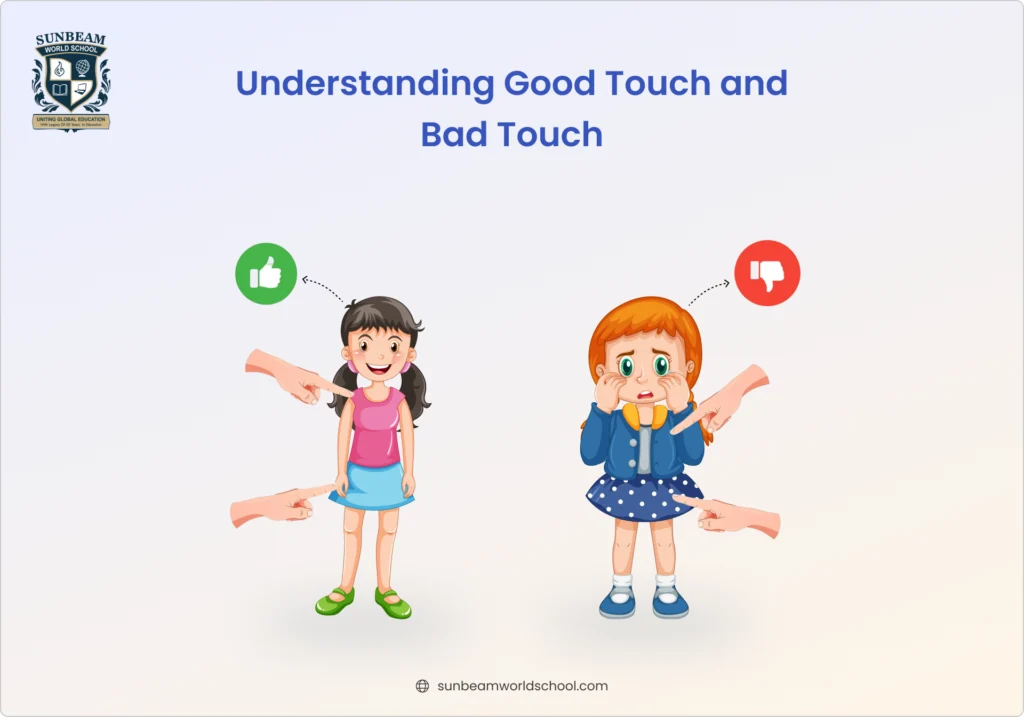
Good Touch and Bad Touch are simple concepts taught to help children understand personal safety and body boundaries. Good touch is physical contact that makes a child feel safe, loved, and comfortable, such as a hug from parents or caregivers. Bad touch makes a child feel scared, uncomfortable, or unsafe, including touching private parts or asking for secrecy. Children should say no and tell a trusted adult immediately.
What Is a Good Touch?
A good touch is a type of physical contact that makes a child feel safe, loved, and respected. It helps the child feel secure, builds trust, strengthens emotional bonds, and supports healthy growth and positive development.
Some Examples of good touch are:
- A hug from parents
- A high-five
- Holding hands when crossing the street
- A doctor checking them with permission
- A teacher placing a hand on their shoulder for encouragement
What Is Bad Touch?
A bad touch is any physical contact that makes a child feel scared, uncomfortable, or unsafe. It crosses personal boundaries, creates confusion, and can leave a child feeling “not okay on the inside.”
Examples of Bad Touch are:
- Anyone touching private parts
- Forcing hugs or kisses
- Touching in secret
- Touch with anger or threat
- Tickling that makes the child feel uneasy
| Important Term: “Unwanted Touch” Not every unwanted touch is dangerous, but children must know they can say NO even to: -Kisses from relatives -Tight hugs -Friendly pats that they dislike REMEMBER: A child’s comfort matters more than social norms. |
How To Teach Girls About Good Touch And Bad Touch
Girls grow up in a world where they’re often taught to be “good,” “polite,” and “obedient.” But while kindness is important, body safety comes first. Our daughters need clear, early conversations about good touch and bad touch because they are more likely to face unwanted physical contact, pressure to stay silent, or confusion about boundaries.
Here is how we, as parents and teachers, can communicate these lessons effectively. Let’s start by making them understand the examples of good and bad touch.
Experiences Of Good Touch For Girls
Girls often experience physical affection differently. Good touch includes gestures that make them feel safe, respected, and comfortable, such as:
- A warm hug from mom
- Hair-braiding or hairstyling where she feels comfortable
- Holding hands while walking for safety
- A caring pat on the head or back
- Good touch always makes her feel respected—not pressured.
Bad Touch Examples Girls Commonly Face
Girls often face inappropriate touches disguised as “affection,” “family bonding,” or “help.” These bad touches include:
- Someone touching the chest area “accidentally” or “to adjust clothes”
- An adult asking her to sit on their lap when she doesn’t want to
- Someone is trying to hug too tightly or for too long
- Anyone trying to touch under her clothes, especially chest or private parts.
Body Safety Tips For Girls
Teach girls about good touch and bad touch, and help them to understand personal boundaries, recognize unsafe touch, and stay safe both offline and online.
- Start by making them understand about private parts clearly. The areas covered by her underwear, especially her chest and genitals, are private. No one should touch, show, or comment on her private parts.
- Teach your daughter that if she feels scared, confused, shy, or sick in her tummy near someone, she must walk away.
- Make your girl practice to say NO loudly. Practice strong responses with her: NO! Don’t touch me! Stop! I don’t like that! Move away from me!
- Teach her that no one should “adjust” her clothes without asking. Also, no adult should be in the room while she is changing (except parents when needed)
- Girls are more targeted online for inappropriate chats or requests. Teach her that no one should ask for selfies in private clothes. Never join unknown video calls alone and always inform your parent if someone makes you feel uncomfortable online.
How To Teach Boys About Good Touch And Bad Touch
Are you also one of those parents who can’t talk to their son about good touch and bad touch? But when it comes to body safety, it’s crucial to make them learn about good and bad touch. Teaching boys body safety helps them trust their instincts, set limits, and confidently speak up.
Experiences of Good Touch for Boys
Good touch helps boys feel safe, valued, and supported. It includes physical gestures that show care without pressure, such as:
- A reassuring hug from a parent or guardian
- A high-five or pat on the back for encouragement
- Holding hands while walking in crowded areas
- Gentle guidance during sports, learning, or playtime
Bad Touch Examples Boys Commonly Face
Boys can also experience unsafe or inappropriate touches, and it’s important they learn to identify them early. Examples of bad touch include:
- Someone touching their private areas “accidentally” or under the pretext of helping.
- Forced hugs or prolonged physical closeness that makes them uncomfortable.
- Tickling, wrestling, or rough play that crosses personal boundaries.
- Touching under clothes or around genitals.
- Any touch that comes with instructions to keep it a secret.
Body Safety Tips For Boys
Helping boys understand personal boundaries and stay safe is essential. Here are the key tips that will definitely help:
- Teach about private parts, areas covered by underwear, including genitals. Only parents (during care) or doctors (with permission) may touch these areas.
- Encourage boys to notice “yucky,” scared, or uneasy feelings and to walk away immediately.
- Teach them to say loudly and confidently: “NO! Stop! Don’t touch me! Move away!”
- No one should adjust their clothes without permission, and boys should have privacy while changing.
- Boys should never share private photos, join unknown video calls alone, or hide online interactions from parents.
Great Books to Teach Your Kids About Body Safety
Talking about body safety can feel challenging, but the right books make these conversations easier and more comfortable. Reading together helps your child understand concepts like good touch and bad touch while creating a safe space for discussion.
Amazing You! Getting Smart About Your Body Parts by Gail Saltz
This book explains the differences between boys and girls in a fun and engaging way, making it easier for children to understand their own bodies.
My Body Belongs to Me, from My Head to My Toes by Pro Familia
A great resource for teaching children about good touch and bad touch, helping them understand personal boundaries and safety rules.
Who Has What? All About Girls’ Bodies and Boys’ Bodies by Robie H. Harris
This book introduces the real names of body parts in a comfortable, age-appropriate way, making it easier for children to talk about their bodies openly.
What’s In There? All About Before You Were Born by Robie H. Harris
Perfect for explaining babies, birth, and where we come from, helping children understand life cycles and body development naturally.
These books are excellent tools to guide conversations, build trust, and empower children to feel confident about their bodies while learning about safety in a supportive and age-appropriate way.
Difference Between Safe Touch And Unsafe Touch
Preventing child abuse through awareness is possible when you can clearly make a child learn about the difference between Good touch and Bad touch which is correctly and easily explained in the below table.
| Aspect | Good Touch (Safe Touch) | Bad Touch (Unsafe Touch) |
| Definition | Safe touch is physical contact that makes a child feel safe, loved, or comfortable. | Unsafe touch is physical contact that makes a child feel scared, uncomfortable, or unsafe. |
| Examples | Hugs from parents, high-fives, hand-holding, doctor examining with permission, reassuring pat on the back. | Touching private parts, forcing hugs or kisses, unwanted tickling, secretive touches, touch with threats or intimidation. |
| Emotional Feeling | Comfort, warmth, safety, reassurance. | Fear, anxiety, discomfort, confusion. |
| Consent | The child feels okay and agrees to the touch. | A child feels scared, pressured, or is not allowed to say “No.” |
| Frequency/Context | Occurs openly and respectfully, in everyday life or care situations. | Can happen in secrecy, without permission, or repeatedly against the child’s will. |
| Action if Experienced | No immediate action needed; normal and positive. | Child should say “No,” move away, and tell a trusted adult immediately. |
| Learning Outcome | Reinforces trust, bonding, and safe interactions. | Teaches the child to recognize danger, assert boundaries, and seek help. |
Why Teaching Good Touch and Bad Touch To Kids Is Extremely Important?
Modern education goes beyond reading and writing-children must also learn body autonomy. Teaching children body safety rules will do the following:
- Builds confidence
- Reduces the risk of abuse
- Helps children trust their instincts
- Encourages open communication
- Ensures they know what to do in unsafe situations
- Less likely to get manipulated
- Easily report unsafe behavior
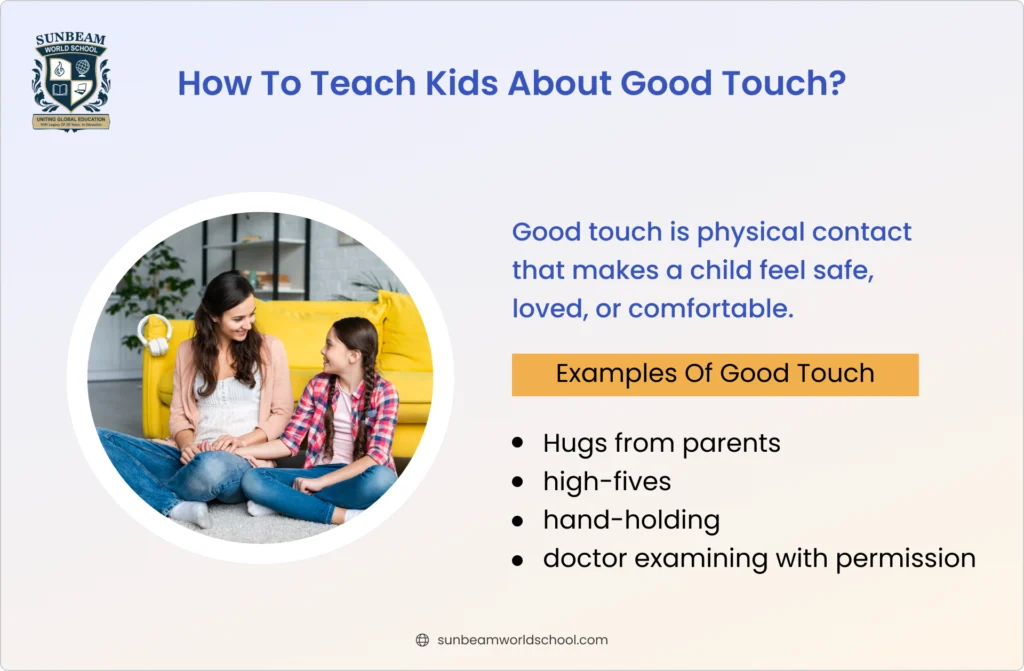
Good touch helps children feel safe, loved, and comfortable when explained with trust and clarity.
The Body Safety Rules Every Child Must Know
These rules simplify the entire concept of body safety for children, helping them understand boundaries, personal space, and safe behavior. Here is how to talk to kids about good touch
Rule No.1: “My Body Belongs to Me”
Teach children that their body is their own, and no one, not even relatives, teachers, or friends, can touch them without their consent. Reinforce that they have the right to say “No” to any touch that makes them uncomfortable. This rule builds confidence and empowers children to protect themselves.
Rule No.2: “Private Parts Are Private”
Explain that private parts are those covered by underwear or a swimsuit, and no one should ever touch these areas except in special, safe circumstances. Exceptions include parents helping with bathing or doctors during check-ups, always with a parent present and permission. Nothing related to private parts should ever be done in secret.
Rule No.3: “If a Touch Feels Wrong, Say STOP and Move Away”
Children do not need to be polite when they feel unsafe. Teach them a simple safety plan: Say “NO!” → Run to safety → Tell a trusted adult immediately. Reinforcing this action plan helps children react quickly in stressful or confusing situations and reduces hesitation or fear.
Rule No.4: “No Secrets About Touching”
Unsafe adults often try to manipulate children by asking them to keep secrets. Teach kids that touching secrets is never allowed, but fun surprises are okay. Reassure them that they will never get in trouble for speaking up, which encourages open communication and trust.
Rule no.5: “If You Feel Yucky, Scared, or Confused — Tell Someone”
Feelings are the first warning signs that something might be wrong. Help children name their emotions—scared, uncomfortable, sad, confused, or weird in the tummy and remind them that it is always okay to tell a trusted adult. Recognizing emotions early helps children take action before a situation escalates.
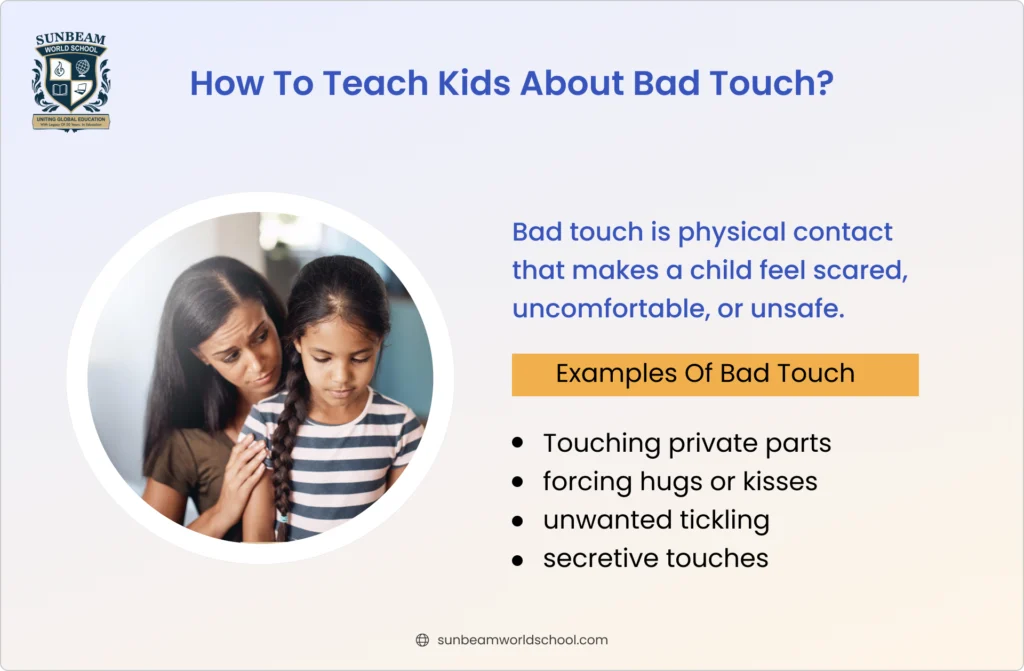
Helping children recognize bad touch empowers them to protect themselves and speak up confidently.
Real Examples – Difference Between Good Touch And Bad Touch
Children often struggle to differentiate between Good and Bad touch, so helping them understand with real-life examples builds awareness and confidence.
Let the child trust their instincts and communicate openly.
| Situation | Good Touch | Bad Touch |
| Hug from an Adult | A warm hug from a parent or guardian after a fall or when the child feels sad. | A hug from someone who makes the child feel uncomfortable, embarrassed, or scared. |
| High-Five or Pat on the Back | A congratulatory high-five or pat from a coach or teacher after a game or achievement. | Touch near private areas or any pat that feels inappropriate or unwanted. |
| Hand-Holding in Emergencies | A parent or caregiver holding the child’s hand while crossing the road or during a potentially dangerous situation. | A stranger or unknown person holding hands and refusing to let go or asking the child to follow them. |
| Doctor’s Check-Up with Consent | A doctor or nurse asking permission before examining, with a parent present. | Any adult touching private areas without consent, or pretending it is a check-up inappropriately. |
| Comfort Cuddle after a Bad Dream | A comforting cuddle from a trusted adult to reassure the child after a nightmare. | Any adult touching the child in private areas or under clothing without reason or consent. |
| Quick Kiss on Cheek | A family member giving a friendly kiss on the cheek in public to say goodbye or show affection. | An adult kissing the child inappropriately or instructing them to keep it a secret. |
| Teacher Helps Tie Shoe | Teacher helping adjust shoelaces or clothing in a public setting as part of care or classroom activity. | Touching thighs, groin, or private areas while assisting, either accidentally or intentionally. |
| Birthday Surprise | A fun, playful peek-a-boo game or surprise organized by parents or friends. | Being asked to keep a secret about any physical activity that makes the child feel uneasy or uncomfortable. |
Age-Appropriate Child Safety Education
To all the parents, teachers, and caretakers, here are the age-appropriate lessons that help children understand body safety clearly and confidently.
For Ages 2–4: Keep It Simple
- Teach names of body parts
- Introduce “private parts”
- Explain who can help with bathing
- Use stories, dolls, or simple body charts to explain.
For Ages 5–8: Build Understanding
- Teach safe vs unsafe touch
- Talk about saying “No”
- Don’t force hugs or kisses
- Introduce “trusted adults list” (at least 5 people)
For Ages 9–12: Expand the Conversation
- Personal boundaries in school
- Online safety
- Self-respect and consent
- Unsafe behavior from older kids or adults
For Teens: Empower and Educate
- Consent and respectful relationships
- Peer pressure
- Digital boundaries
- Privacy online
Teachers and Parents’ Guide For Talking Body Safety
Practical tips for parents and teachers to help children understand body safety, recognize unsafe touch, and build confidence in protecting themselves.
- Private body parts education for kids
Using proper anatomical terms for body parts is essential for teaching children about their bodies safely. When kids know the right names for private areas, they can communicate clearly and accurately if they ever feel uncomfortable. - Role-playing good touch bad touch with kids
Practicing real-life scenarios through role-play helps children understand how to react when faced with unsafe touch. By rehearsing saying “No,” walking away, or seeking help, children develop confidence and readiness to handle situations calmly. - Teach the “Trusted Adult Circle”
Children should know which adults they can rely on if something feels wrong. Identifying a few safe adults, such as parents, teachers, or family friends, ensures children know where to go for help. - Never Force Physical Affection
Respecting a child’s choice to say “No” to hugs, kisses, or other physical contact reinforces body autonomy and teaches consent. Honor their preferences to build confidence and a sense of safety. - Keep Conversations Regular and Casual
Body safety discussions should not be a one-time event. Talking about touch, boundaries, and safety regularly during everyday routines like bedtime, storytime, or car rides normalizes the topic, reducing fear and encouraging children to approach adults with questions or concerns. - Encourage Open Communication
Creating an environment where children feel safe to ask questions or share feelings is critical. Listen patiently and without judgment, reassure them that they will never get in trouble for speaking up. - Use Visuals and Stories
Books, charts, and videos are effective tools to explain body safety concepts in a memorable way. Visual aids help children understand boundaries, recognize unsafe situations. - Reinforce the “Say NO, Go, Tell” Strategy
Repetition of the three-step safety plan helps children internalize a clear action method for unsafe situations. Regular practice ensures that saying “No,” moving away, and telling a trusted adult becomes a natural reflex, reducing hesitation or confusion during real-life encounters. - Recognize Emotional Warning Signs
Children should learn to notice feelings of fear, discomfort, sadness, or confusion, as these emotions are often the first indicators that something is wrong. - Adapt Lessons According to Age
Tailoring lessons to a child’s developmental stage ensures understanding and retention. Simple explanations work for toddlers, while older children and teens can learn more detailed concepts, including digital safety, helping them navigate both offline and online environments safely.
How Parents Should Respond When a Child Reports Unsafe Touch
Learn how parents can respond calmly, supportively, and effectively when a child reports a bad touch, ensuring the child feels heard, safe, and empowered to speak up. What you should do:
- Stay calm
- Believe them
- Appreciate their courage
- Assure them “You did the right thing”
- Take steps to ensure safety
- Inform authorities if needed
- Never blame or question them like “Why didn’t you stop it?”
- They are children. Protect, don’t interrogate.
Common Red Flags of Unsafe Touch Every Parent Should Know
Learn how to recognize warning signs that your child may be experiencing unsafe or inappropriate touch. A child may be trying to communicate something if they show:
- Sudden fear of a person or place
- Change in behavior or sleep patterns
- Avoidance of physical affection
- Knowledge of sexual acts too early
- Unexplained anxiety
Digital Age Warning– Online Touch Is Also a Threat
In today’s digital world, children face risks not just offline but also online. Unsafe adults can attempt to exploit children through messages, video calls, or requests for private photos. It is essential that children understand that the same rules of body safety apply to the online world as they do offline.
Children must also know:
- No one should ask for photos of private parts
- No video calls showing their body
- No messaging strangers
- No keeping secrets from parents online
Teaching children online boundaries early helps them recognize manipulation attempts, reinforces their understanding of consent, and empowers them to report unsafe situations immediately. Parents and teachers should have open discussions about digital safety, encourage transparency, and monitor online activity without creating fear, so children feel supported while navigating the online world safely.
How Sunbeam World School Promotes Body Safety Education
At Sunbeam World School, education goes beyond academics. From early years onward, the school incorporates body safety awareness, including understanding good touch and bad touch, into its curriculum. They engage children through age-appropriate sessions using storytelling, role‑play, and interactive discussions that help kids recognise safe and unsafe touches without fear or confusion.
Sunbeam creates a safe, trusting environment where children feel comfortable asking questions and expressing concerns. Teachers and staff are trained to handle sensitive conversations with care and respect, ensuring that students know their bodies belong to them and that it’s okay to speak up if something feels wrong.
For online learners and families, Sunbeam also emphasises digital body‑safety education- teaching children that boundaries apply online too. Whether it’s during in‑person classes or online sessions, Sunbeam ensures children learn the importance of consent, privacy, and personal safety in all settings.
Final Thoughts
Teaching children about good touch and bad touch is not about fear—it’s about awareness, confidence, and lifelong safety. Children who understand body safety can recognize unsafe behavior, set personal boundaries, and feel empowered to speak up.
At Sunbeam World School, we focus on early education, open communication, and simple, age-appropriate lessons to make body safety a natural part of daily learning.
By combining guidance, practice, and support, parents, teachers, and schools can ensure children grow up safe, informed, and empowered, equipped to protect themselves both offline and online.
FAQs
1. What is the difference between good touch and bad touch?
Good touch is safe, caring, and makes a child feel comfortable, such as hugs from parents or a doctor’s check-up with permission. Bad touch is unwanted, uncomfortable, or unsafe, like touching private parts or forced hugs.
2. At what age should you teach kids about good touch and bad touch?
You can teach kids about good touch and bad touch as early as 2–3 years old, with age-appropriate explanations. Lessons should become more detailed as children grow, including digital safety for older kids.
3. How can parents and teachers teach body safety effectively?
Use simple language, proper names for body parts, role-play scenarios, visual aids, and open conversations. Reinforce the “Say No, Go, Tell” strategy and encourage children to speak up whenever they feel unsafe.
4. What should a child do if they experience bad touch?
Children should be taught to immediately say “No,” move away from the situation, and tell a trusted adult. Emphasize that they will never get in trouble for reporting unsafe touch.
5. How can online safety be included in teaching body safety?
Children should know that unsafe behavior online, like requests for private photos or secretive video calls, is also bad touch. Parents should teach boundaries, monitor online activity, and encourage open communication about digital interactions.
In this article



Share this post:


Press and Blogs
Stay updated with our press releases, educational blogs, and more.

What to do after Class 10 is what many students and parents wonder about. The...

One can study effectively using research-backed study tips and smart techniques rather than long, passive...
Bullying in schools is a widespread issue that adversely affects student well‑being, academic success, and...