
 Academic Excellence
Long-Term Goals for Students: A Complete Guide to Success
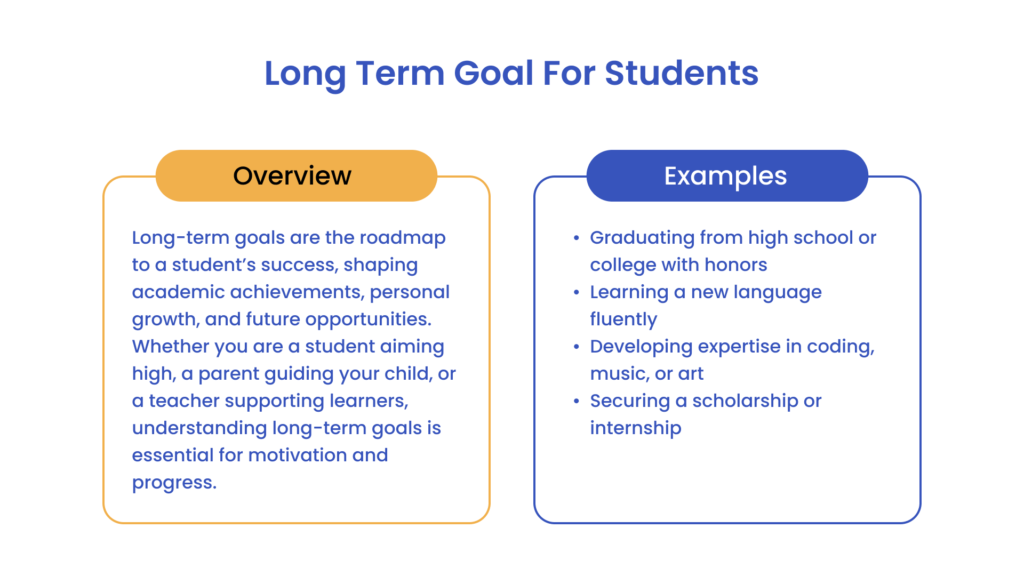
Long-term goals are the roadmap to a student’s success, shaping academic achievements, personal growth, and future opportunities. Whether you are a student aiming high, a parent guiding your child, or a teacher supporting learners, understanding long-term goals is essential for motivation and progress.
In this complete guide, we’ll explore why long-term goals matter, share inspiring examples, and reveal practical strategies to help students plan, track, and achieve their dreams with clarity and purpose.
Let’s start your progress now!
What Are Long Term Goals?
Long-term goals are an objective that takes months or even years to achieve. Unlike short term goals, which focus on immediate tasks, long-term goals require careful planning, patience, and consistent effort. They act as a guiding star, helping students make decisions and stay on track over an extended period.
Examples of Long-Term Goals for Students:
- Graduating from high school or college with honors
- Learning a new language fluently
- Developing expertise in coding, music, or art
- Securing a scholarship or internship
Benefits of Long-Term Goals for Students
Long-term goals are not just about reaching milestones—they guide students toward personal growth, academic success, and future achievements. Here’s a deeper look at the key benefits:
1. Provides Clarity and Direction
Having long-term goals gives students a clear roadmap for their academic and personal journey. When students know exactly what they want to achieve, they can prioritize tasks, focus on essential activities, and avoid wasting time on distractions. This clarity helps in making informed decisions and staying committed to meaningful objectives.
2. Boosts Motivation
Long-term goals act as a powerful source of motivation. When students understand the purpose behind their efforts, they are more likely to stay committed, even during challenging times. Motivation fueled by meaningful goals also inspires students to go the extra mile consistently.
3. Improves Time Management
Students with long-term goals often learn to manage their time effectively. By breaking large goals into smaller, manageable tasks, they can schedule study hours, extracurricular activities, and hobbies efficiently. Effective time management ensures that students balance academics with personal growth, maintain a healthy lifestyle, and meet deadlines without unnecessary stress.
4. Enhances Academic Performance
Focused students naturally achieve better academic results. Long-term goals encourage consistent study habits, active participation in class, and a deeper understanding of subjects. For instance, a student aiming to become a top performer in math will plan daily practice sessions, complete extra exercises, and seek help when needed—all contributing to improved grades and knowledge retention.
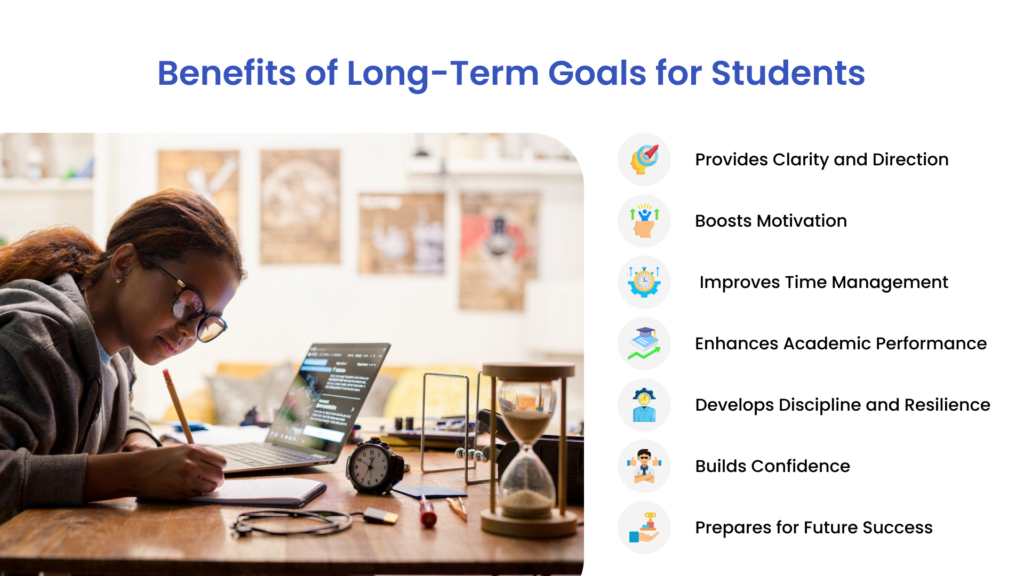
5. Develops Discipline and Resilience
Pursuing long-term goals teaches students the value of discipline and perseverance. Challenges, distractions, and setbacks are inevitable, but having a clear goal instills consistency and determination. Students learn to push through difficult periods, stay committed to their plans, and cultivate resilience, which is essential not just academically but also in personal and professional life.
6. Builds Confidence
Achieving milestones along the way reinforces self-belief and confidence. Every completed step, from finishing a project to acing a test, validates the student’s efforts and capabilities. This growing confidence motivates them to set even higher goals, take on challenges, and embrace new opportunities without fear of failure.
7. Prepares for Future Success
Long-term planning equips students with skills and habits that extend beyond school. Whether it’s preparing for college, internships, or career goals, students who set long-term objectives develop strategic thinking, goal-setting abilities, and decision-making skills. By learning to plan, track progress, and adjust strategies, students are ready to tackle the complexities of adulthood with confidence and purpose.
How to Set Long-Term Goals for Students
Setting long-term goals is a crucial skill for students, helping them stay focused, motivated, and organized. Here’s a step-by-step guide for students to set effective long-term goals:
1. Reflect on Your Aspirations
Before setting goals, students should identify their passions, interests, and future aspirations. Reflection ensures that the goals you set are aligned with personal interests and long-term ambitions, making them more motivating and achievable.
Ask yourself questions like:
- What subjects or skills do I enjoy most?
- Where do I see myself in 3–5 years academically or professionally?
- What kind of person do I want to become?
| Example: “If I enjoy writing and communication, I might aim to improve my essay writing skills and eventually pursue journalism or content creation in college.” |
2. Define Clear and Specific Goals
A vague goal like “I want to do well in school” is hard to measure. Specific goals help students focus their efforts on tangible outcomes and track progress effectively. Instead, set specific objectives that clearly describe what you want to achieve.
| Example:
“I want to improve my math grade from 75% to 90% by the end of the semester.” |
3. Break Goals into Short-Term Milestones
Long-term goals can feel overwhelming, so it’s important to divide them into smaller, manageable tasks. These short-term milestones act as stepping stones, making the goal achievable and keeping motivation high.
Example: For improving math grades, long-term goals can be broken into these short goals:
|
4. Use the SMART Goal Framework
The SMART framework ensures goals are practical, actionable, and trackable:
- Specific: Define exactly what you want to achieve
- Measurable: Include criteria to track your progress
- Achievable: Set goals that are challenging but realstic
- Relevant: Make sure your goal aligns with your values and future plans
- Time-Bound: Set a clear deadline for completion
| Example of a SMART Goal: I will complete 5 coding projects by the end of the academic year to strengthen my programming skills. |
5. Write Your Goals Down
Documenting goals increases accountability and reinforces commitment. Writing goals in a journal, planner, or digital tool makes them easier to review, adjust, and follow consistently.
Example:
|
6. Develop an Action Plan
A goal without a plan is just a wish. Students should list the steps and resources needed to achieve their objectives. This may include:
- Daily or weekly schedules
- Required study materials
- Support from teachers, mentors, or peers
| Example: Steps for Improving Writing Skills:
|
7. Review and Adjust Regularly
Regular reflection is key to achieving long-term goals. Students should track progress, identify obstacles, and adjust strategies when necessary. Flexibility allows you to stay on course without feeling discouraged.
Example:
|
8. Stay Motivated and Committed
Maintaining motivation over months or years is challenging. Motivation sustains students’ progress, even when challenges arise.
Students can stay committed by:
- Visualizing success
- Rewarding small achievements
- Seeking support from teachers, family, or friends
- Remembering the “why” behind each goal
Example:
|
50+ Long-Term Goals Examples for Students to Achieve Success
From academics to personal growth, discover meaningful long-term goals that help students plan ahead and achieve lasting success.
1. Academic Long-Term Goals
Here are the academic goals that help students build strong foundations, improve performance, and achieve long-term success in their studies.
- Achieve a GPA of 4.0 by the end of the school year
- Score 90% or above in all subjects
- Master a challenging subject like mathematics or physics
- Complete all assignments before deadlines consistently
- Earn top grades in science or language subjects
- Participate and excel in science fairs or academic competitions
- Get accepted into a preferred college or university
- Publish a research project in a school journal
- Improve reading comprehension and writing skills
- Learn a new language fluently
2. Personal Development Goals
These are long-term goals that are focused on improving habits, mindset, and self-confidence beyond academics.
- Develop effective time management skills
- Build self-discipline in study routines
- Improve public speaking and presentation skills
- Learn to manage stress effectively
- Enhance problem-solving and critical thinking abilities
- Read at least 20 books in a year
- Develop a consistent daily routine for productivity
- Improve memory and concentration skills
- Become more organized with notes and study materials
- Build a growth mindset and a positive attitude
3. Career & Future Planning Goals
Long-term goals that guide students in choosing careers, higher education, and professional growth.
- Explore career options in engineering, medicine, or arts
- Complete an internship in a desired field
- Develop networking skills for professional growth
- Learn relevant software tools (e.g., Excel, Photoshop, coding)
- Attend career workshops and webinars
- Create a personal portfolio of achievements
- Develop leadership skills through school clubs or activities
- Prepare for college entrance exams (SAT, ACT, GRE)
- Research scholarships and grants for higher education
- Build a LinkedIn profile for future opportunities
4. Health & Fitness Goals
Health-focused goals that help students build strong bodies, healthy habits, and long-term well-being.
- Exercise at least 3–4 times a week
- Maintain a balanced diet for better focus
- Practice mindfulness or meditation daily
- Get 7–8 hours of sleep consistently
- Participate in sports or physical activities
- Improve stamina and endurance for school activities
- Avoid unhealthy habits like excessive screen time
- Learn yoga or breathing exercises for mental clarity
- Track physical activity and set fitness milestones
- Maintain regular health check-ups
5. Social & Extracurricular Goals
These Goals help students build social skills, teamwork, and meaningful experiences beyond the classroom.
- Join a school club or community organization
- Volunteer for social service activities
- Participate in debates, quizzes, or competitions
- Develop teamwork and collaboration skills
- Build lasting friendships and networking connections
- Organize or lead a school project or event
- Enhance communication and interpersonal skills
- Participate in cultural or arts activities
- Learn musical instruments or creative arts
- Travel or participate in exchange programs for exposure
6. Financial & Responsibility Goals
Long-term goals to help students save, budget, and develop personal responsibility.
- Save pocket money for educational or personal use
- Start a small side project to earn money
- Learn budgeting and financial management
- Understand basic investment or saving concepts
- Take responsibility for personal belongings and studies
Understanding The Difference Between Long-Term Goals And Short-Term Goals
Let us not conflate your long-term and short-term goals. Learn how long-term and short-term goals differ, and how combining both helps students stay focused, motivated, and achieve success.
| Aspect | Long-Term Goals | Short-Term Goals |
| Definition | Major objectives achieved over months or years | Smaller, immediate steps to reach long-term goals |
| Time Frame | Usually 1 year or more | Days, weeks, or a few months |
| Purpose | Provide direction, vision, and motivation | Act as stepping stones for long-term goals |
| Examples | Score 90%+ in science by year-end | Complete weekly science assignments |
| Importance | Keeps students focused on ambitions | Builds discipline, consistency, and measurable progress |
| Impact | Shapes future success, career, and personal growth | Supports daily progress and short-term achievements |
Long-Term Success Habits for Students
Achieving academic and personal goals isn’t about luck or shortcuts — it’s the result of consistent daily habits and intentional effort. Students who cultivate the right habits can make steady progress toward their long-term goals while maintaining balance in life.
Here are key habits that lead to lasting success:
1. Consistency
Regularly completing tasks, following study routines, and staying committed to learning builds momentum over time. Even small daily efforts, like completing 20 minutes of math practice, accumulate into meaningful results.
2. Time Management
Planning schedules to balance studies, hobbies, rest, and extracurriculars ensures productivity without burnout. Tools like planners, calendars, or time-blocking apps can help students prioritize tasks effectively.
3. Self-Reflection
Tracking progress, reviewing achievements, and adjusting strategies allow students to identify what works and what doesn’t. Reflecting weekly on goals helps refine study methods and stay aligned with long-term objectives.
4. Resilience
Setbacks are inevitable. Students who stay committed, learn from mistakes, and adapt their strategies are more likely to overcome challenges and achieve lasting success.
5. Healthy Lifestyle
Sleep, nutrition, and exercise directly affect focus, memory, and energy. Prioritizing physical and mental well-being supports better performance in both academics and extracurricular activities.
6. Growth Mindset
Viewing challenges as learning opportunities rather than obstacles encourages curiosity, creativity, and continuous improvement. Embracing effort and persistence over perfection fosters long-term growth.
Quick Tip:Start small, incorporate one new positive habit daily to compound into significant achievements over months or years. Long-term goals become easier to reach when supported by a foundation of healthy, productive routines. |
Overcoming Challenges in Pursuing Long-Term Goals
Pursuing long-term goals is rewarding, but it often comes with obstacles. Recognizing common challenges and developing strategies to tackle them can help students stay on track and maintain momentum. Here’s how to address key hurdles:
1. Procrastination
Procrastination is one of the biggest barriers to long-term success. Students can overcome it by breaking larger goals into smaller, manageable tasks. Creating a daily or weekly study schedule ensures steady progress.
Example: Instead of “finish entire history project,” divide it into research, drafting, editing, and finalizing — and set deadlines for each step.
2. Loss of Motivation
It’s normal to feel unmotivated at times. Students should remind themselves of the purpose behind their goals and celebrate small achievements along the way.
Example: Reward yourself with a favorite activity after completing a chapter, project, or milestone. Keeping a visual tracker can also reinforce progress.
3. Distractions
Distractions, especially from social media or noisy environments, can derail focus. Students should designate a dedicated study space, minimize interruptions, and use techniques like the Pomodoro method to stay engaged.
Example: Turn off phone notifications during study blocks and allocate short breaks to check messages.
4. Unexpected Setbacks
Sometimes, circumstances like illness, technical issues, or changes in schedule can interrupt progress. It’s important to adjust timelines and stay flexible without losing sight of the goal.
Example: If you miss a week of practice, revise your schedule to include extra time next week rather than giving up.
5. Fear of Failure
Fear of making mistakes can prevent students from trying new approaches. Adopting a growth mindset helps students see failure as a learning opportunity, not a permanent setback.
Example: If a test score is lower than expected, review errors, understand concepts better, and use it as a guide to improve future performance.
How SunBeam Helps Students in Setting Long-Term Goals
At SunBeam World School, we firmly believe that long-term success begins with clear direction, structured planning, and consistent support. Here is how we help our kids to achieve big goals in life.
-
Personalized Goal-Setting Workshops
We conduct structured workshops designed to help students identify their interests, strengths, and long-term aspirations. Through guided reflection and interactive activities, students learn how to define meaningful goals and convert them into clear, actionable plans tailored to their academic and personal journeys.
-
SMART Goal Frameworks
We introduce students to the SMART goal-setting framework, ensuring every goal is Specific, Measurable, Achievable, Relevant, and Time-bound. With step-by-step guidance, students learn how to apply this framework to academic performance, personal development, and future career planning, making goals realistic and trackable.
-
Progress Tracking Tools
Furthermore, we provide easy-to-use progress tracking tools that help students visualize their milestones and achievements. Regular tracking builds accountability, highlights improvement areas, and keeps students motivated by showing how small efforts contribute to long-term success.
-
Mentorship & Continuous Support
Our experienced mentors and educators offer ongoing guidance and encouragement. Whether students face challenges, self-doubt, or setbacks, they receive personalized support that helps them stay focused, motivated, and resilient throughout their goal journey.
-
Habit-Building Strategies for Success
We understand that long-term goals are sustained by daily habits. Thus, at SunBeam, we emphasize habit-building strategies that promote time management, consistency, productivity, and self-discipline. Students learn how to create routines that support learning without burnout.
Conclusion
Long-term goals play a vital role in a student’s academic success, personal development, and future career achievements. By setting clear objectives, building consistent habits, and staying adaptable, students can transform aspirations into real accomplishments.
With expert guidance, ongoing support, and the right mindset, every child can reach their full potential. At SunBeam World School, we empower students with structured goal-setting programs, practical tools, and mentorship to stay focused, motivated, and succeed confidently.
Start your child’s journey to long-term success today!
FAQs
-
What are long-term goals?
Long-term goals are objectives that take months or years to achieve. They provide direction, help students plan ahead, and guide consistent efforts toward academic success, personal growth, or future career aspirations.
-
Which is the best example for achieving long-term objectives?
A strong example of a long-term objective is completing a degree with high grades while developing relevant skills. It requires planning, discipline, and consistent effort over several years.
-
What is a perfect example of a long-term goal?
A perfect long-term goal is becoming a qualified professional, such as an engineer or doctor, by completing education, gaining experience, and developing skills over time with a clear roadmap.
-
What is a long-term SMART goal?
A long-term SMART goal is specific, measurable, achievable, relevant, and time-bound. For example, completing five certified courses within three years to prepare for a chosen career path.
-
How do I set long-term goals as a student?
Students can set long-term goals by identifying interests, defining clear outcomes, breaking goals into milestones, using the SMART framework, tracking progress regularly, and staying flexible while adjusting strategies when needed.
-
How do long-term goals differ from short-term goals?
Long-term goals focus on future achievements over months or years, while short-term goals are smaller steps completed daily or weekly. Short-term goals support and lead toward long-term success.
-
Why are long-term goals important for students?
Long-term goals help students stay focused, motivated, and organized. They provide purpose, improve time management, encourage perseverance, and guide academic, personal, and career decisions over time.
-
How can parents or teachers help students achieve long-term goals?
Parents and teachers can support students by offering guidance, setting realistic expectations, monitoring progress, encouraging consistency, celebrating milestones, and helping students stay motivated during challenges or setbacks.
-
Can long-term goals change over time?
Yes, long-term goals can change as students grow, discover new interests, or face new opportunities. Adapting goals shows maturity and ensures plans remain relevant and aligned with personal development.
-
What makes a Good goal?
A good goal is clear, realistic, measurable, and time-bound. It aligns with personal interests, challenges the student appropriately, and includes actionable steps that make progress trackable and achievable.
-
How long are long-term goals?
Long-term goals typically span one year or more, often taking several years to achieve. For students, they usually involve major objectives like academic milestones, skill mastery, or career preparation that require sustained planning and consistent effort over time.
In this article


Share this post:


Press and Blogs
Stay updated with our press releases, educational blogs, and more.

Are you also thinking about what are the passing marks out of 80 in CBSE...

Education in the USA is changing faster than ever as more families are inclining towards...

Most educational processes have shifted in recent years from didactic approaches to emphasising student-centred approaches,...
