
 Exam
Exam
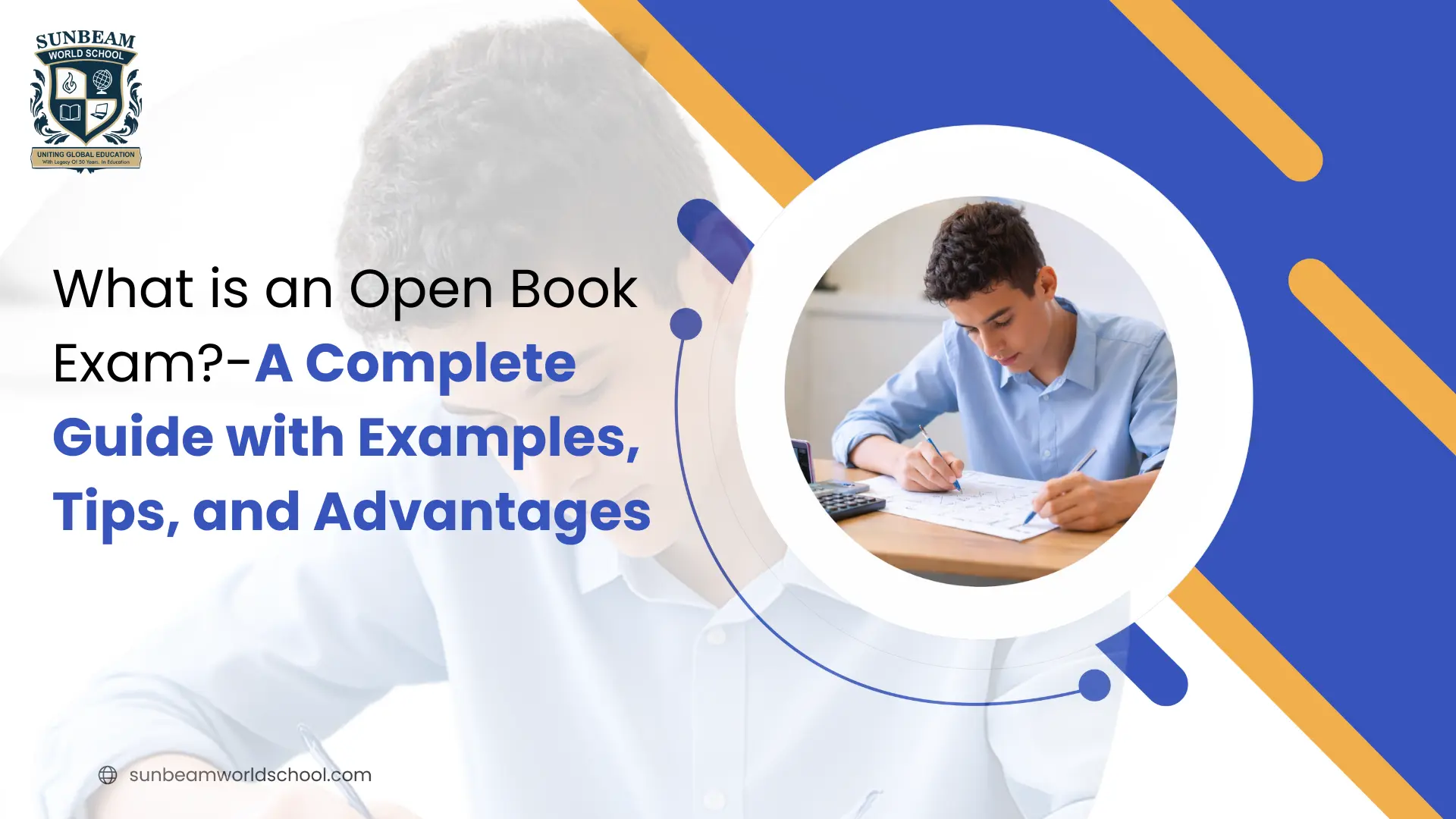
What is an Open Book Exam? A Complete Guide with Examples, Tips, and Advantages
| Open book exams in India are redefining student assessment by shifting the focus from memorization to critical thinking, practical application, and problem-solving skills. With CBSE introducing this format for Class 9, students are encouraged to organize their notes strategically, analyze questions carefully, and apply concepts rather than just recalling facts. Open book examination not only reduces exam stress but also prepares learners for real-world challenges, higher education, and in future careers. Success in open book exams relies on smart preparation, effective time management, and the ability to use resources intelligently, making it a modern and practical assessment method. |
Ever wondered if open book exams are really “easy”? Or are they just as challenging as traditional tests, but in a different way? If you’re a student preparing for one, it’s time to rethink your strategy. Open book examinations aren’t about flipping pages randomly—they’re about thinking critically, applying concepts, and solving problems efficiently.
If you’re a student preparing for open book exam in India, understanding how to use your notes strategically can make all the difference. In this guide, we’ll break down what an open book exam is, share real-life examples, reveal common mistakes to avoid, and give you proven tips to prepare smartly. Let’s turn your books and notes into tools for success!
Open Book Exam in IndiaStarting next year, CBSE will introduce open book exams for Class 9 students, allowing them to refer to textbooks, notes, and study materials while answering questions. This change is designed to shift the focus from rote memorization to understanding, application, and analytical thinking. Students will now be evaluated on their ability to interpret concepts, solve problems, and apply knowledge in real-life scenarios. This move aligns with modern education trends that encourage critical thinking and practical learning, preparing students better for higher classes and competitive exams. |
What is an Open Book Exam?
An open book exam is a type of assessment where students are allowed to refer to textbooks, notes, or other study materials while answering questions. Unlike traditional closed book exams, it emphasizes understanding, application, and analytical thinking rather than memorization.
Example of an open book test, in a business management open book test, instead of asking for definitions of marketing terms, students may be given a case study of a struggling company and asked to propose strategies based on theories and references from their textbooks. This format tests problem-solving skills and the ability to use resources effectively in real-world scenarios.
Open Book Examination meaning:Open Book Exam is a system of evaluation designed to test how well students can apply concepts rather than how much information they can memorize. |
The Idea Behind Open Exam
| Expert Insight:
India’s move toward open book exams is designed to shift assessment from memorisation to critical thinking and practical application. Well-structured questions encourage students to analyse, synthesise, and apply knowledge—skills vital for modern careers. Successful implementation, however, depends on thoughtful question design, teacher training, and equitable access to study resources, ensuring that all students can benefit fully from this progressive assessment approach. |
The core idea behind an open book exam is to evaluate a student’s ability to understand, analyze, and apply knowledge, rather than simply memorize information. Traditional closed book examinations often test a student’s memory under pressure, which may not reflect real-world problem-solving skills. In contrast, an open book examination simulates practical scenarios where access to information is allowed, but correct application and critical thinking are essential.
For example, in a medical open book test, a student may refer to textbooks to diagnose a patient case but must interpret symptoms accurately and suggest an effective treatment plan. This approach encourages deeper learning, reduces stress, and aligns assessments with real-life professional situations.
By focusing on analysis, reasoning, and creativity, the open book exam system ensures that students are not just repositories of information but thinkers who can use knowledge meaningfully. It emphasizes learning for understanding rather than rote memorization, preparing students for both academic success and future careers.
Types of Open Book Exams
Open book exams are not a one-size-fits-all format. Different types are designed to assess a student’s understanding, analytical skills, and ability to apply knowledge in practical situations. Understanding the types of open book exams helps students prepare effectively and perform better.
1. Restricted Open Book Exam
In this type, students are allowed to use only specific materials such as a single textbook, class notes, or instructor-approved references. The aim is to test analytical and application skills while keeping the exam controlled. For example, in a history exam, students might be allowed to refer to one course textbook to answer essay questions.
2. Unrestricted Open Book Exam
Here, students can use any reference material, including textbooks, lecture notes, and digital resources. These exams are often more research-oriented, requiring critical thinking and problem-solving rather than direct recall. For instance, in a law open book exam, students may be given a case study and must consult multiple legal resources to provide a comprehensive answer.
3. Take-Home Open Book Exam
Take-home exams are a flexible form of open book assessment, usually completed over a longer period, such as 24 to 72 hours. Students can use all available resources and are expected to provide detailed, well-researched answers. This format is common in graduate programs, management courses, and research-focused subjects, where deep analysis is required.
4. Open Book Evaluation Projects
Some open book exams take the form of assignments or projects instead of timed tests. Students work on case studies, simulations, or real-world scenarios, applying their knowledge and using resources effectively. For example, an engineering student might be asked to design a model using reference manuals and calculations, reflecting a true open book evaluation approach.
Open Book Exam Structure
The open book exam structure is designed to evaluate a student’s ability to analyze, apply, and interpret knowledge, rather than test rote memorization. Unlike closed book examinations that rely on memory recall, open book exams focus on practical problem-solving, critical thinking, and decision-making skills. Understanding the structure of an open book exam is essential for students to prepare effectively and perform at their best.
1. Sections and Question Types
Most open book exams are divided into multiple sections, each designed to assess different levels of understanding:
- Analytical Questions: These require students to interpret data, identify patterns, and draw logical conclusions based on reference materials.
- Application-Based Questions: Students are often given real-life scenarios or case studies where they must apply theoretical concepts. For example, in a management open book exam, a student may analyze a struggling company and propose marketing strategies using textbook theories.
- Essay Questions: These test the student’s ability to synthesize information from multiple sources, organize thoughts coherently, and present well-structured arguments.
- Problem-Solving Questions: Especially in subjects like engineering, mathematics, or finance, students are required to solve complex problems using formulas, reference tables, and guides.
2. Time Allocation
The open book examination system usually provides longer durations than traditional exams, allowing students to refer to study materials efficiently. Time is typically allocated based on sections and the complexity of questions. For example, case study analysis may take 40–50% of the total exam time, while short analytical questions occupy the rest. Students must manage their time carefully to avoid spending too long searching for answers in books or notes.
3. Reference Materials Allowed
The structure often specifies the type and scope of resources students can use:
- Restricted Open Book Exams: Only selected textbooks, lecture notes, or instructor-approved references are allowed.
- Unrestricted Open Book Exams: Students may consult any printed or digital resources relevant to the course.
- Take-Home Exams: Usually completed over 24–72 hours, with access to all materials including online sources.
4. Open Book Exam Evaluation Criteria
Open book exams focus on higher-order thinking skills, so the evaluation criteria are different from memorization-based tests. Examiners assess:
- Understanding and Application: How effectively a student applies concepts to solve real-world problems.
- Critical Thinking: Ability to analyze, interpret, and compare information from various sources.
- Clarity of Presentation: Logical flow, structured answers, and originality.
- Accuracy: Correct use of references, formulas, or methods.
5. Answer Format
The open book exam format often requires:
- Well-organized, concise answers rather than long verbatim copying.
- Proper referencing of textbooks, notes, or online materials.
- Use of charts, tables, or diagrams when necessary to support explanations.
6. Flexibility in Structure
Some open book exams may take the form of projects, assignments, or research reports instead of timed tests. This flexible structure allows students to work in-depth on problems, analyze multiple sources, and present detailed solutions. For example, engineering or management students may submit design projects or strategic plans based on reference materials, reflecting true open book evaluation principles.
How to Take an Open Book Exam?
Now that you understand what is open book test, it may sound simple to you, but in reality, it requires a smart and well-planned approach. Many students assume that because books and notes are allowed, preparation is not necessary. This is one of the biggest mistakes learners make.
An open book examination tests understanding, application, and analytical skills, not the ability to copy information. Therefore, knowing how to take an open book exam effectively is extremely important for scoring well.
Understand the Purpose of the Exam
Before attempting an open book exam, students must clearly understand what this type of assessment expects from them. The main objective of an open book test is to evaluate how well you can apply knowledge to real-life situations. Questions are usually case-based, analytical, and problem-oriented. Simply locating answers in the textbook will not be enough. Keeping this mindset is the first step toward performing well.
Prepare Seriously in Advance
Even though it is called an open book exam, proper preparation is still essential. Students should study all topics thoroughly before the exam day. Relying completely on books during the exam will waste valuable time. It is important to read chapters carefully, understand key concepts, and practice application-based questions in advance. The better prepared you are, the easier it will be to use your resources effectively.
Organize Your Study Materials
One of the most important strategies for taking an open book examination is to keep your material well organized. During the exam, there is limited time, and searching randomly through books can create confusion. Students should use bookmarks, sticky notes, highlights, and indexes to mark important sections. Creating short summaries, charts, and quick reference notes can save a lot of time and help in locating answers quickly.
Read the Questions Carefully
In an open book exam, questions are often tricky and require deep understanding. Instead of rushing to open the book immediately, students should first read each question carefully and analyze what is being asked. Identifying keywords, instructions, and expectations in the question is crucial. Many students lose marks because they misunderstand the requirement of the question and give irrelevant answers.
Manage Your Time Wisely
Time management plays a very important role in open book exams. Since students have access to study material, they often spend too much time searching for information. This can result in incomplete answers. It is essential to divide time properly among all questions and avoid over-dependence on books. Ideally, you should already know where to find most of the information instead of starting fresh research during the exam.
Use Resources Smartly, Not Excessively
The biggest advantage of an open book test is access to information, but this should be used intelligently. Students should refer to books only to support their answers, not to copy large portions of text. Examiners look for original thinking, proper explanation, and logical reasoning. Overusing references can make answers lengthy, unfocused, and poorly structured.
Write Answers in Your Own Words
Even in an open book exam system, copying directly from textbooks is not recommended. Most questions are designed in a way that requires personal interpretation. Students should read the relevant material, understand it, and then present the answer in their own words. This shows clarity of thought and helps in scoring higher marks.
Practice Before the Actual Exam
The best way to master an open book examination is to practice similar questions beforehand. Students can attempt mock tests, solve previous year papers, and practice case-study questions using their books and notes. This helps in developing speed, accuracy, and confidence for the final exam.
Stay Calm and Focused
Finally, maintaining a calm and focused mindset is very important. Many students panic because they believe they need to find every answer in the book. Instead, they should trust their preparation and use resources only as support tools. A clear and confident approach always leads to better performance.
Advantages of Open Book Examination
The open book examination system has gained wide acceptance across modern education because it aligns more closely with practical learning and real-world problem solving. Unlike traditional exams that mainly test memory, an open book exam evaluates how effectively students can use knowledge and resources. There are several important advantages of open book examination that make it a powerful and progressive assessment method.
1. Reduces Exam Stress and AnxietyOne of the biggest advantages of open book examination is that it significantly reduces stress and fear among students. In closed book exams, students often feel extreme pressure to memorize large amounts of information. This leads to anxiety, nervousness, and sometimes poor performance despite good understanding. In an open book exam, students know they can refer to their books and notes, which creates a more relaxed and confident mindset. This allows them to focus on answering questions logically instead of worrying about forgetting facts.
2. Encourages Conceptual UnderstandingThe open book exam system promotes true learning rather than rote memorization. Since students are allowed to use study materials, the questions are designed in such a way that simply copying from the textbook is not possible. Students must understand concepts deeply to apply them to different situations. This approach ensures that learning becomes meaningful and long-lasting instead of temporary cramming done only for exam purposes.
3. Develops Critical Thinking SkillsAnother major advantage of open book examination is that it strengthens critical thinking and analytical abilities. Most open book tests include case studies, problem-based questions, and application-oriented scenarios. Students are required to analyze information, compare ideas, and draw logical conclusions. This helps them develop independent thinking skills, which are extremely important for higher education and professional careers.
4. Reflects Real-Life Working ConditionsIn real life, professionals are never expected to remember everything by heart. Doctors consult medical journals, engineers refer to manuals, and lawyers study legal documents before making decisions. The open book examination follows the same principle. It prepares students for actual workplace situations where using resources effectively is more important than memorizing facts. This makes the assessment system more practical and realistic.
5. Improves Research and Reference SkillsOpen book exams teach students how to locate relevant information quickly and efficiently, including the use of digital resources accessible during open book assessments. Instead of mugging up pages, learners focus on organizing their notes, highlighting important points, and understanding where to find specific data. These research and reference skills are extremely valuable for higher studies, competitive exams, and professional life.
6. Promotes Better Quality LearningWhen students know that the exam will be open book, they study in a different manner. Rather than trying to memorize every line, they concentrate on understanding topics thoroughly. They prepare summaries, make organized notes, and focus on conceptual clarity. This results in better quality learning and a stronger grasp of subjects.
7. Reduces Unfair Pressure of Memorization
Many students struggle in closed book examinations not because they lack intelligence, but because they are not good at memorizing. The open book exam system removes this unfair barrier. It gives equal opportunity to all types of learners by focusing on knowledge application rather than memory power. This makes the evaluation process more balanced and student-friendly.
8. Encourages Honest Learning HabitsIn traditional exams, students often rely on last-minute cramming, shortcuts, or rote learning techniques. Open book examinations discourage such habits. Since questions demand interpretation and analysis, students must study sincerely throughout the academic session. This leads to more disciplined and genuine learning behavior.
9. Supports Higher-Order ThinkingOpen book exams are designed to test higher-order thinking skills such as evaluation, synthesis, and problem solving. Students are required to connect different concepts, justify their answers, and present well-structured arguments. This type of assessment goes beyond basic knowledge and helps in intellectual growth.
10. Makes Online Education More EffectiveWith the growth of digital learning, the open book exam system has become even more relevant. Online education cannot always rely on strict memory-based testing. Open book exams fit perfectly into online and distance learning models, allowing fair evaluation while maintaining academic integrity.
Open Book Exam vs Closed Book Examination – Key Differences
| Parameter | Open Book Exam | Closed Book Examination |
| Definition | Students are allowed to use textbooks, notes, and reference materials during the exam | Students must answer all questions from memory without any study material |
| Main Focus | Understanding, analysis, and application of concepts | Memorization and recall of information |
| Type of Questions | Analytical, case-based, and problem-solving questions | Direct, factual, and theory-based questions |
| Learning Approach | Encourages deep learning and conceptual clarity | Often promotes rote learning and cramming |
| Stress Level | Lower stress as resources are available | Higher stress due to dependence on memory |
| Real-World Relevance | More practical and aligned with professional work environments | Less aligned with real-life situations |
| Preparation Method | Requires organized notes and conceptual study | Requires repeated revision and memorization |
| Use of Resources | Books and materials are actively used | No external resources are allowed |
| Time Management | Time is spent searching and analyzing information | Time is spent recalling and writing answers |
| Risk Factor | Risk of poor time management | Risk of forgetting important information |
| Skill Development | Builds research, reasoning, and critical thinking skills | Builds memory retention skills |
| Suitability | Best for higher education and professional courses | Suitable for basic knowledge testing |
Disadvantages of open book examination
While open book exams offer many advantages like reduced stress and practical application of knowledge, they are not without challenges. Understanding these drawbacks can help students prepare more effectively and avoid pitfalls.
- Time-Consuming During ExamsAlthough students can refer to books and notes, searching for information during the exam can be time-consuming. Many end up spending more time looking for answers than actually analyzing and writing them, which can reduce overall performance.
- False Sense of SecurityStudents often assume that open book exams are “easy” and skip thorough preparation. This overconfidence can backfire, as success depends on understanding, applying, and interpreting concepts—not just finding information in books.
- Requires Strong Analytical SkillsOpen book exams emphasize problem-solving and application rather than memorization. Students who lack critical thinking or analytical skills may struggle, even with access to textbooks and notes.
- Potential Over-Reliance on MaterialsSome learners depend too heavily on notes, copying answers directly instead of using them to support original thinking. This approach can result in incomplete, poorly structured, or low-quality answers.
- Stress from Managing ResourcesDespite reduced memorization pressure, managing multiple books, notes, and references can feel overwhelming. Students need excellent organization and time management, which can be stressful if not practiced.
- Difficulty in Preparing Reference MaterialsCreating organized, quick-access notes and summaries requires significant effort before the exam. Students who don’t prepare these tools may waste valuable time searching during the test.
- Evaluation is Often TougherSince questions are designed to test understanding and reasoning, scoring can sometimes be stricter. Teachers expect students to demonstrate original thought, analysis, and practical application, which may be more challenging than rote memorization.
- Not Suitable for All SubjectsSome subjects, especially those that rely on formulas, quick recall, or time-bound problem-solving (like basic math), may not benefit much from open book exams. Here, too much reference usage can slow students down.
- Can Increase Anxiety for Some StudentsWhile many feel less stressed, others experience anxiety over managing materials and ensuring they are using the correct information efficiently. Poor planning can turn the perceived “easy” format into a stressful experience.
- Limited Practice for Memory RetentionOpen book exams reduce the pressure to memorize facts, which can impact long-term retention. In professions or courses where quick recall is necessary, students may find themselves less prepared.
Tips to Prepare for an Open Book Exam
Think an open book exam is “easy”? Think again! Success isn’t just about flipping through textbooks. It’s about mastering concepts, organizing your materials smartly, practicing real-life application questions, and managing your time like a pro to ace every answer.
Tip 1. Understand the Syllabus: Focus on topics likely to appear in analytical or case-based questions.
Tip 2. Organize Study Materials: Use bookmarks, highlights, sticky notes, and summary sheets for quick access.
Tip 3. Focus on Conceptual Understanding: Learn concepts deeply rather than memorizing information.
Tip 4. Practice Application-Based Questions: Solve past papers, case studies, and mock tests to improve speed and accuracy.
Tip 5. Create Quick Reference Notes: Compile formulas, key points, and important examples for fast retrieval.
Tip 6. Manage Time Wisely: Allocate time for reading, consulting resources, and writing answers efficiently.
Tip 7. Write in Your Own Words: Avoid copying directly; use examples and structured arguments to show understanding.
Tip 8. Stay Calm and Confident: Trust your preparation and use resources as support rather than a crutch.
Common Mistakes in Open Book Exams
Now that you understand open book examination advantages and disadvantages, let us understand the common mistakes in open book exams. Open book exams might seem stress-free, but many students stumble by making simple errors.
Mistake 1: Relying too much on books instead of understanding concepts.
Mistake 2: Poor organization of notes and study materials.
Mistake 3: Not reading or understanding questions carefully.
Mistake 4: Copying answers directly from textbooks.
Mistake 5: Spending too much time on a single question.
Mistake 6: Ignoring conceptual clarity and critical thinking.
Mistake 7: Not practicing case studies or past papers.
Mistake 8: Overlooking time management during the exam.
Real-Life Examples of Open Book Exams
Understanding what is open book examination isn’t just theory—they mirror real-world challenges. From law and medicine to business and engineering, these assessments test how well students apply knowledge, solve problems, and make decisions using resources, just like professionals do every day.
| Field / Course | Example of Open Book Exam | Purpose / Skills Tested |
| Law | Students are given a hypothetical legal dispute and must provide arguments, cite precedents, and suggest solutions using legal references. | Tests ability to analyze legal information, apply laws, and think critically. |
| Medical & Nursing | Students receive patient case studies with symptoms, lab results, and medical histories, and must propose diagnosis and treatment plans using textbooks or guidelines. | Evaluates clinical judgment, problem-solving, and accurate application of medical knowledge. |
| Business & Management | Students analyze a failing company’s profile and recommend solutions for marketing, operations, or finance using frameworks from textbooks. | Measures strategic thinking, decision-making, and synthesis of multiple resources. |
| Engineering & Technology | Students solve problems or design systems using reference formulas, manuals, or standards while applying them correctly to practical scenarios. | Tests analytical skills, accuracy, and application of technical knowledge. |
| Online & Distance Education | Timed assessments allow students to use PDFs, online notes, and approved digital resources to answer application-oriented questions. | Assesses research skills, resource utilization, and application ability in a digital environment. |
Conclusion
Open book exams are more than just having textbooks at your fingertips—they test critical thinking, problem-solving, and the ability to apply knowledge effectively. With the right preparation, organization, and understanding of concepts, students can approach these exams with confidence and clarity.
At Sunbeam World School, students are guided through innovative learning methods and structured support that help them excel in open book assessments while building skills for real-life challenges. By combining smart study strategies with practical application, learners can turn every exam into an opportunity to showcase their understanding and analytical abilities.

Frequently Asked Questions
What do you understand by open book exam?
-An open book exam allows students to refer to textbooks, notes, or approved resources while answering questions. It focuses on applying knowledge, critical thinking, and problem-solving rather than memorization, often including case studies or analytical scenarios.
How is an open book exam different from a closed book exam?
+What are the advantages of open book exams?
+What are the disadvantages of open book exams?
+How should I prepare for an open book exam?
+Can I copy answers from textbooks in an open book exam?
+Where are open book exams conducted?
+What types of open book exams exist?
+
In this article
Share this post:


Press and Blogs
Stay updated with our press releases, educational blogs, and more.
Quick Summary The area of rectangle equals its length multiplied by its width (A =...

Quick Summary Student success motivational quotes are short, memorable lines that can help students stay...
Quick Summary The area of a square is the total space enclosed within its four...